

The difference is where the primer sits. In a rimfire cartridge, the priming compound is inside the rim at the base of the case, and the firing pin hits the rim. In a centerfire cartridge, a separate primer is pressed into the center of the case base, and the firing pin hits that.
That one design choice drives almost everything else you will notice: cost, pressure, noise, what you can reload and what each type is used for. This post walks through each, using trade-group and government sources.
Rimfire vs centerfire: how each one fires
Rimfire. The case has a hollow rim, and the priming chemicals sit inside it. The National Institute of Justice, in its firearms examiner training, describes the rimfire primer as “integral with the case” (NIJ, Primer Manufacture). When the firing pin strikes the rim, the compound makes heat and gas that light the powder.
Centerfire. A separate, button-shaped primer sits in the center of the base of the case. The firing pin hits it there. The trade group NSSF notes that centerfire primers come in standard sizes, such as small and large rifle and pistol, plus magnum versions (NSSF Let’s Go Shooting, Rimfire vs. Centerfire).
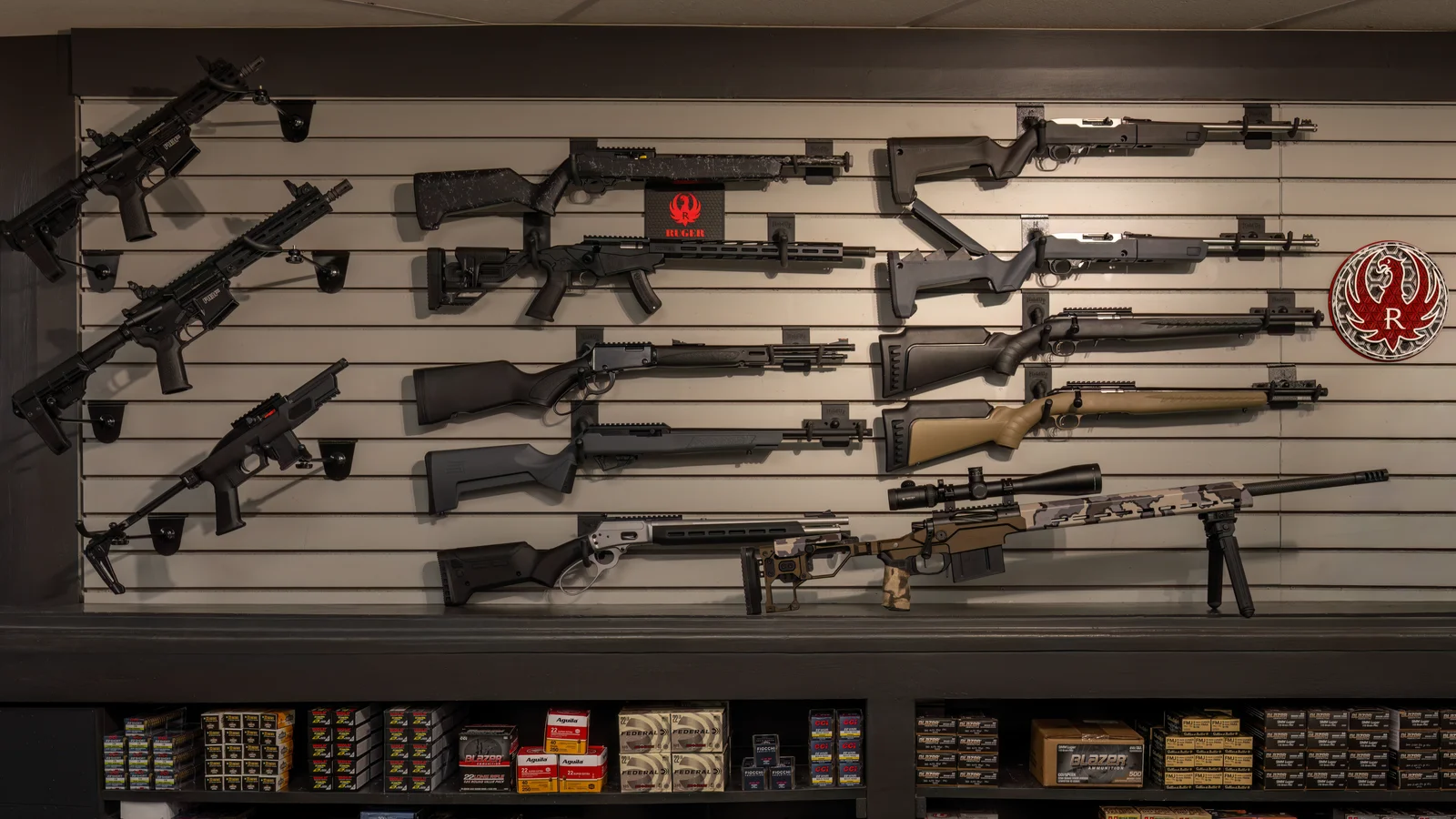
What changes in practice
Three things change for the shooter: what you can reload, how hard the gun kicks, and what a box costs.
What you can and cannot reload
Reloading means refilling a fired case with a new primer, powder and bullet. Centerfire cases can be reloaded this way. NSSF says that doing so can improve accuracy and save money for people who do it.
Rimfire cases cannot be reloaded. NSSF explains that the rim’s priming compound is used up when the round is fired, and there is no removable primer to replace. If you shoot rimfire, you buy new ammo every time and leave the empty cases behind.
Pressure, recoil and noise
Centerfire cartridges generally run at significantly higher pressure than rimfire. NSSF says that produces higher velocity, more recoil and a louder report. Rimfire uses less powder and produces lower pressure, which makes it quieter and easier on the shooter.
NSSF’s articles do not give pressure numbers, and neither will we. The point for a new shooter is simple: the same gun frame can feel much softer with a rimfire round than with a centerfire round.
The case is part of this, too. NSSF notes that centerfire cases are made of thicker brass and are more complex overall than rimfire cases.
Cost and reliability
Rimfire ammo costs less, especially in .22 caliber, according to NSSF. That is why it is the classic round for learning and for long days of practice. For more on that, see our post on why many new shooters start with a .22.
Centerfire primers are separate parts, made and checked on their own. Rimfire primer is spread around the rim. The NIJ training page says rimfire makers inspect to reject cases with voids, because a void in the compound can cause a misfire. A gap in the compound is a cause that is specific to how rimfire is built.
What each is used for
NSSF’s guide lists these common uses:
| Rimfire | Centerfire | |
|---|---|---|
| Primer | In the case rim | Separate primer in the center of the case base |
| Reloadable | No | Yes |
| Pressure | Lower | Significantly higher |
| Recoil and noise | Lower | Higher |
| Cost | Less, especially .22 | More |
| Common uses | Target practice, plinking, small game | Big game, long range, self defense |
| Calibers NSSF names | .22 Long Rifle (the most popular), .22 Winchester Magnum Rimfire, .17 HMR, .17 Mach II | .45 ACP, .38 Special, .308, .300 Win Mag |
To put it plainly: the .22 Long Rifle is a rimfire. A 9mm, a .45 ACP, a .308 and a 5.56 are centerfire. If you are weighing two similar-sounding calibers, our posts on .22 LR vs .22 Magnum and 5.56 vs .223 take on two of the common mix-ups.
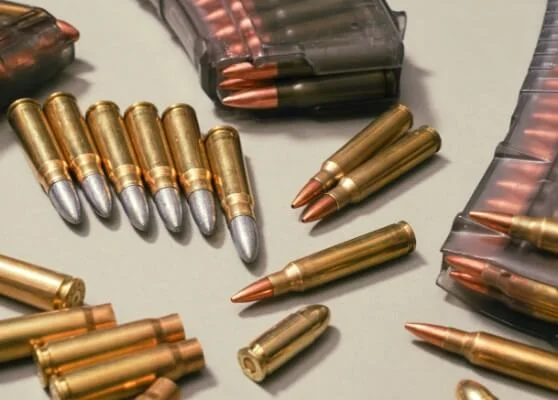
Why rimfire misfires happen: how the primer is made
The NIJ training page walks through how rimfire primer gets into the case. Wet priming mix is pressed into holes in a plate and dropped into a tray of rimfire cases. A spinning step spreads the mix evenly around the rim cavity. Inspectors then reject cases with voids, because voids can cause misfires. The cases are dried in low-temperature ovens and sampled with a sensitivity test, where a steel ball is dropped on them.
The page lists the priming compound as a mixture of lead styphnate, antimony sulfide, barium nitrate and other chemicals, held in place with binders. You do not need to remember any of that. The takeaway is that the compound has to sit evenly all the way around a thin rim, and a firing pin only hits one spot on it. Quality control matters, which is one reason a box of rimfire ammo can have the odd round that does not go off. Neither NSSF nor NIJ gives a failure rate, so we will not either.
Storing and handling both types
Both types follow the same storage rules. SAAMI says to keep ammunition in its original packaging, in a cool, dry place away from solvents, heat and open flame, and apart from your firearms. One more note from SAAMI’s water-exposure guidance: it says rimfire ammunition is much more susceptible to moisture damage than other types, because of how the cartridges are built, and that every effort should be made to keep it out of rain, snow and wet ground (SAAMI, Guidance on Ammunition That Has Been Submerged in Water). Our post on how to store ammo covers the details.
How to tell them apart, and one safety rule
Look at the base of the case. A rimfire case shows no separate primer in the center. A centerfire case has a round primer in the middle. The name stamped there, the headstamp, tells you the cartridge.
Then follow one rule from SAAMI, the ammunition makers’ standards group: make sure the cartridge name on the ammunition’s headstamp matches the name marked on the firearm’s barrel. If the gun is built for more than one cartridge, check the owner’s manual to see which are safe (SAAMI, Recommendations for Safe Ammunition Storage and Handling). Never rely on whether a round happens to fit.
Names that sound alike but are not
Caliber names can mislead. A .22 Long Rifle and a .223 Remington both carry a “.22” in the name, but they are different cartridges. The .22 Long Rifle is a rimfire. The .223 Remington is a centerfire rifle cartridge, and SAAMI publishes its own guidance on which firearms it can be used in. We cover that in 5.56 vs .223.
The same goes for the .17 names. NSSF lists the .17 HMR and the .17 Mach II as rimfire cartridges. Because several different rounds share a bore size, the name on the barrel and the stamp on the case are what count, not the size alone. If you are ever unsure, do not guess. Ask a qualified person to check before you load it.
Which one should you buy?
It depends on the job. For learning, plinking and practice on a budget, rimfire is the usual starting point. For defense, big game or longer shots, you will be looking at centerfire. Plenty of shooters own both kinds, since each suits a different job.
If you are picking a first gun, our post on buying your first gun in Georgia covers the steps. Questions about which caliber suits what you want to do? Ask the counter at Lakeside Munitions in Cumming, or send us a note through the contact page.

