

For many new shooters, the best first rifle is a .22 LR. It is light, it does not kick much, and the ammunition costs far less than centerfire rounds, so you can afford to practice. A rifle you enjoy shooting is a rifle you will shoot often, and that is how people get good.
A .22 is not the only right answer, and it has limits. This post explains why so many people start there, what the choices look like, and how to pick one by handling it, not by reading a spec sheet. It does not recommend a model, because the right rifle depends on you.
Why is a .22 a good first rifle?
An NRA Women writer, B. Gil Horman, says in a guide for beginner and casual shooters that a small .22 LR carbine is the first firearm he would hand to a new shooter. His reasoning is simple. Light rimfire rifles are soft-shooting, and they help new shooters learn the basics: stance, sight alignment and trigger control.
That guide also points out three more reasons:
- Low recoil prevents flinching. Starting with a gun that does not push back hard helps a new shooter avoid flinching, which is a jerk in anticipation of the shot that hurts accuracy.
- Practice costs less. The author compared prices at his local big-box store and found bulk .22 LR cost a fraction of budget 9 mm practice ammunition. Prices change, so check today’s shelf, but the gap between rimfire and centerfire is a long-standing one.
- You will not outgrow it. He calls a good .22 carbine a rifle you will not outgrow, and says he still enjoys his alongside more powerful guns.
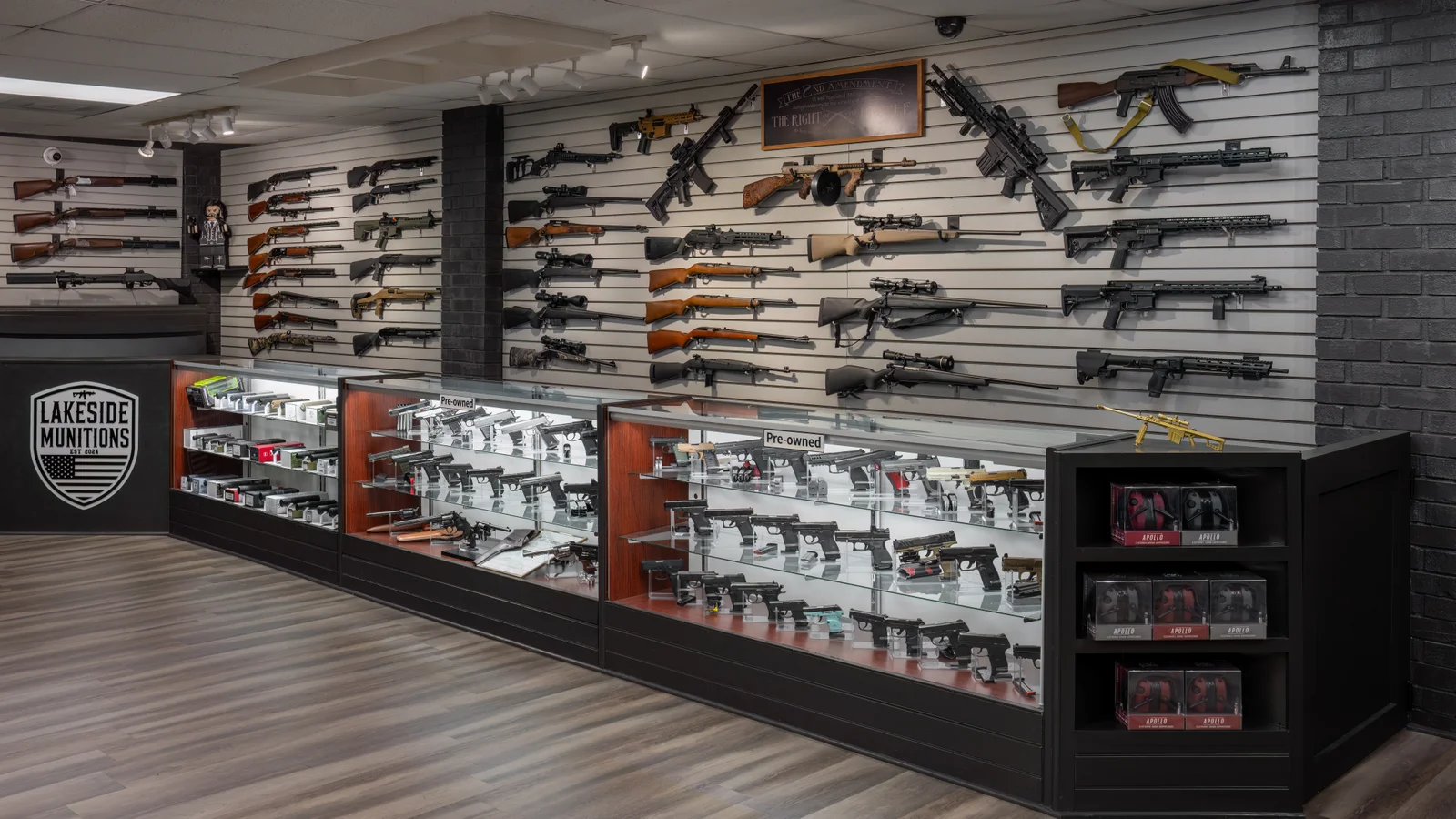
What is a rifle, and what kinds of .22 are there?
Federal regulations define a rifle as a weapon designed or made to be fired from the shoulder, and intended to use the energy of an explosive to fire a single projectile through a rifled bore for each single pull of the trigger (27 CFR 478.11). A rifled bore has spiral grooves inside the barrel that spin the bullet. That is the whole legal idea, and it is why a bolt-action, a lever-action and a semi-automatic can all be rifles.
A “.22” is a caliber, which is the bullet’s width. It does not tell you the action, the size or the brand. You can find .22 rifles that load a single round at a time, ones that work with a bolt or a lever, and ones that feed from a magazine.
The Horman guide describes the main types, and it does not pick between them:
- Semi-automatic: The guide says these are popular for removable, easy-to-load magazines and light triggers. The gun reloads itself after each shot, and you pull the trigger once per round.
- Lever-action: You work a lever under the stock to load the next round. The guide mentions a lever-action as an option for shooters who do not want a semi-auto.
- Bolt-action: You slide a bolt to eject the empty case and load the next round.
The guide does not rank them, so there is no official winner. Think about what you want. If you like loading the next round yourself, the lever or the bolt will feel natural. If you want easy magazines and light triggers, a semi-auto may fit better.
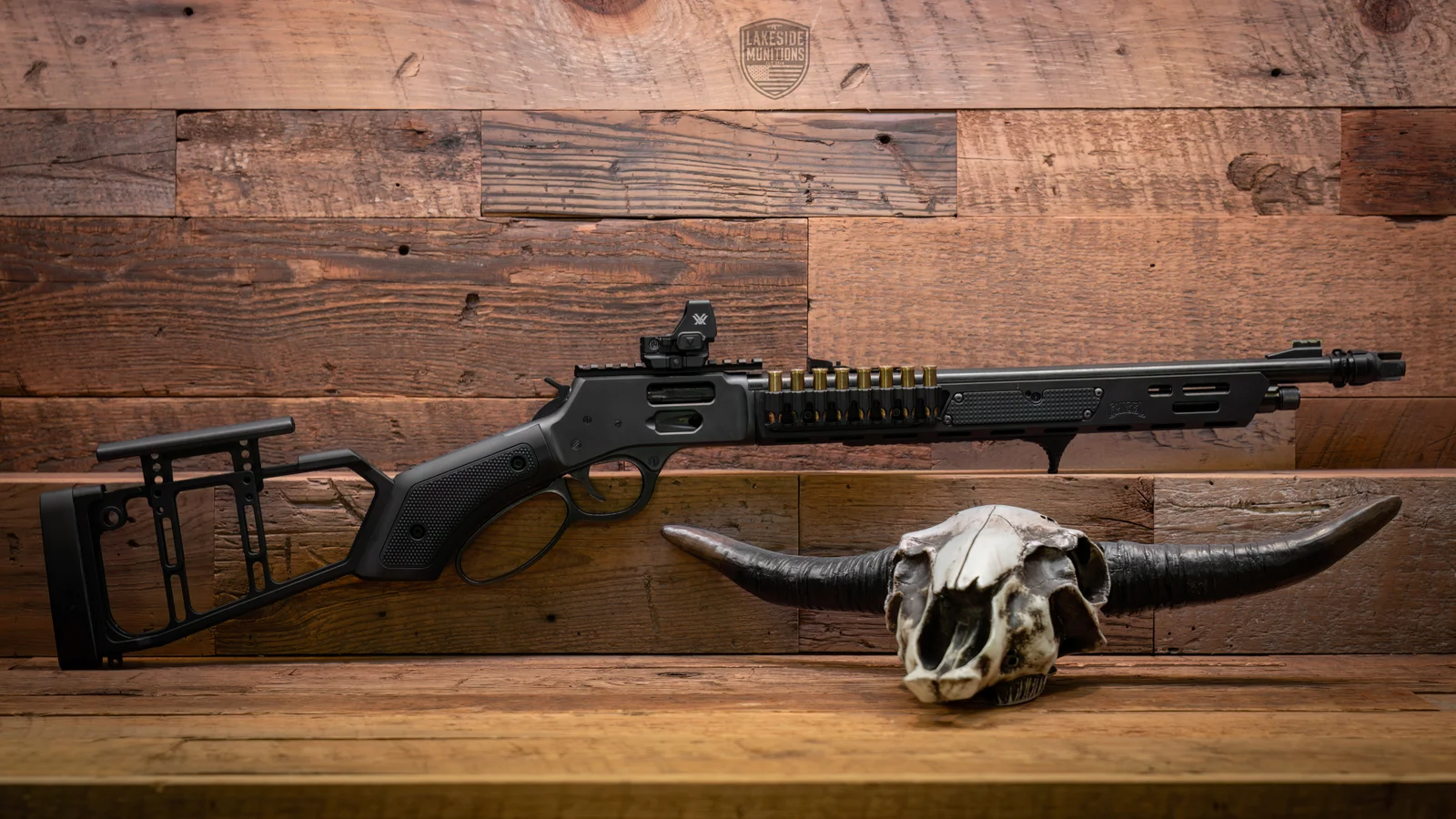
What a .22 does not do well
Be honest about the limits. The same guide says .22 rifles and pistols are poor choices for personal protection or home defense, and should be used for recreation unless modified. They are good for learning, targets, and small game and pest control, as the guide notes. They are not built for everything.
If you plan to hunt larger game or shoot at long range, you will end up looking at a different caliber. A first .22 does not stop you from buying a bigger rifle later.
Safety and how to choose
Safety comes first, with any rifle. A low-recoil rifle does not make safety optional. The NSSF’s rules of firearms safety say to:
- keep the muzzle pointed in a safe direction
- keep guns unloaded when not in use
- be sure of your target and what is beyond it
- use only the ammunition made for your firearm
- wear eye and ear protection whenever you shoot
The NSSF notes that bullets can travel far past the target, so the point about what is beyond it applies to a .22 as much as to any other rifle. The NSSF list also asks you to learn the mechanical and handling traits of the firearm you are using. For a first-time shooter, a basic course is a quick way to do that.
Once the safety habits are in place, you can narrow down a first rifle without reading a hundred reviews. Before you pay, it helps to ask three plain questions at the counter. What ammunition does it take? Does it come with a magazine, or does it load one round at a time? How do I clean it? The last one matters because a rifle you do not clean will not stay reliable, and our post on how often to clean your gun explains a good routine.
- Choose the job. Plinking at paper targets, small game, or learning the basics each point to different rifles.
- Choose the action. Handle a bolt, a lever and a semi-auto, and see which one you enjoy working.
- Check the fit. At the counter, with the rifle unloaded and the muzzle pointed in a safe direction, bring it to your shoulder. Can you see the sights without craning your neck? Is it light enough to hold steady?
- Think about what comes next. If you will want a rifle for more than a .22 can do, ask what the next step looks like.
- Check your age. Federal law bars a licensed dealer from selling a rifle or shotgun to anyone the dealer knows or has reason to believe is under 18 (18 U.S.C. 922(b)(1)). That is as of November 2026, and it is general information, not legal advice. State rules are a separate question, and our guide on the age to buy a gun in Georgia covers them.
Come hold a few
A rifle is a personal choice, and the best test is how it feels in your own hands. Lakeside Munitions will not say which rifle you should start with, because we have not seen you hold it yet. Come by the counter, tell us what you want to do with a rifle, and handle a few. If you are new to all of this, read what happens when you buy your first gun in Georgia.
If you want a rifle that is not on our shelf, ask about a special order. If you bought one online, an FFL transfer brings it through our counter. Or send us a question before you come by.

