

Buying your first gun from a licensed dealer in Georgia comes down to three things: you meet the federal age and eligibility rules, you fill out a federal form honestly, and, for most buyers, you pass a background check before you walk out the door. The part that actually trips people up isn’t the paperwork. It’s walking in not knowing what to expect, and feeling like you can’t ask.
We built Lakeside Munitions for exactly that person.
What this post covers:
- What you need to bring, and who’s actually allowed to buy
- The real sequence of events from the moment you walk in to the moment you walk out
- What it means if your background check comes back “delayed” instead of approved
- How to store your first gun safely once it’s home
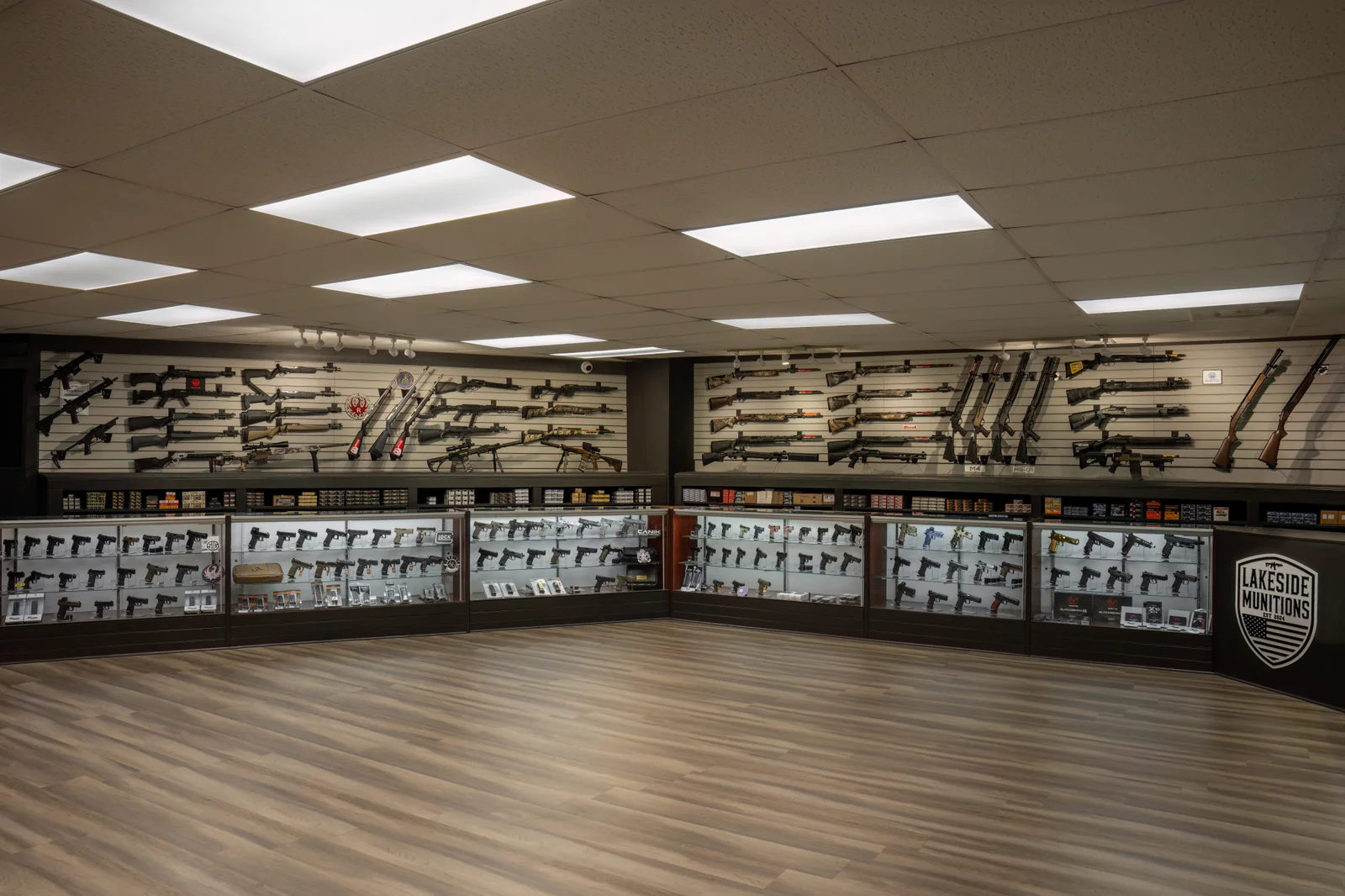
What You Need to Buy Your First Gun in Georgia
Buying from a licensed dealer runs on federal rules, and every dealer in the country follows the same ones. What you need is the right age, identification, and a clean background check.
Age. Federal law sets the floor, and it’s different depending on what you’re buying. To buy a handgun from a licensed dealer like us, you have to be 21. To buy a rifle or shotgun, you have to be 18. That split comes straight from the federal Gun Control Act, 18 U.S.C. § 922(b)(1), and it applies the same way at every FFL dealer in the country.
Identification. Bring a valid government-issued photo ID that shows your current address, typically a Georgia driver’s license or state ID. If yours doesn’t show your current address, call before you come in.
A clean background check. This is the one people worry about the most, so we’ll walk through exactly how it works below.
Who Federal Law Says Can’t Buy a Gun
Most first-time buyers never come close to this list, but it’s worth knowing what it actually says instead of guessing. Federal law, under 18 U.S.C. § 922(g), bars a person from buying or possessing a firearm if they have a felony conviction, an active domestic violence restraining order, certain domestic violence misdemeanor convictions, unlawful use of or addiction to a controlled substance, or an involuntary commitment to a mental institution, among a short list of other categories. Most buyers go through the federal background check system on every purchase from a licensed dealer, which is what protects both you and us if something in your history doesn’t clear.
If you’re not sure whether something in your past applies, talk to an attorney before you fill out the form. That beats finding out the hard way at the counter.
What Actually Happens at the Counter, Step by Step
This is the part most first-time buyers never see written down, so here is the order things happen in at a licensed dealer, including ours in Cumming.
1. You ask questions and handle the guns. Before anything gets written down, walk the wall. Pick things up. Ask what a feature does, why one gun costs more than another, or whether a specific model even makes sense for what you want it for. If a question feels dumb to you, ask it anyway. Take the time you need.
2. You choose the firearm. No rush, no pressure to decide today. If you want to come back next week after thinking it over, that’s a completely normal way to buy a first gun.
3. You show your ID. A valid government photo ID with your current address, checked against the form you’re about to fill out.
4. You fill out ATF Form 4473. This is the federal firearms transaction record every licensed dealer in the country uses. It asks for basic identifying information and a short series of yes-or-no eligibility questions. Answer every question honestly. Lying on a 4473 is a federal crime on its own, separate from whatever the actual answer would have been, so there’s no version of this where guessing or fudging an answer helps you.
5. The background check. For most buyers, we submit your information through the National Instant Criminal Background Check System while you’re standing at the counter. Often the answer comes back while you wait. If you hold a valid Georgia Weapons Carry License, it stands in for the background check. A temporary renewal license does not (ATF Brady Permit Chart), and an expired license means a check.
6. You take it home. Once the check clears and the sale is complete, the gun is yours.
Never bought a gun before? Never filled out a 4473? Tell us that when you walk in, and ask about anything on the form you don’t understand.
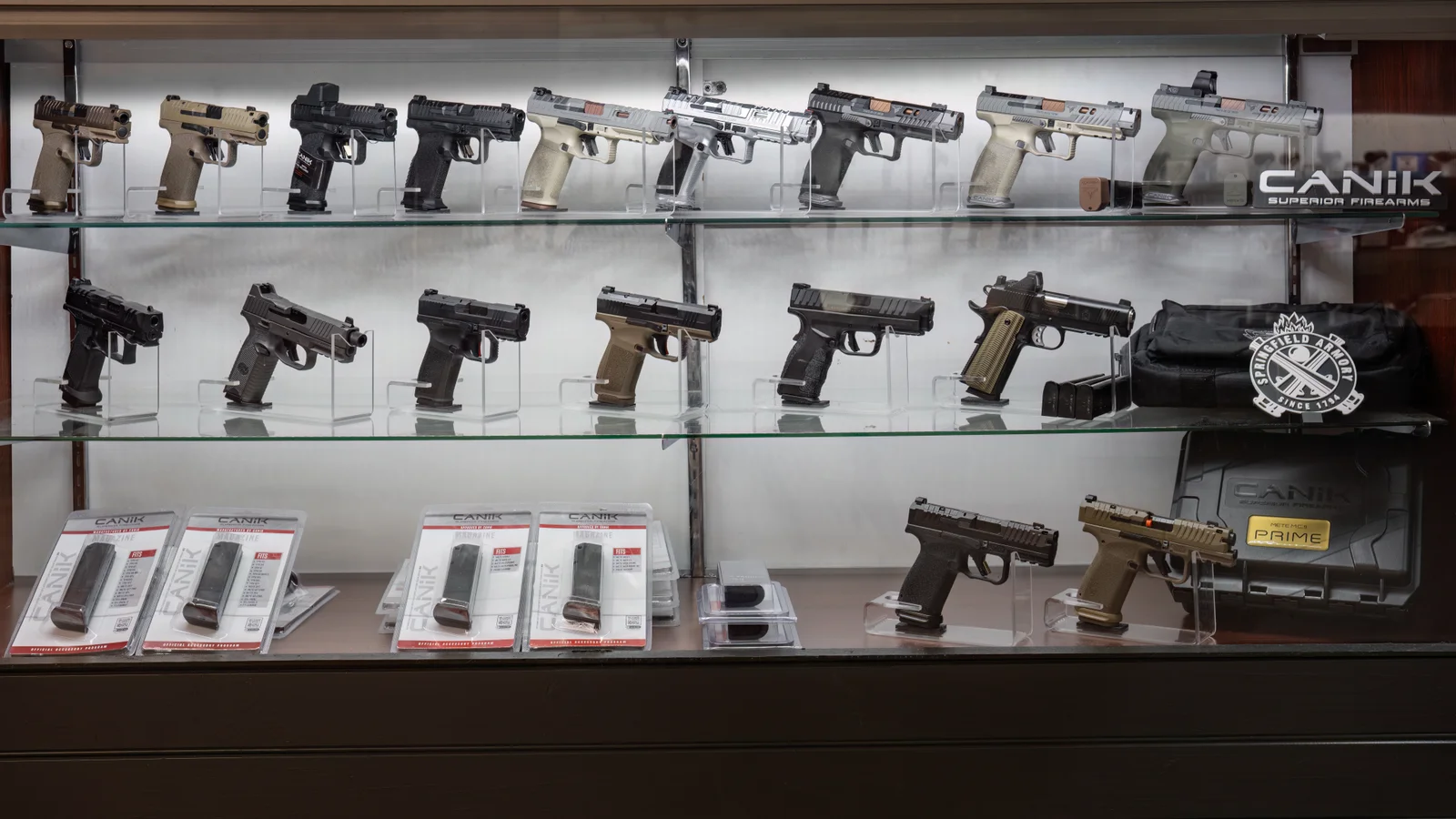
What If Your Background Check Comes Back “Delayed”?
Sometimes a check doesn’t come back approved right away, and that’s worth understanding ahead of time instead of panicking about it at the counter.
A “delayed” response means the system needs more time to confirm your record, usually because something in your name or history needs a closer look before it can clear you. It is not a denial. Under federal law, if three full business days pass from the day we contacted the system and we still haven’t received a denial, we’re legally permitted to complete the transfer at our discretion, a rule known in the industry as the “default proceed” (18 U.S.C. § 922(t)). If you are under 21, that window can stretch to 10 business days when the system flags a possible juvenile record for a closer look. Business days here means days Georgia state offices are open.
In practice, NICS gives a Brady Transfer Date three business days out, and the day the check runs doesn’t count. Run it on a Thursday and the three days are Friday, Monday and Tuesday, so the earliest transfer is Wednesday. A state holiday pushes it out further. If yours comes back delayed, we’ll tell you where it stands.
| The rule | The number |
|---|---|
| Age to buy a handgun from a licensed dealer | 21 |
| Age to buy a rifle or shotgun | 18 |
| Delayed check: we may complete the transfer after | 3 full business days with no denial |
| Delayed check, under 21, possible juvenile record flagged | Up to 10 business days |
Taking Your First Gun Home: Storage That Actually Matters
Buying the gun is the easy part. Storing it safely is the part that actually protects the people in your house.
The CDC’s guidance on firearm injury prevention is blunt about this: secure storage, such as a safe or lock box, can help prevent unauthorized access and use, including by children. In practice that means locked, unloaded when it’s not in use, and with ammunition stored separately if anyone else, especially a kid, has access to the space. A gun in a nightstand drawer isn’t storage. A gun in a locked safe with the ammunition somewhere else is.
If you’re not sure what kind of safe or lock actually fits your situation, ask us. We’ll point you toward something that matches how you actually plan to use the gun, not the biggest or most expensive option on the wall.
Why We Built Lakeside Munitions for People Like You
We opened Lakeside Munitions in 2024 because we were tired of watching people get ignored at the counter, talked down to, or steered toward whatever a shop needed to move that month. Forsyth County deserved a shop where a first-time buyer gets the same straight answers as somebody buying their fifth suppressor. So we built it.
Buying your first gun shouldn’t feel like a sales pitch. At Lakeside, we start with questions: what it’s for, how much experience you have, and what matters most to you. From there, we walk you through the options that fit and explain why, so you understand the differences and the tradeoffs. Sometimes that takes five minutes, and sometimes it takes an hour. Either way, we want you to leave comfortable and confident in what you bought.
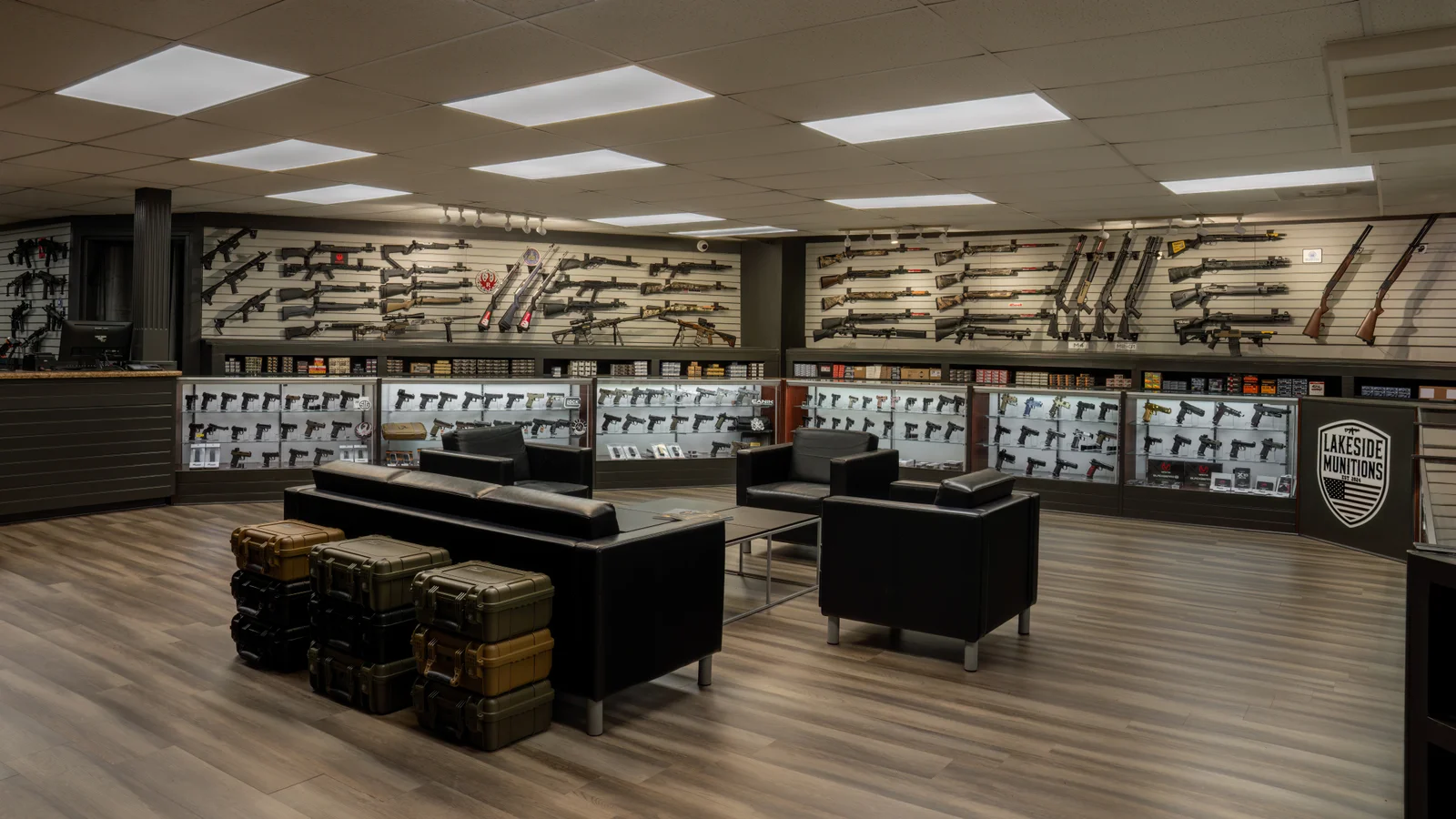
Alex C., one of our customers, put it this way in a Google review: “The staff were friendly, respectful, and really took the time to answer all my questions without any pressure.” That’s the experience we’re aiming for every single time, whether it’s your first pistol or your fiftieth visit.
One thing worth saying plainly: we’re a retail gun shop, an FFL transfer dealer, and a gunsmith, but we don’t have a shooting range and we don’t teach classes. If this is your first time handling a gun and you want hands-on instruction before you buy, or a place to actually shoot it once it’s home, find a certified range or instructor near you and get that training. We’ll sell you the gun and answer every question you have about it, but we won’t pretend we’re something we’re not.
Once you’ve got it home, if you want an optic mounted or a better set of sights installed, that’s gunsmithing, and we post our prices instead of making you call and ask. If you end up ordering online instead of buying in person, you’ll need a local dealer to receive it, and our FFL transfer page walks through exactly how that works and what it costs.
We’re locally owned, at 211 Atlanta Rd in Cumming, open Tuesday through Saturday. If you’ve got a question this post didn’t answer, our FAQ page covers a lot of the rest, or you can read more about why we built the shop the way we did. Either way: come in, ask questions, handle the guns. That’s what the counter is for.
This is general information about the buying process, not legal advice, and it was checked against current federal sources in September 2026. Laws change. If you have a specific eligibility question, ask us or talk to an attorney.


