

A revolver is the simpler handgun, and a semi-automatic pistol holds more rounds and reloads faster. That is the core of the revolver vs semi auto question. Which one is right for you depends on your hands, how you plan to use it, and how much you want to learn before the first trip to the range.
This post explains how each one works, what each does well, and how to make the choice with your own hands. It does not pick a winner, because there is not one.
What is the difference between a revolver and a semi-auto?
The two names describe how the gun loads the next round.
Federal regulations define a revolver as a projectile weapon of the pistol type with a breechloading chambered cylinder, arranged so that cocking the hammer or moving the trigger turns the cylinder and brings the next cartridge in line with the barrel (27 CFR 478.11). In plain words, the rounds sit in a rotating cylinder, and the cylinder turns with each shot.
The same regulation defines a semiautomatic pistol as a repeating pistol that uses some of the energy of a fired cartridge to eject the empty case and load the next round, and that needs a separate trigger pull for each shot. In plain words, the gun reloads itself after every shot, and you pull the trigger once per round. The rounds come from a magazine, which is a box of cartridges that slides into the grip.
So the real difference is where the rounds live and what moves them. A revolver turns a cylinder. A semi-auto cycles its slide.
How many rounds does each hold?
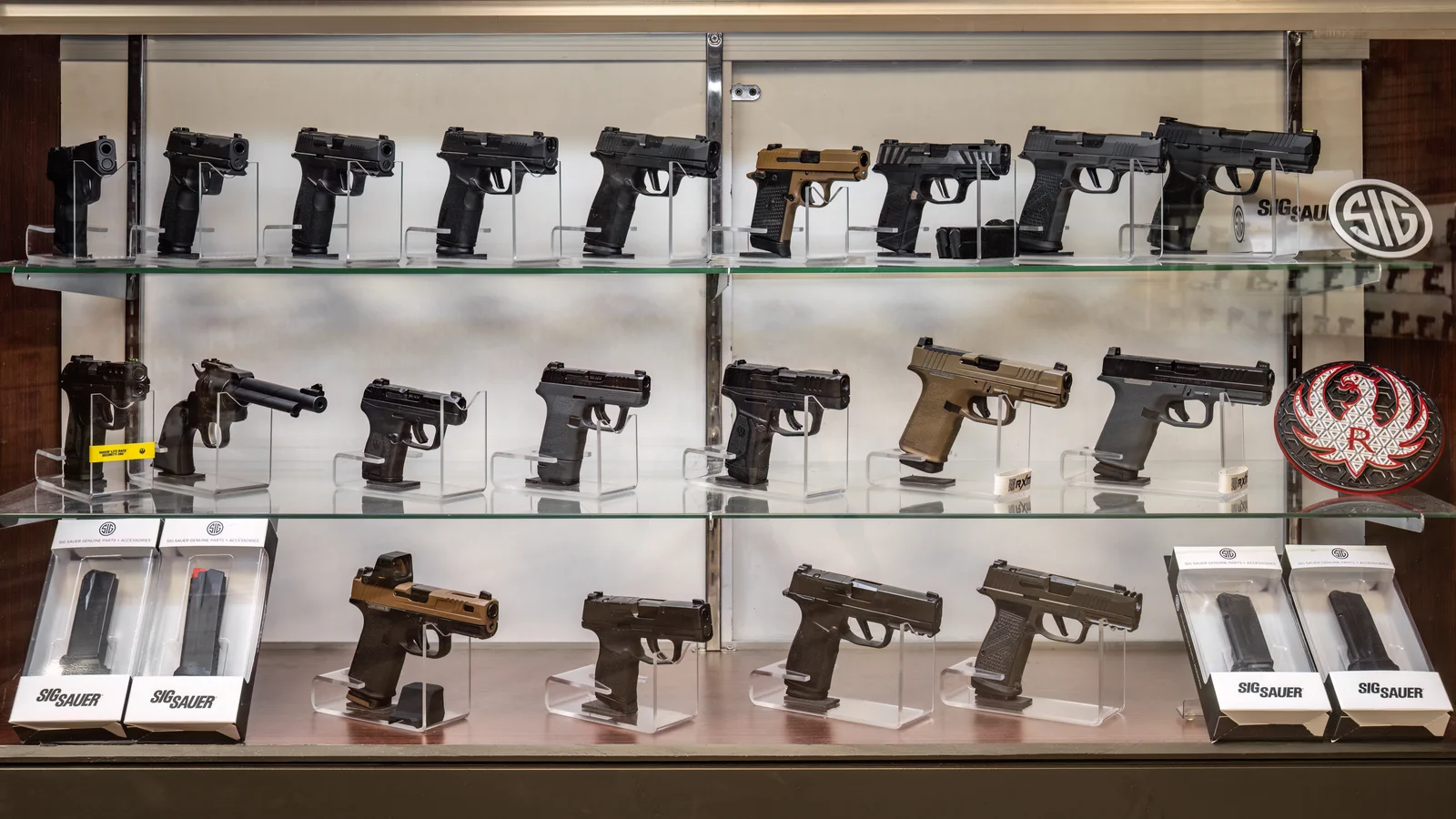
Capacity is the clearest difference. The NRA’s first-time handgun buyer guide says revolvers hold five or six cartridges. It says the detachable magazines on semi-automatics hold anywhere from six to 20 rounds.
Reloading differs too. A semi-auto reloads by swapping a magazine, and the guide says semi-autos offer faster reloading and a thinner profile. A revolver reloads through its cylinder, which takes more time.
Whether that matters depends on the job. For an afternoon at the range, nobody counts the seconds. Capacity matters more if you want a gun that holds more before you have to reload.
Which is simpler and more reliable?
The NRA buyer guide says semi-autos are more complex to operate and may be less reliable than revolvers. A semi-auto has to feed, fire and eject every round by cycling its slide, and a revolver does not.
It adds that reliability is the most important trait of a self-defense gun, and it suggests testing any gun with at least 50 rounds of defensive ammunition. That is good advice for either type. A semi-auto should feed, fire and eject smoothly with a wide variety of loads, and its magazines should load securely and drop freely.
A revolver also handles a wider range of loads, the guide says, from light target loads to heavy defensive loads. A semi-auto tends to run best within a certain power range.
One more practical point. If a gun fails to fire when you pull the trigger, the NSSF rules of firearms safety say to keep the muzzle pointed in a safe direction, keep your face away from the breech, and unload carefully. That holds for both types, and a short course will show you how.
How do they feel to shoot, and who do they fit?
A revolver trigger works in one of two ways, according to the NRA guide. In single-action mode you cock the hammer by hand first, and the trigger needs only a short, light pull. In double-action mode, the trigger does all the work with a long, relatively heavy pull. The guide says defensive revolver shooting is always done in double-action mode.
That heavy trigger pull is one reason some new shooters find a revolver hard to shoot well. Semi-autos vary a lot, so there is no one answer there. If you want to know how the trigger on a semi-auto works, our post on striker fired vs hammer fired pistols goes through the types.
Size and weight matter here too. Revolvers come in frames from pocket-sized to very large, and the heavy ones soak up recoil. The NRA Women size guide notes that a lighter revolver means more recoil. Our post on handgun sizes explained covers the same trade for pistols.
The NRA Women size guide shows how wide the range is. A pocket-size revolver has a barrel of about 1 to 3 inches and weighs roughly 13 to 16 ounces, and the guide suggests it for people who are not comfortable with a semi-automatic. A large-frame revolver can weigh well over 55 ounces, and its weight absorbs recoil. Same type of gun, very different experience.
If you handle a revolver, ask the person at the counter to show you how the trigger works in each mode before you decide how it feels. The two modes feel very different, and a photo or a spec sheet will not tell you which one you will like.
The NRA guide points out that shooters with limited hand strength may find it hard to rack the slide or load a magazine on a semi-auto. That is a real reason some people end up with a revolver. A revolver has no slide to rack. Pulling a long, heavy trigger asks for a different kind of strength, so it pays to test both with your own hands and not guess.
Fit matters for both. The guide says the gun should fit your hand comfortably and point naturally, with controls you can reach and a recoil you can control for quick follow-up shots. It also notes that beginners usually shoot faster and more accurately with lower-recoil cartridges than with the heaviest ones.
How to choose
You do not need to settle this online. A few steps help.
- Say what the gun is for. Range fun, home, or both. The job narrows the field.
- Check your hands. Can you rack a slide? Can you pull a long, heavy trigger and stay steady?
- Handle both types. Ask to hold a revolver and a semi-auto back to back. Look at grip, weight and controls, with the gun unloaded and the muzzle pointed in a safe direction.
- Take a basic course. The NRA guide calls a basic pistol course highly recommended for every new gun owner, whether or not they have bought a gun.
If you are new to all of this, our post on buying your first gun in Georgia explains what to expect at the counter.
Come handle both
Lakeside Munitions will not tell you that one type is the right one for you. We would rather you hold both and decide. Come by the counter and tell us what you want the gun for. If you want something we do not have on the shelf, ask about a special order. If you already bought a gun elsewhere, an FFL transfer brings it through our counter. Or send us a question before you stop in.

