

A pistol suppressor is not a simple screw-on part. Your pistol needs a threaded barrel, the suppressor needs the right mount for how your pistol works, and your sights may need to change. Get those three things right and a pistol suppressor is a quiet, comfortable way to shoot. Get one wrong and you can damage the gun.
This guide walks through all three, using the owner’s manuals from suppressor maker Dead Air as the source. It is general information, not legal advice. Georgia buyers still file a Form 4 and wait for approval before taking a suppressor home, and our suppressor service page covers that process.
Start with the barrel: a pistol suppressor needs threads
A suppressor screws onto the muzzle, so the barrel has to be threaded. You can buy a pistol that ships with a threaded barrel, or swap in an aftermarket threaded barrel.
Threads come in different sizes, called thread pitch. Dead Air’s own parts list shows pistons for 1/2-28 (common on 9mm), M13.5x1 left-hand (a metric thread), 9/16-24 (.40 caliber) and .578-28 (.45 caliber), and each one is a separate part (Dead Air fitment guide). Rugged Suppressors publishes a list of which pitch goes with which pistol, and it says to double check your pitch with the gun’s maker (Rugged thread pitch guide). We break that list down in our barrel thread pitch guide.
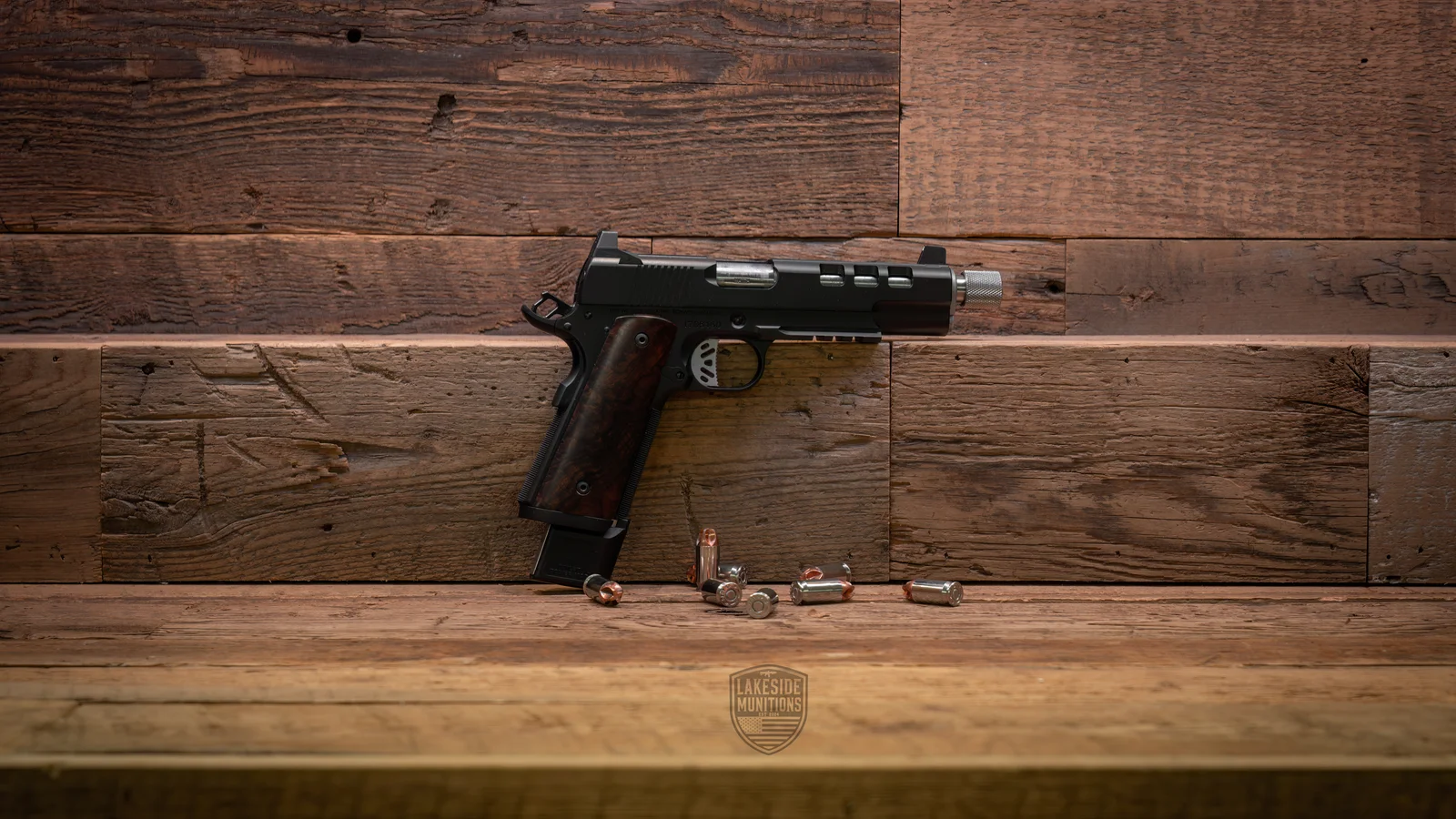
If your barrel is already threaded and you have bought a muzzle device, we install it for $20, and it is free if you buy the muzzle device from us. Cutting new threads into a barrel is machine work. It is not on our posted gunsmithing price list, and our gunsmithing covers work that does not need complex machining. See the gunsmithing page for what we do take on.
Booster or fixed mount: it depends on your pistol’s action
This is the part new buyers miss. Most modern pistols are “tilting barrel” designs, also called Browning-style actions. When you fire, the barrel tilts as the slide moves back.
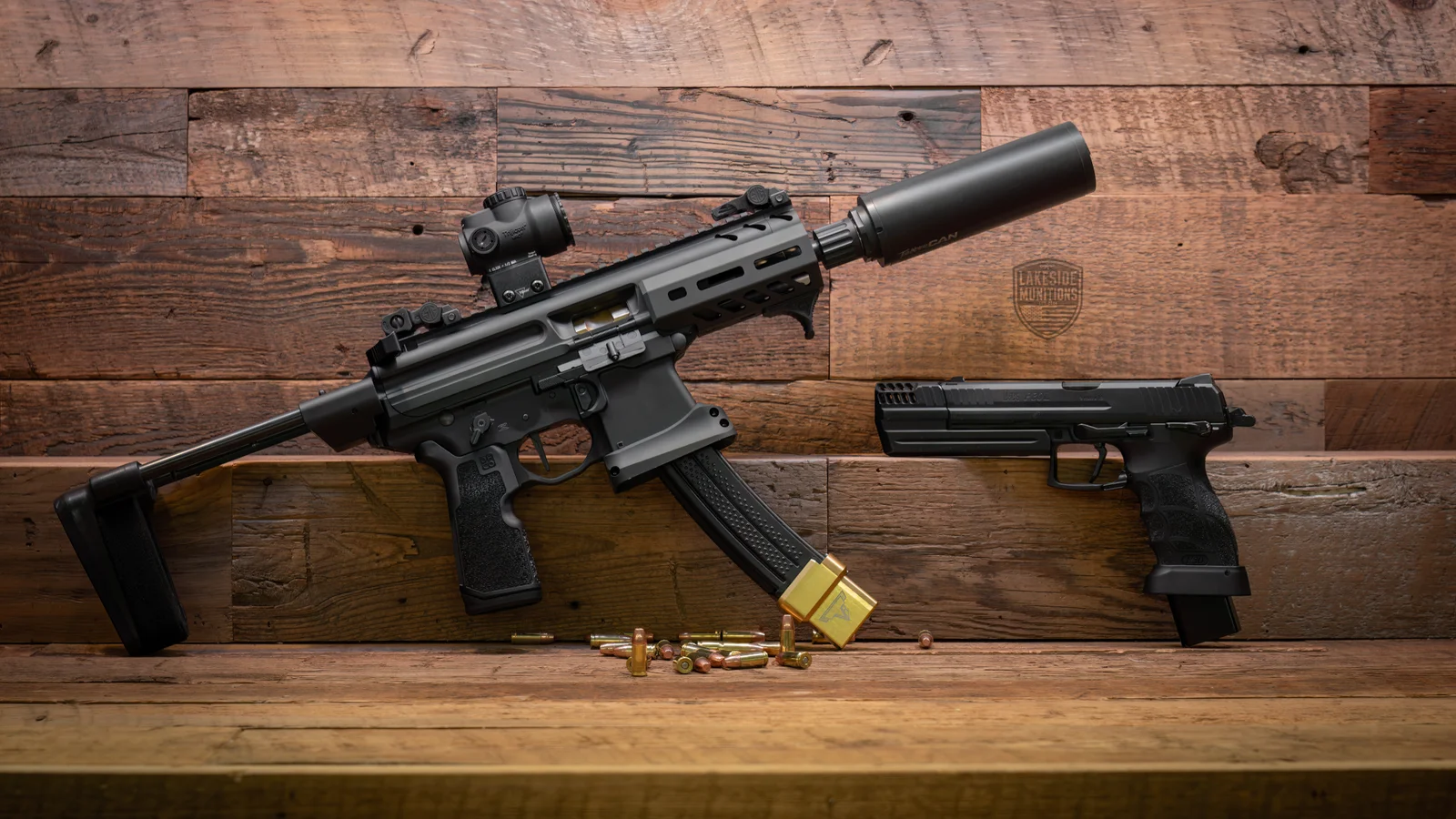
A suppressor on one of these pistols needs a booster, also called a Nielsen device. It is a spring and piston that connects the suppressor to the barrel. Dead Air’s Wolfman manual says a booster and piston are for pistols with Browning-style actions, and a fixed thread mount is for threaded barrels that do not tilt or move with the action, such as a pistol caliber carbine (Dead Air Wolfman manual). Dead Air’s FAQ says the same thing about handguns with a tilting barrel (Dead Air FAQ).
It also works the other way. The same Wolfman manual warns you not to use the booster on a fixed barrel firearm, because the repeated impact will damage the firearm. The Odessa-9 manual calls the booster a “Nielson inertia decoupler” and says a threaded piston connects the suppressor to your barrel (Dead Air Odessa-9 manual). Pistons are matched to your thread pitch, so you buy the one that fits your barrel.
A short rule to remember:
- Pistol with a tilting barrel: booster and a piston that matches your thread.
- Carbine or other fixed barrel: a fixed mount, or a spacer in place of the booster spring.
Dead Air sells a fixed barrel spacer for its Mojave line for exactly this reason, and its RXD910Ti manual lists several ways to mount on a fixed barrel (Dead Air RXD910Ti manual).
How much quieter is a pistol suppressor?
A lot quieter, but not silent. Peak sound from firearms runs from about 140 to 175 decibels, and a suppressor does not always bring it under 120 to 140, according to a review in the National Library of Medicine. Keep hearing protection with you.
Dead Air publishes test numbers for the Odessa-9, and they show two useful things. First, length matters. Second, the ammunition matters.
| Odessa-9 setup | Suppressed, Hush 165 gr | Suppressed, Rem UMC 147 gr |
|---|---|---|
| Full, 10 baffles | 121.9 dB | 126.8 dB |
| Mid, 7 baffles | 128.5 dB | 133.7 dB |
| Short, 4 baffles | 139.1 dB | 143.4 dB |
The same table lists the unsuppressed pistol at 161.1 dB. These are Dead Air’s own test results, taken with its equipment, so treat them as a way to compare setups, not a promise for your gun. The Mojave 9 manual adds that with supersonic ammunition, the main sound comes from the bullet itself moving faster than sound, which a suppressor cannot control, and that subsonic ammunition gives the most pleasant sound (Dead Air Mojave 9 manual).
Sights: plan for them before you buy
A suppressor sits in front of the muzzle, and on a pistol it can sit in your line of sight. Dead Air says the Odessa-9 has a low profile so you can see more of the target without the suppressor blocking the sight picture, and that it lines up flush with, or even under, factory pistol sights. That is one maker’s claim about one suppressor, so check it against your own sights.
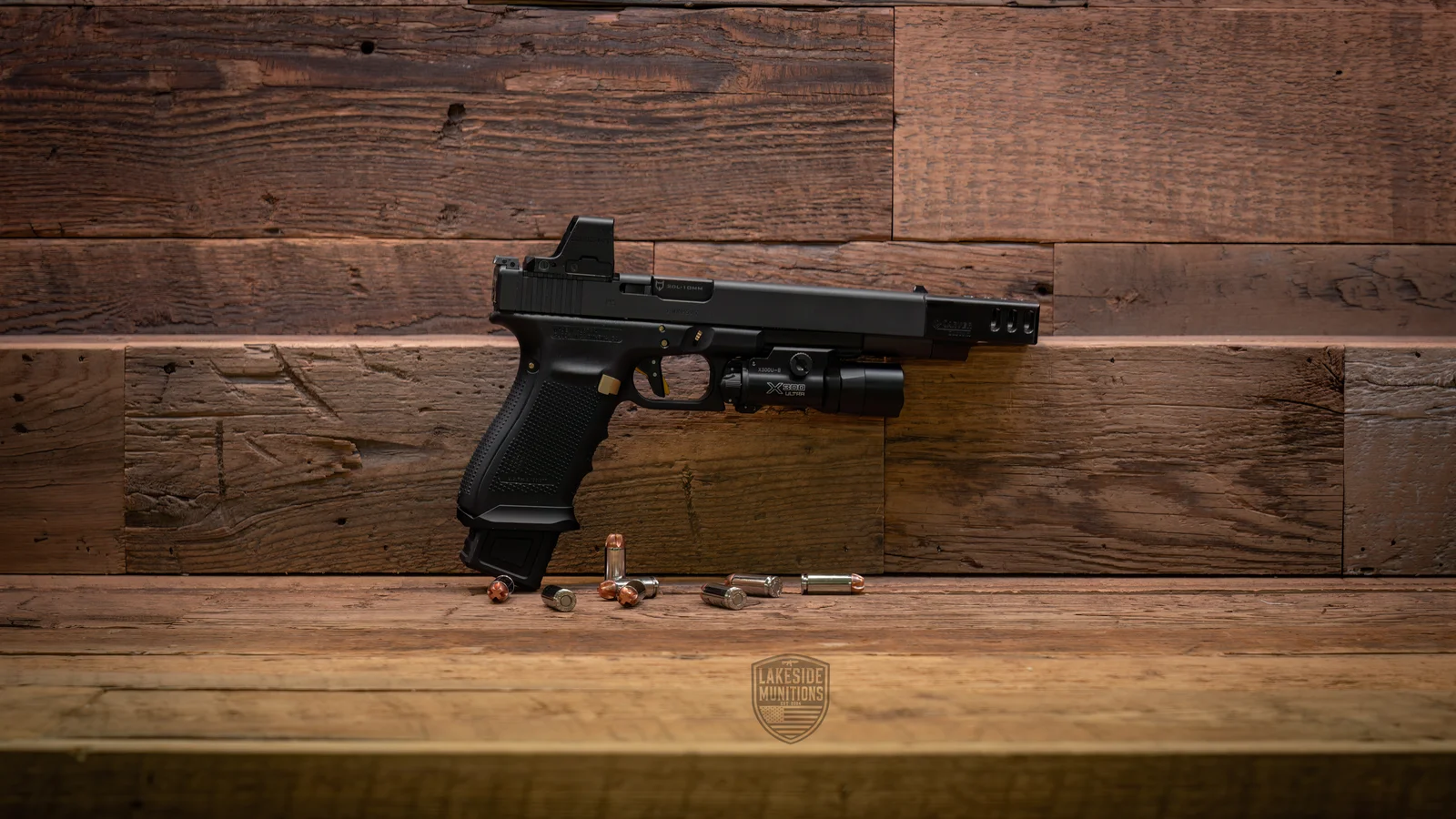
If the suppressor blocks your factory sights, you may need different sights or an optic. Our posted price for a handgun sight install is $40, and an optic mount, red dot or magnified, is $45. Those prices assume a gun in factory condition. If it has other changes, we look at the job first. We cover the height question in more detail in our post on suppressor height and sights.
Keep it working: cleaning and checks
Pistol suppressors need a few habits that rifle suppressors do not:
- Clean the booster. Dead Air’s Mojave 9 manual says to clean the booster spring and piston every shooting session and to check the O-ring.
- Check tightness. The same manual says all direct thread suppressors loosen with use, and a loose one shifts your point of impact. It suggests checking after every magazine, wearing a heat-resistant glove.
- Check alignment. Dead Air says to have a gunsmith verify that your barrel threads are concentric with the bore if you cannot check it yourself. A misaligned barrel can cause a baffle strike, where a bullet hits the inside of the suppressor.
- Respect the rating. Pistol suppressors are rated for specific cartridges. The Mojave 9, for example, is not rated for 5.56 or .223, and its manual says not to shoot .22 LR through it because exposed lead can build up where it is hard to remove.
- Protect yourself. Dead Air notes that shooting a suppressed firearm puts airborne lead around the gun, so wash your hands and wear protection when cleaning.
Our post on cleaning a suppressor goes through the cleaning steps.
Before you buy: questions to answer, then what to do next
Bring these answers to the counter:
- Which pistol, and does it have a threaded barrel? If so, what thread pitch?
- Does the pistol have a tilting barrel, or is it a carbine with a fixed barrel?
- What ammunition will you shoot most, subsonic or standard?
- Do your sights still work with a suppressor on, or will you change them?
If you plan to use a suppressor on more than one gun, ask about muzzle devices too. Our post on direct thread and quick detach mounts explains how that works.
Come by our Cumming shop, bring the pistol you want to suppress, and talk it through at the counter. Buy the suppressor from us and there is no transfer fee. The $100 fee only applies to one bought somewhere else and shipped in, and the federal tax stamp has been $0 since January 1, 2026. ATF approval is still required in Georgia, as of November 2026. See the suppressor service page for the full steps, or contact us with your questions.


