

Direct thread means the suppressor screws straight onto your barrel threads. Quick detach, often shortened to QD, means a muzzle device stays on the barrel and the suppressor locks onto it, so you can take it off and put it back fast. Direct thread is simpler and a bit smaller. Quick detach is faster to swap and easier to share between guns. Neither is wrong, and the right one depends on how you shoot.
This post uses owner’s manuals, the accessory fitment guide and the FAQ from suppressor maker Dead Air as its main sources. Dead Air sells both systems, and it has its own opinion, which we point out where it comes up. This is general information, not legal advice. For the Georgia buying process, see our suppressor service page.
What direct thread means
With direct thread, a mount sits in the back of the suppressor, and that mount screws onto your barrel threads. You thread the suppressor on until it seats against the shoulder of the barrel. That is it. No extra part stays on the gun.
It has the fewest parts, but it depends on your barrel threads. Dead Air’s manuals are direct about this:
- All direct thread suppressors loosen with use, and they depend heavily on the quality of the barrel threading (RXD30Ti manual).
- A loose suppressor shifts your point of impact, and it may cause a bullet to strike a baffle or the front cap (Mojave 9 manual). The Mojave 9 manual suggests checking tightness after every magazine, wearing a heat-resistant glove.
- Do not overtighten it. Dead Air says barrel torque for its direct thread mounts should not exceed 30 foot-pounds, with 25, plus or minus 5, as the best target. Its FAQ says the same limit, and adds there is no separate torque spec for direct thread.
- Never use crush washers or shims with Dead Air’s direct thread brake mount.
- If a mount keeps loosening after heavy heat cycles, Dead Air says to degrease the threads and use a medium-strength, high-temperature thread locker.
What quick detach means
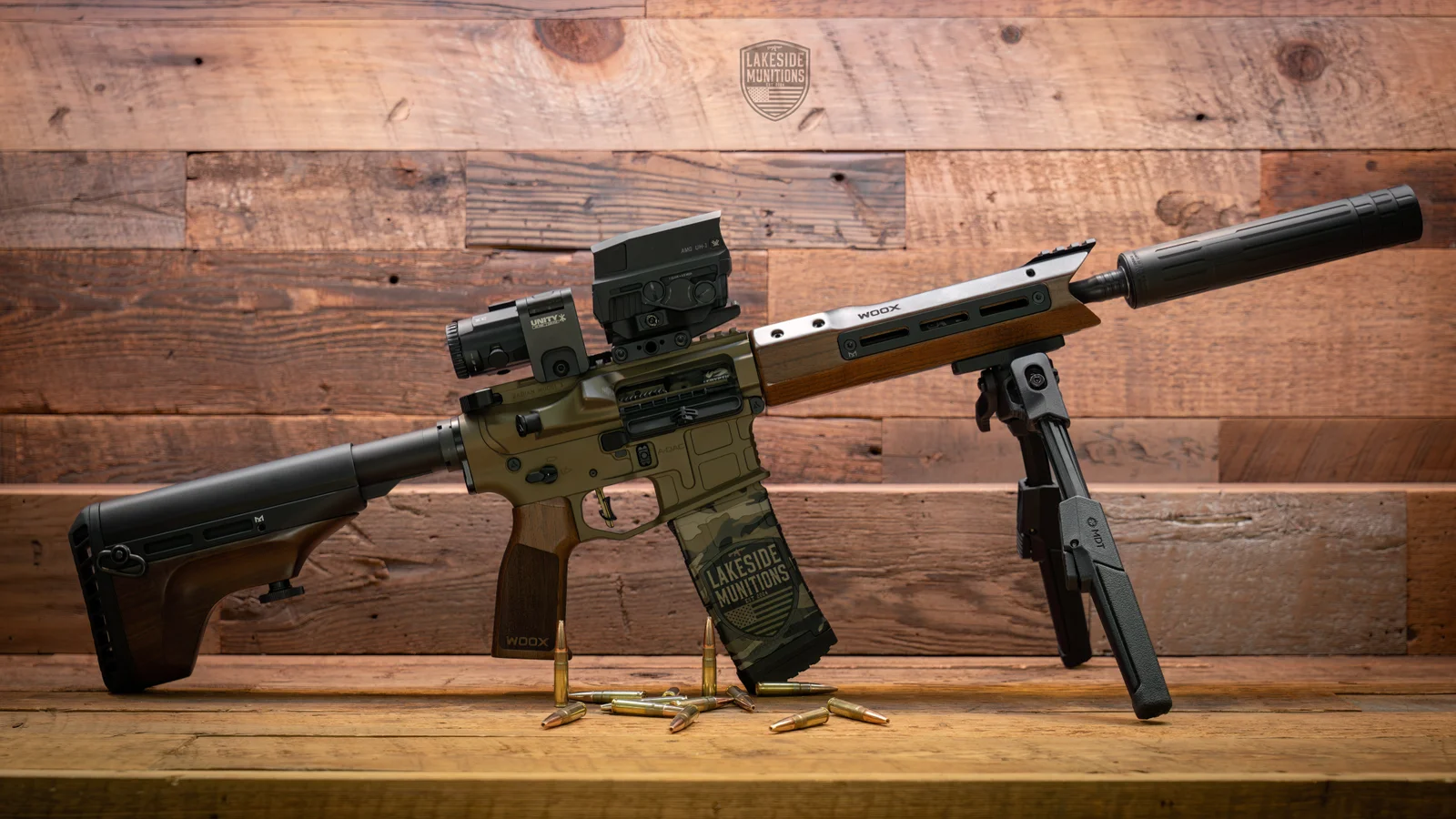
With quick detach, you screw a muzzle device onto the barrel. It might be a flash hider or a muzzle brake. The suppressor then locks onto that device instead of the barrel threads. Dead Air’s two QD systems are called KeyMo and Xeno. Its KeyMo adapter page says the adapter lets you swap a direct thread fixed mount for a faster and more repeatable attachment method.
Some facts from Dead Air’s FAQ and manuals:
- Xeno muzzle devices do not need to be timed, because they have no specific orientation.
- For the KeyMount flash hider, timing is not required and performance is not affected without it. Timing only sets where it indexes.
- The torque limit is the same. Barrel torque for direct thread mounts, KeyMo and Xeno muzzle devices should not exceed 30 foot-pounds.
- Parts are system-specific. Dead Air lists the third-party suppressors its KeyMo adapter works with, and says that list may change, so check before you buy for a suppressor from another maker (Dead Air FAQ).
One thing stays the same either way. Your barrel threads still need to be cut straight with the bore. QD does not fix a crooked thread, because the muzzle device screws onto the same threads.
Size and weight: the numbers
Dead Air’s fitment guide lists suppressor length and weight for each mount, so you can compare. Here are its figures for the CT5P and Sierra5, both made for 5.56:
| Suppressor and mount | Length | Weight |
|---|---|---|
| CT5P, direct thread | 5.49 in | 13.7 oz |
| CT5P, Xeno | 5.89 in | 14.3 oz |
| CT5P, KeyMo | 6.55 in | 14.9 oz |
| Sierra5, Xeno | 5.7 in | 13.3 oz |
| Sierra5, KeyMo | 6.2 in | 15.4 oz |
Source: Dead Air accessory fitment guide. Lengths and weights are the figures Dead Air lists.
On the CT5P, direct thread is the shortest and lightest. The Xeno adds 0.4 inch and 0.6 ounce. The KeyMo adds about 1.1 inches and 1.2 ounces. The Sierra5 shows the same pattern between its two QD systems: the Xeno version is shorter and lighter than the KeyMo version.
One suppressor, more than one gun
This is where quick detach earns its keep. The Dead Air fitment guide lists KeyMo and Xeno muzzle devices in many thread pitches: 1/2-28, 5/8-24, M13.5x1 left-hand, 9/16-24 and more. If you have two rifles with different barrel threads, you can put a QD muzzle device in the right pitch on each, and the same suppressor locks onto both.
With direct thread you can do something similar by swapping the mount in the back of the suppressor to a different pitch. It works, but it takes tools. Dead Air’s manuals describe using a wrench on the mount and a second tool for counter-torque, and say the mount can need heat to loosen. Our barrel thread pitch guide lists the common pitches.
Direct thread vs quick detach: what the maker says
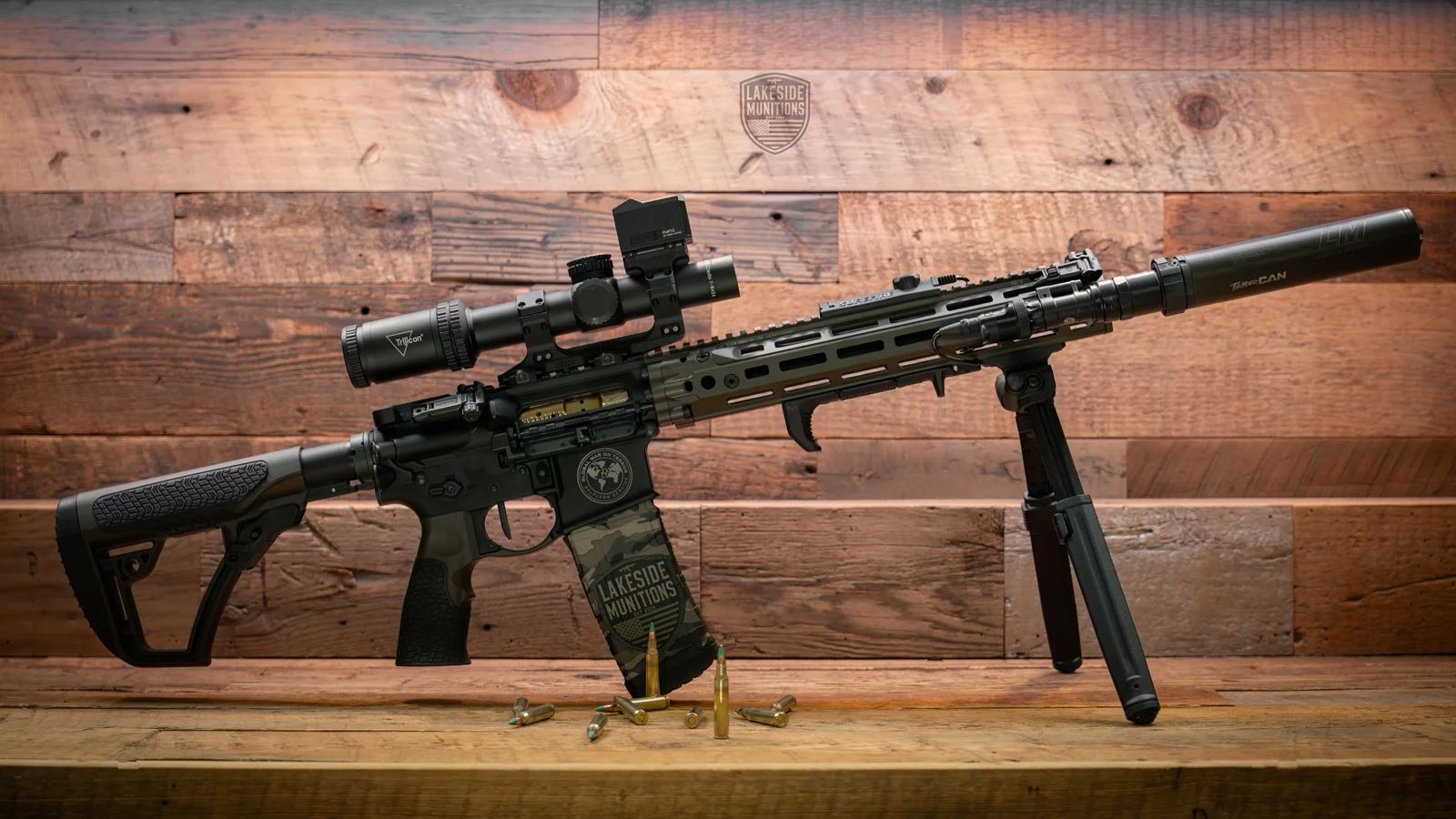
Dead Air’s FAQ goes further than most. It says a QD system like Xeno or KeyMo is “always superior to direct thread, no matter the action type of your host rifle.” That is the maker’s view, and it also sells QD parts. It is a fair opinion, and the manuals do back up the reasons: direct thread loosens with use and depends on thread quality.
Still, plenty of shooters keep one suppressor on one rifle and never need to move it. Dead Air’s own numbers show that direct thread is lighter and shorter, and it does work when set up right. Here is a simple way to decide:
- One gun, one suppressor, rarely removed: direct thread is a good fit. Check the tightness often and keep the torque in range.
- Several guns or several thread pitches: quick detach makes moving one suppressor easier.
- A gun where the suppressor is on and off a lot: quick detach, because you are not threading it on each time.
- A short, light setup matters most: direct thread is the smaller choice in Dead Air’s CT5P numbers.
Pistols add one more factor. A pistol with a tilting barrel needs a booster and a piston, and Dead Air’s guide also lists QD parts for 9mm. Our pistol suppressor guide covers pistol mounts.
Safe habits for either system, and what to do next
These come straight from the Dead Air manuals:
- Check that the suppressor is mounted straight to the bore, using a caliber-appropriate alignment rod.
- Never install a suppressor on a firearm with a closed action.
- Stay under 30 foot-pounds on barrel torque.
- Let it cool, or wear heat protective gloves, before taking it off.
- If it does not thread on smoothly, stop and call the maker.
If your barrel is threaded and you buy a QD muzzle device, our muzzle device install is $20, and it is free if you buy the device from us. That price assumes a gun in factory condition. See our gunsmithing page.
Come to our Cumming shop, bring your gun, and tell us how you plan to use the suppressor. Buy the suppressor from us and there is no transfer fee. The $100 fee only applies to one bought elsewhere and shipped in. The federal tax stamp has been $0 since January 1, 2026, and ATF approval is still required in Georgia, as of November 2026. See our suppressor service page, or contact us.


