

Barrel thread pitch is the size of the threads at the end of your barrel. It decides which suppressor mount, flash hider or muzzle brake will screw on. The two you will see most are 1/2x28 and 5/8x24. Most 5.56 rifles and many 9mm and .22 pistols use 1/2x28, and .30 caliber rifles and 300 Blackout often use 5/8x24. Many other pitches exist, so check yours before you buy anything.
This guide uses thread charts and owner’s manuals from suppressor makers Rugged Suppressors and Dead Air as its sources. It is general information. Always confirm your own pitch with your gun’s maker.
How to read a thread pitch
A name like 1/2x28 has two numbers. The first is the width of the thread in inches. The second is how many threads fit in one inch, called TPI. Dead Air writes it this way in its manuals, for example a “1/2-28 TPI piston.” So 1/2x28 means a half-inch thread with 28 threads per inch.
Metric threads work the same way, but in millimeters. M13.5x1 means 13.5 millimeters wide, with threads one millimeter apart.
Two more letters show up often:
- LH means left-hand. These threads turn the opposite way from a normal screw. Dead Air’s RXD30Ti manual warns that some thread pitches are left-handed, and tells you to be aware of it.
- RH means right-hand, the normal direction. Dead Air’s fitment guide lists both versions of some pitches, such as M14x1 LH and M14x1 RH.
Two threads with the same width but different TPI will not fit each other, even if they look close. That is why the pitch has to match exactly.
Common pitches and where you will see them
This table comes from Rugged’s thread pitch guide (Rugged thread pitch guide). It lists examples, not every gun. Makers change barrels, so use it as a starting point.
| Thread pitch | Examples listed by Rugged |
|---|---|
| 1/2x28 | 5.56 AR rifles, aftermarket .22 and 9mm barrels, Ruger .22 pistols, Beretta, CZ and Smith & Wesson 9mm, FN 15 and SCAR 16 |
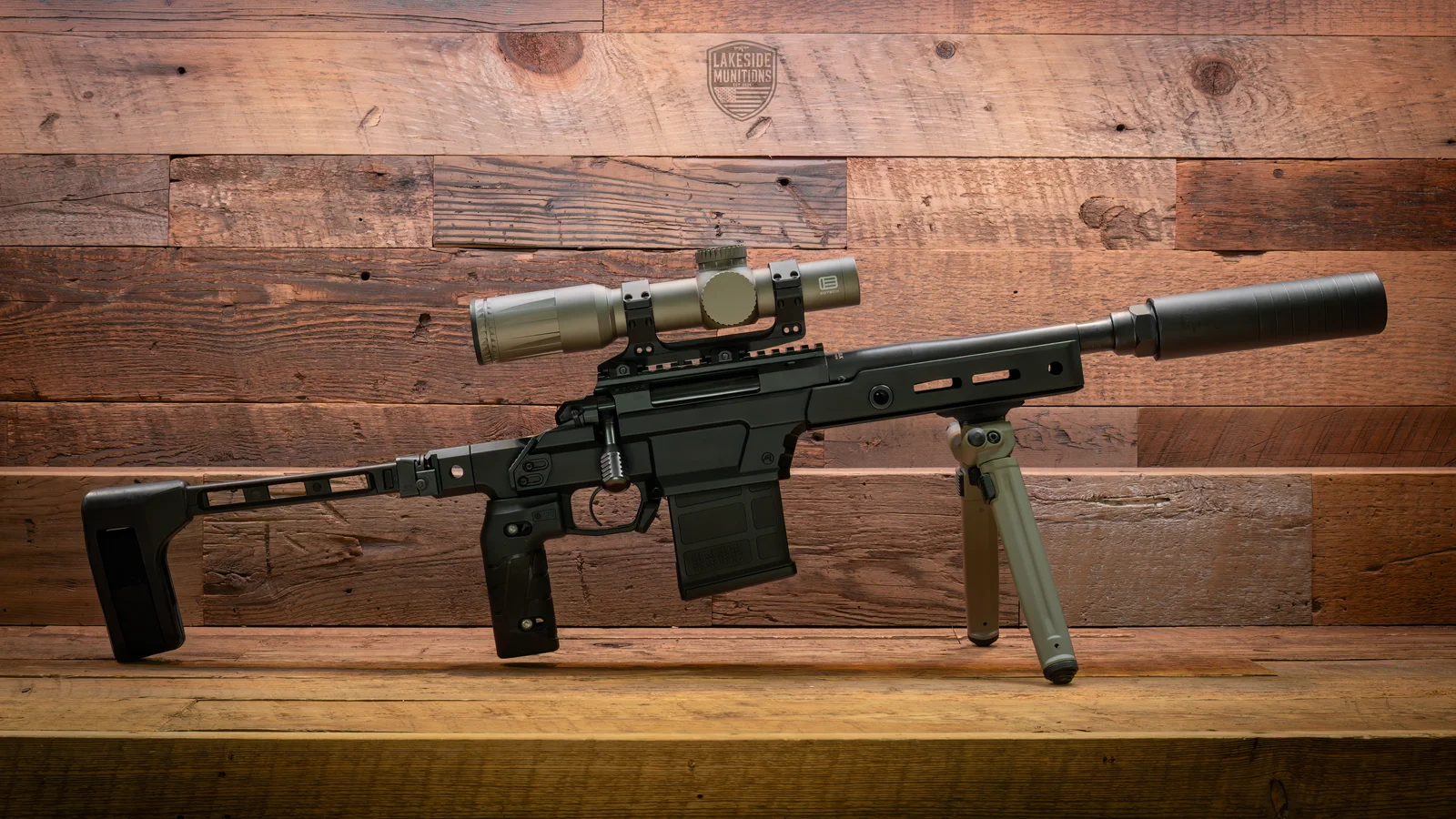
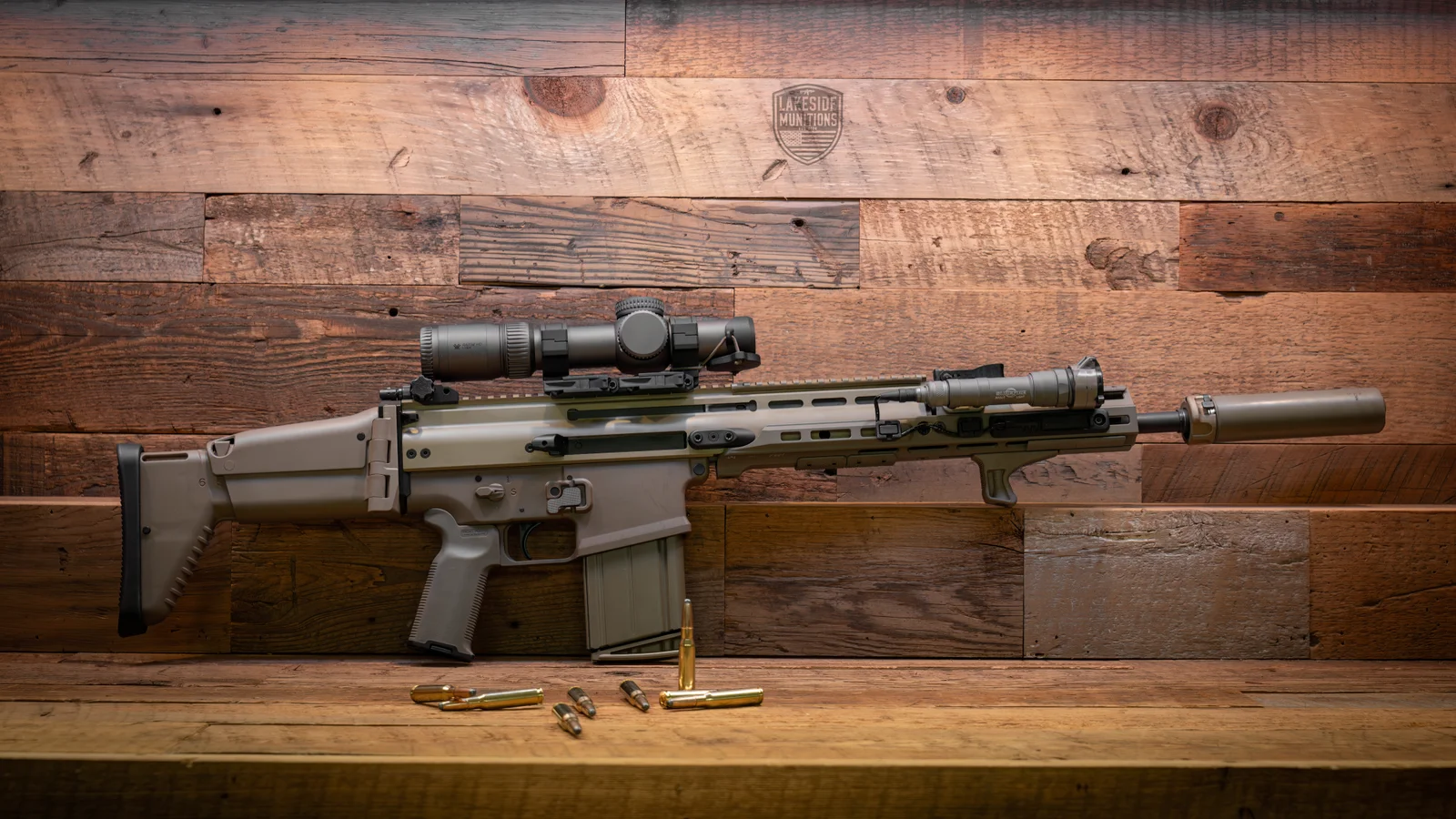
| 5/8x24 | .30 caliber rifles, 300 Blackout ARs, Tikka T3x, SCAR 17 |
| M13.5x1 left-hand | Glock, H&K and Sig Sauer 9mm pistols, B&T 9mm |
| M14.5x1 left-hand | Glock and H&K .40 S&W |
| M16x1 left-hand | Glock and H&K .45 ACP |
| 9/16x24 | Aftermarket .40 S&W barrels, Kel-Tec .40 |
| .578x28 | Aftermarket .45 ACP barrels, Smith & Wesson, Sig Sauer and FN .45 ACP |
| 1/2x36 | Colt, IWI and Angstadt 9mm carbines |
The guide shows that caliber alone does not tell you the pitch. A 9mm can be 1/2x28, 1/2x36 or M13.5x1 left-hand depending on the gun. A .45 ACP can be .578x28 or M16x1 left-hand. Look up the exact gun.
Why barrel thread pitch is only one check
A matching thread does not make a good setup. Dead Air’s manuals (RXD30Ti, Mask) add three more things to look at.
Shoulder. The suppressor mount should tighten against a flat shoulder on the barrel. Dead Air says not to thread onto barrels that do not have a proper shoulder or a muzzle face that is square with the bore.
Thread length. Dead Air’s Mask manual says that suppressor will attach to threads up to .6 inches long, but .4 inches is best for sound and baffle life. Another Dead Air manual says that with longer threads the suppressor may seat on the muzzle face instead of the shoulder.
Alignment. The threads need to be cut in line with the bore. The manuals call this concentricity and say a gunsmith should check it if you cannot. If it is off, a bullet can strike a baffle inside the suppressor.
Our post on putting a suppressor on any gun covers these checks along with caliber ratings.
How suppressors handle different pitches
You do not need a different suppressor for every pitch. Many suppressors use a mount, a piston or a muzzle device in the pitch you need, and the suppressor itself stays the same.
Dead Air’s accessory fitment guide shows this clearly. For its pistol suppressors it lists pistons in M13.5x1 left-hand for 9mm, 9/16-24 for .40, .578-28 for .45 and 1/2-28 for 9mm, each as a separate part. For its direct thread rifle suppressors, it lists mounts in 1/2-28 and 5/8-24. Its quick detach muzzle devices come in even more pitches.
Dead Air’s FAQ spells it out for one pistol suppressor: you still need a piston that matches the thread pitch of the threaded barrel you plan to use. Treat that as a rule. Buy the suppressor, then buy the mount in your pitch.
How to find your pitch
Try these in order:
- Your owner’s manual or the maker’s website. The gun’s maker is the most reliable source. Rugged’s guide itself tells you to double check with the original manufacturer.
- The barrel or box. Aftermarket barrels often list their thread pitch on the box or in the product description.
- A chart like the one above. Use it to narrow it down, not to settle it.
- A gunsmith. If you cannot tell, ask someone to measure the threads.
Do not guess and force a mount on. A wrong guess costs more than a quick check. Dead Air’s manuals say that if a suppressor does not thread on smoothly, stop and call the maker, because forcing it can damage the gun or the suppressor.
What changing muzzle devices involves, and what to do next
If your barrel is already threaded and has a flash hider or muzzle brake on it, a suppressor mount or a different device screws on in its place. Our posted price for a muzzle device install is $20, and it is free if you buy the muzzle device from us. That price assumes a firearm in factory condition. If the gun has been modified, we look at the job first and the price may change.
Cutting new threads into a barrel that has none is machine work. It is not on our posted price list, and our gunsmithing covers work that does not need complex machining. See the gunsmithing page for what we do take on. If you are comparing mount styles, our post on direct thread and quick detach explains the difference. The one on flash hiders and muzzle brakes covers what goes on the end of the barrel.
Bring your gun and any manual you have to our Cumming shop and ask at the counter. We can help you sort out what mount you need. If you are buying a suppressor too, buy it from us and there is no transfer fee. The $100 fee only applies to one bought elsewhere and shipped in. The federal tax stamp has been $0 since January 1, 2026, and ATF approval is still required in Georgia, as of November 2026. See the gunsmithing page or contact us.


