

A flash hider cuts down the flash you see when the gun fires. A muzzle brake sends gas out to the sides to tame recoil. They look alike, many parts do a bit of both, and the name on the box does not always tell you which job the part was built for.
This post explains what each one does, what each one costs you in noise, and how to pick. It also covers where suppressor mounts fit in.
Flash hider vs muzzle brake in one minute
Here is the short version, based on how CMMG, a rifle maker, describes them, plus a recoil and sound test from Outdoor Life covered below.
| Flash hider | Muzzle brake | |
|---|---|---|
| Main job | Reduce the flash you see | Reduce recoil and muzzle rise |
| How | Cools or breaks up the gas as it leaves the muzzle | Vents gas out the sides or top |
| Main downside | Does not cut recoil much and does not quiet the shot | Louder for you and the people beside you |
| Best for | Shooting in low light | Cutting kick and muzzle climb |
A part can be sold as both. CMMG says many modern muzzle devices are built for more than one job.
What a flash hider does
When a round fires, hot gas and unburnt powder leave the barrel with a flash. In low light, that flash is what a flash hider is meant to tame.
A flash hider breaks up or cools that gas as it leaves the muzzle. CMMG says it does this so the flash does not blind the shooter. The job is less glare in your eyes.
A flash hider is not a recoil fix and it is not a quiet part. If you want less recoil, look at a muzzle brake. If you want less noise, a flash hider will not do it.
What a muzzle brake does
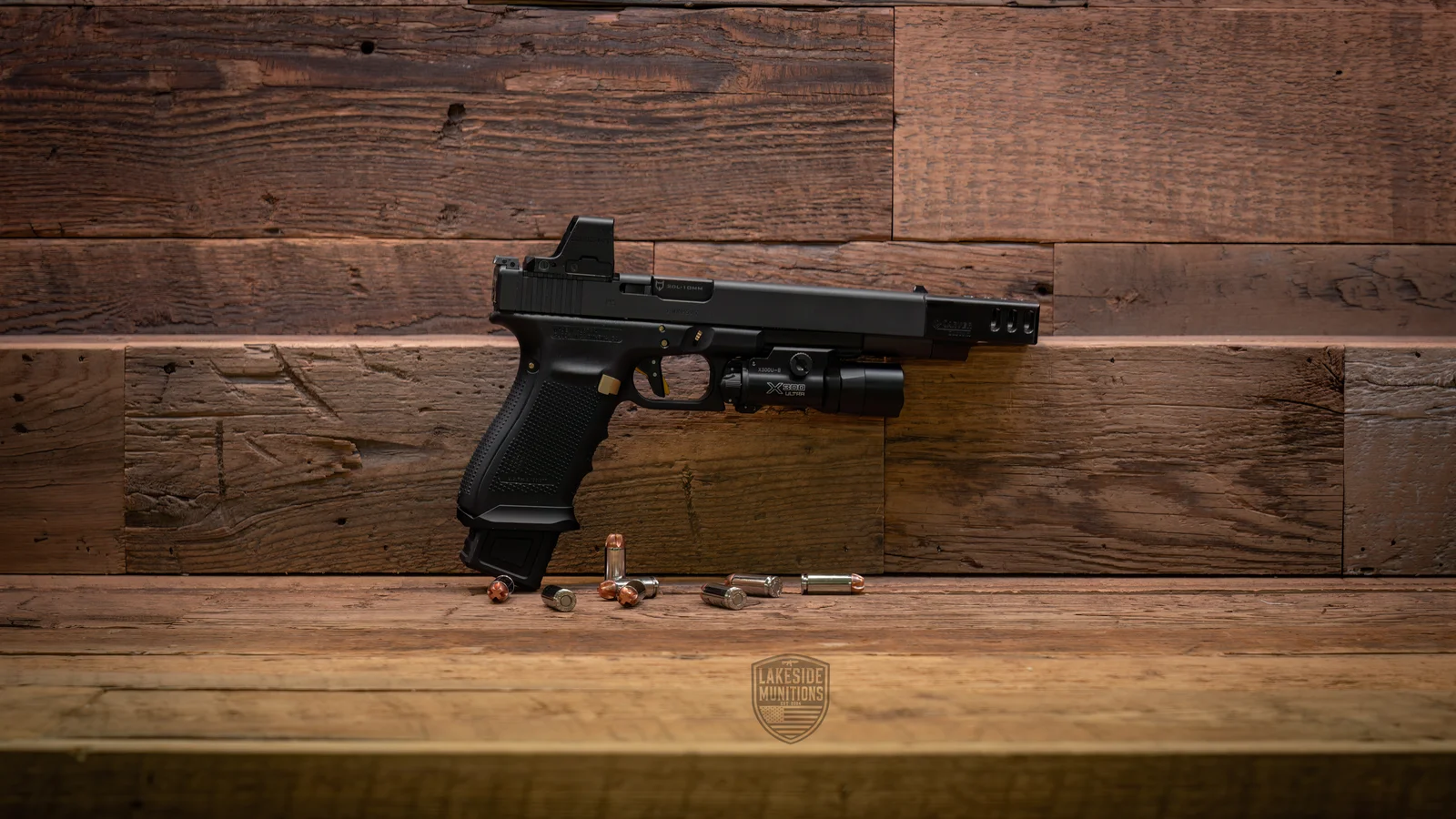
A muzzle brake has openings, called ports, that send gas out the sides or top as the bullet leaves. Pushing that gas sideways works against the gun’s backward kick and its muzzle climb. CMMG says most brakes send gas to the side, which gives a flatter shooting experience, and that a brake can help your accuracy.
How much does a brake help?
Outdoor Life ran a test with a 6.5 Creedmoor rifle on a wheeled sled, measuring how far the rifle rolled back in inches. A bare muzzle rolled back 39.5 inches. Two brakes tested alone rolled back 16.5 inches and 23.5 inches. The author warns that one inch of sled travel is about 4 percent of felt recoil, and that a lower number does not always feel better to the shooter. Still, the gap between a bare muzzle and a good brake was large.
What it costs you
The cost is noise. In the same Outdoor Life test, the bare muzzle read 165 dB at one meter to the left of the muzzle. The two brakes read 168.9 and 167.7 dB. Those are the test’s numbers for that rifle, not a promise for every gun, but the direction is clear. A brake is louder to the people around you.
If other people stand close to you at the range, tell them before you add a brake, and everyone should wear hearing protection.
Where compensators and combo parts fit
Two other names come up in this talk.
Compensator. The NRA describes a compensator as the part that counters muzzle rise by sending gas up or to the sides. You can often spot one by where the openings are: a compensator’s vents are usually not on the bottom. On a handgun, a compensator is common. On a rifle, a part called a brake does much the same thing.
Linear compensator. CMMG describes this one as pushing gas forward instead of sideways, so blast moves toward the target. CMMG calls it best suited for an AR and says the goal is less blast and less rise. Because the gas goes forward, the intent is to send less noise back at the shooter. CMMG words this as the “ideal,” so treat it as the design goal.
Combo devices. Many parts mix jobs. The marketing name alone does not prove what a part does, so read the maker’s stated purpose. As a rough guide, CMMG and the NRA both point to the vents: openings on the sides or top point to a brake or compensator.
Which one fits you?
Start with what bothers you on the range or in the field.
- Flash in low light is the problem. Pick a flash hider.
- Recoil or muzzle climb is the problem. Pick a brake or a compensator, and plan on more noise for the people next to you.
- You want one part for everyday use. Look at a combo part and read the maker’s description.
- You plan to add a suppressor. Read the next section before you buy anything.
If you are not sure, tell us what you shoot and what you want fixed, and we will talk it through.
Muzzle devices and suppressor mounts
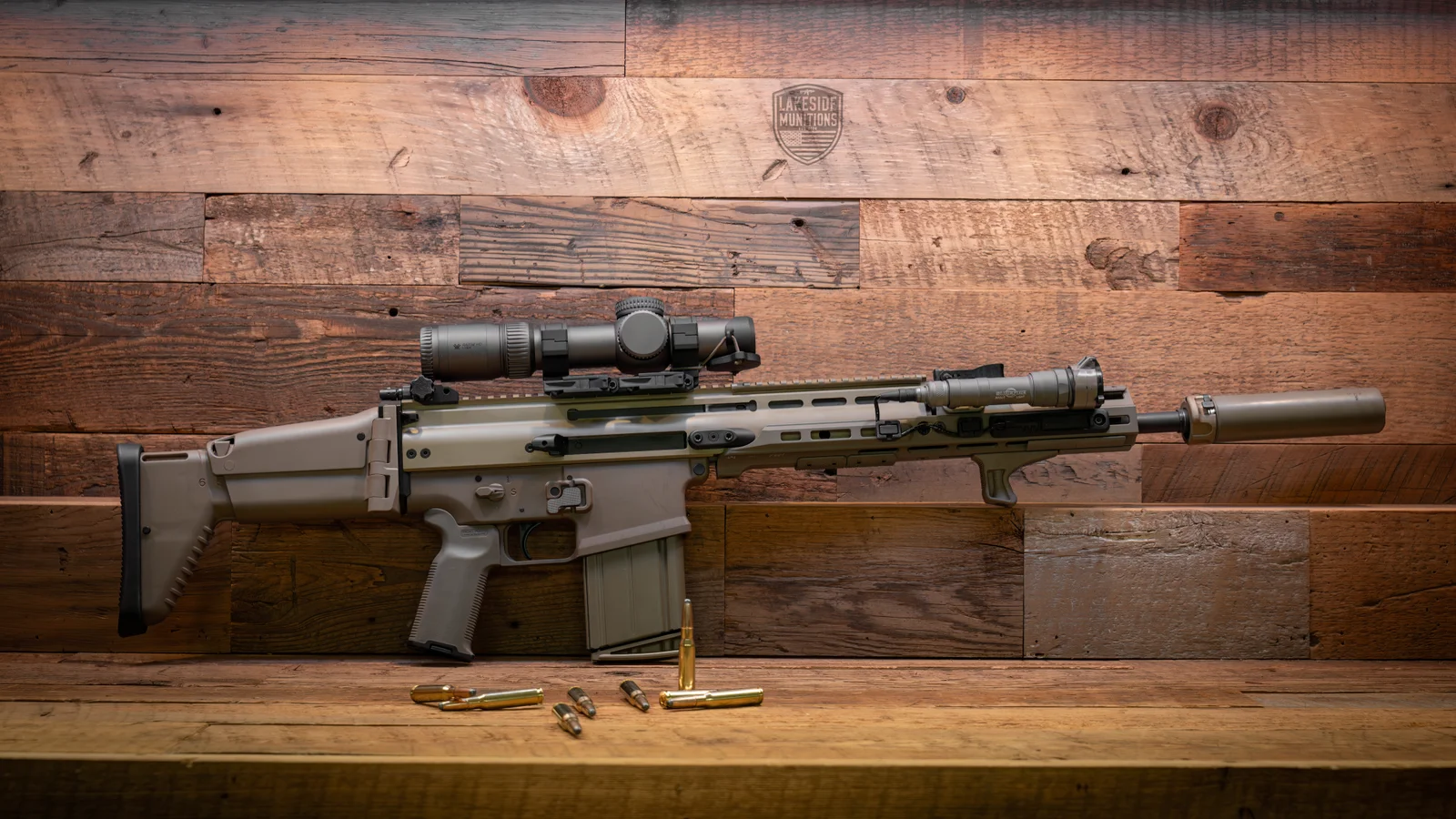
A suppressor attaches to the muzzle, so the muzzle device and the suppressor have to work as a pair. Some quick-detach suppressors lock onto a muzzle device made for that system, and others thread on directly.
Two things to check before you buy a device:
- Thread size. The device screws onto your barrel, so the thread has to match. Our guide on barrel thread pitch covers this in detail.
- How the suppressor attaches. Some mounts thread straight on, some lock on with a quick-detach system. Our guide on direct thread vs quick detach explains the difference.
If a suppressor is in your future, check the suppressor maker’s mount list before you buy a device, so the two match. Our post on whether a suppressor is worth it covers the rest of that decision, including the paperwork.
Getting a muzzle device installed at Lakeside
Muzzle device installation is on our posted gunsmithing price list at $20. If you buy the muzzle device from Lakeside Munitions, we install it for free. Walk-ins are welcome, no appointment needed.
A few notes so there are no surprises:
- The barrel needs to be threaded already. Our gunsmithing does not include complex machining.
- Our posted prices assume a firearm in factory condition. If other changes were made to the gun, we look at the job first and the cost may vary.
- The work is done in the shop, not sent out.
You can see every posted price on our gunsmithing page. If you are not sure which part you need, ask at the counter. We will tell you plainly what a part does and what it does not do before you spend a dollar.
Stop by the shop in Cumming with your gun or just your questions, or send us a note through the contact page. Tell us what bothers you most, flash, recoil or noise, and we will point you to the right kind of part. Then see the gunsmithing page for the posted install price.


