

For most people who shoot regularly, yes, a suppressor is worth it. Your hearing is worth protecting, and the federal tax stamp dropped to $0 on January 1, 2026. The part that still trips people up is the wait and the paperwork, and that is the honest reason some buyers walk away before they ever pull the trigger.
This guide covers what a suppressor actually costs in Georgia, how long approval really takes, whether it is legal to own here, and how to decide between filing as an individual or through a trust. None of it is legal advice. It is general information, checked against current sources as of September 2026.
Is a Suppressor Worth It? The Short Answer
The math changed in a real way this year. Before 2026, every suppressor purchase carried a flat $200 federal tax on top of the can’s price. As of January 1, 2026, that federal transfer tax is $0. The change came from a 2025 federal tax law, and it is confirmed by the firearm industry’s trade association, NSSF. In Georgia, the ATF Form 4 paperwork itself is still required. Only the $200 tax is gone.
That single change removes the biggest line-item objection to buying a suppressor. What is left is not money, it is time and process: filling out federal paperwork correctly, submitting fingerprints, and waiting on an approval you cannot control the exact date of. That is where a buyer’s experience actually gets decided, and it is why who you buy from matters more than what you buy.
What You Actually Get: The Real Benefits
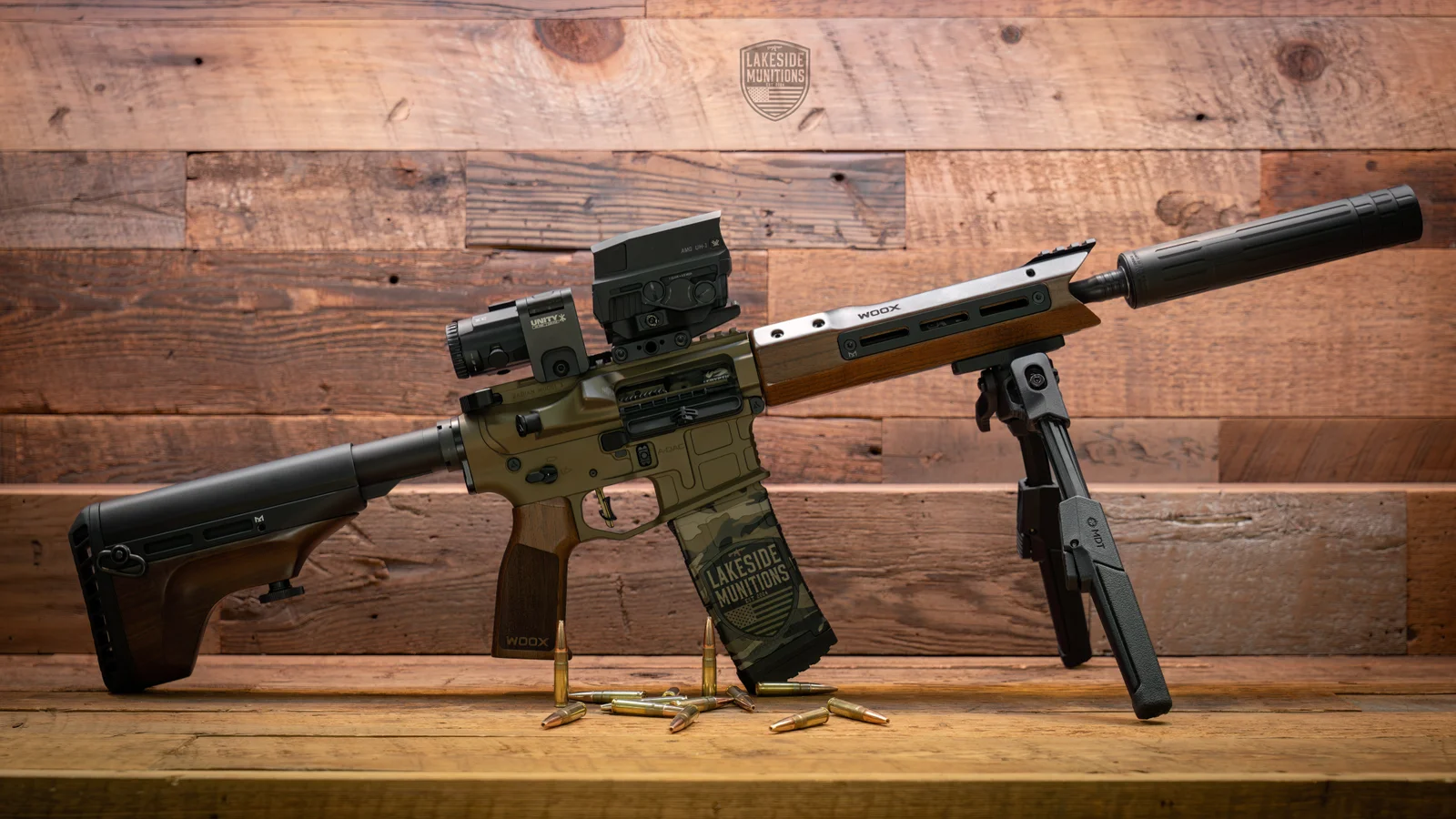
A suppressor does not make a gun silent, and nobody selling you one honestly should say it does. What it does is bring the sound level of a gunshot down enough to matter, both for your ears and for the people and dogs around you.
Peak sound from firearms ranges from about 140 to 175 decibels, according to a peer-reviewed review of hearing loss from recreational shooting published in the National Library of Medicine’s PubMed Central. In one study that review describes, suppressors on AR-15 rifles cut mean peak levels by 18 to 22 decibels. The same review is just as clear on the limit: a suppressor does not always bring the peak below 120 to 140 decibels, especially with short barrels or supersonic ammunition. In other words, a suppressor helps a lot, and you should still wear hearing protection at the range.
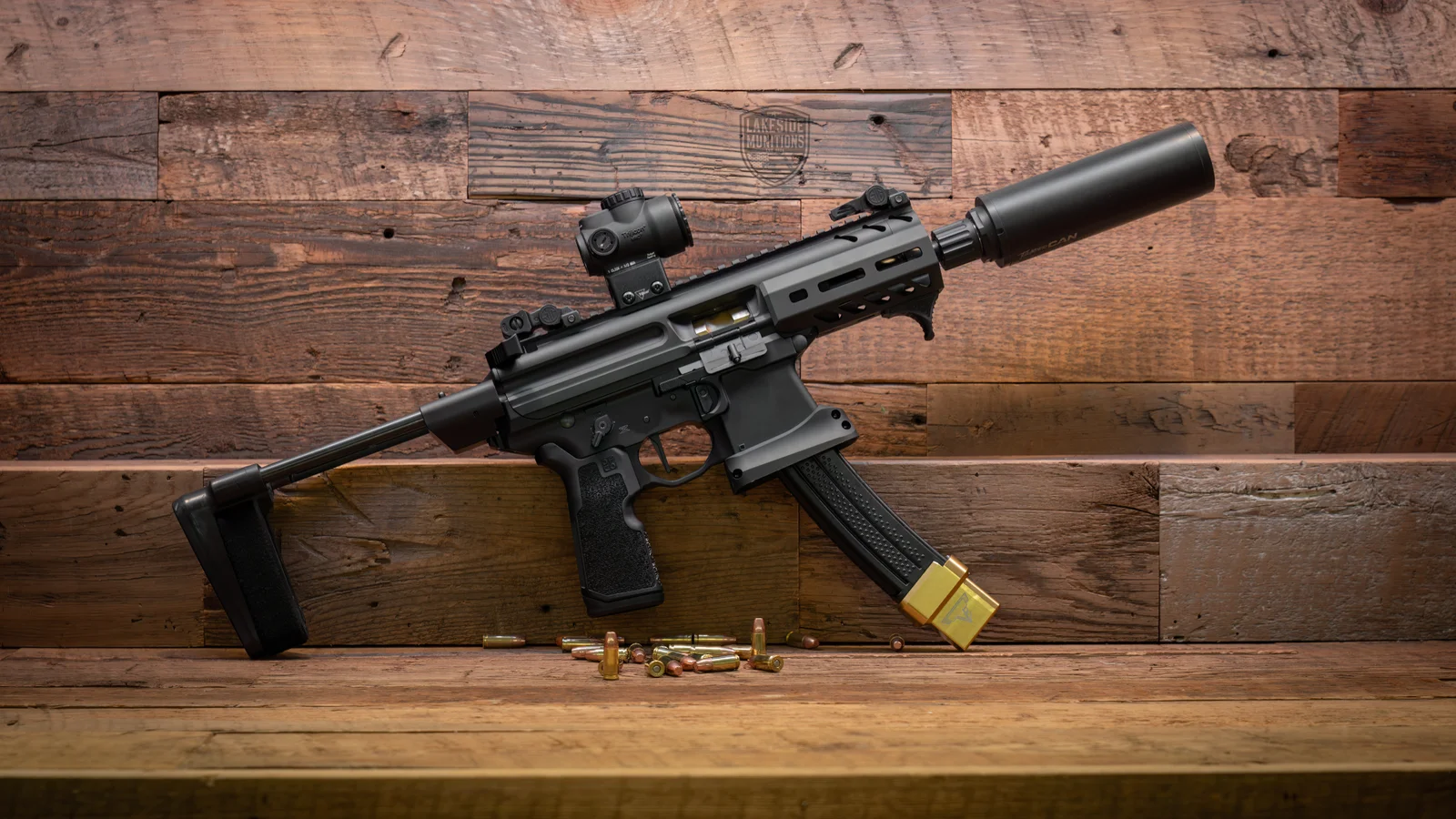
Many shooters also say a suppressed gun is simply more comfortable to shoot, with less blast and noise at the bench. It will not turn a bad shooter into a great one, but it can make a range session more pleasant for you and everyone next to you.
How Much Does a Suppressor Cost in Georgia?
Three numbers make up the real cost of a suppressor, and buyers usually only hear about one of them.
The suppressor itself. Prices vary widely by caliber rating, material, and whether it is built for a single caliber or several. A rimfire can built for a .22 costs less than a multi-caliber rifle suppressor built to handle magnum pressures. We will not point you to a specific model here (that belongs to the store, not this page), but we can walk you through categories, rimfire, pistol, rifle, and multi-caliber, and tell you honestly what fits what you already shoot.
The transfer fee. Buy the suppressor from Lakeside Munitions and there is no transfer fee. The $100 transfer fee only applies to a suppressor bought somewhere else and shipped to us. One bought directly from Silencer Shop has no transfer fee either. Either way, we handle the Form 4 paperwork with you in the shop.
The federal tax stamp. $0 for suppressors as of January 1, 2026, confirmed by NSSF above and by SilencerCo.
So the “all in” cost today, buying from us, is the suppressor’s price: no transfer fee and no tax stamp. Before 2026 the stamp alone added $200. That is a real difference, and it is worth saying plainly instead of burying it in fine print.
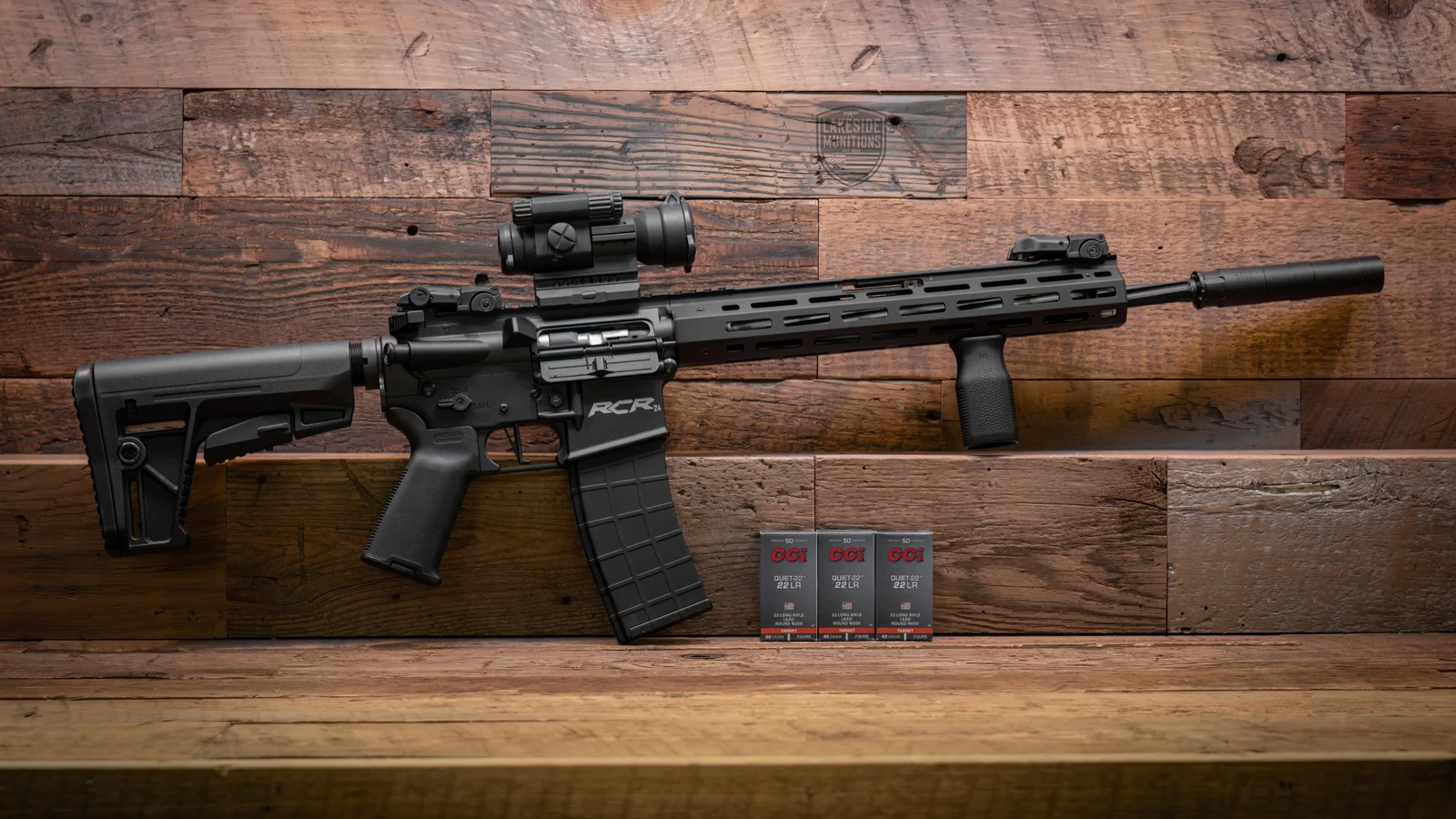
How Long Does It Take to Get a Suppressor in Georgia?
We would rather give you the real range than a number that sounds good and turns out wrong.
Nationally, the ATF’s own current processing time data showed an individual eForm 4 at 9 days and a trust eForm 4 at 33 days for applications finalized in July 2026, when we checked in September 2026. Those are national averages across every dealer in the country, and they move around depending on application volume.
Here is what we are seeing at our own counter right now, at a shop that has moved more than 500 suppressors since it opened in 2024:
- Filing as an individual: approvals are running 2 to 3 days right now, and they can take up to 21 days.
- Filing through a trust: up to a month.
| Filing type | ATF national average (applications finalized July 2026) | At our counter right now |
|---|---|---|
| Individual | 9 days | 2 to 3 days, up to 21 days |
| Trust | 33 days | Up to a month |
A Georgia Weapons Carry License does not shorten any of this. It can stand in for the background check on a regular gun, but a suppressor needs NFA approval first, then a standard 4473 once you are approved.
We are a Silencer Shop Elite dealer, a tier that carries its own minimum volume requirement to hold onto, and we will tell you honestly where you stand before you pay, not after.
Is a Suppressor Legal in Georgia?
Yes. Suppressor ownership with a completed federal NFA transfer is legal in Georgia today for anyone who can legally own a firearm, and you must be 21 to buy one from a dealer. Georgia Code lists silencers among items whose possession is restricted, with an exception carved out for owners who complete the federal transfer process. That is the framework that already allows Lakeside to sell suppressors here, and it has not changed.
Two bills introduced in the 2026 Georgia legislative session, Senate Bill 499 and House Bill 1324, would have removed suppressors from that restricted list outright instead of leaving them governed by the exception. Neither passed before the session ended at Sine Die on April 2, 2026. The practical result for a buyer today is the same either way: a completed Form 4 transfer is what makes suppressor ownership legal in Georgia, and that has not moved.
You may have seen the headlines in October 2026. On October 9, ATF said it will no longer enforce federal approval and registration for suppressors, after a federal court ruling. ATF’s own guidance says it does not override state laws, and Georgia’s exception covers a silencer registered under the National Firearms Act. Georgia has not changed that law. So in Georgia the full Form 4 process still applies: background check, fingerprints, photos and ATF approval before you take your suppressor home. ATF still accepts and approves the forms, and every suppressor we transfer goes through them.
An enforcement decision is also not a repeal. The NFA is still law, and ATF itself warns that enforcement could resume if the court ruling is overturned, and that there is no automatic grandfathering for unregistered items.
This section is general information, not legal advice, checked against current sources as of October 11, 2026. If you want the fine print explained for your own situation, ask us when you come in, or talk to an attorney for anything beyond the general process.
Filing as an Individual or Through a Trust
Georgia is still what is called an NFA trust state, meaning both paths are open to you: file the Form 4 as an individual, or set up a trust first and file through that. Neither is automatically better, and the right one depends on your situation.
Filing as an individual is simpler on paper and, going by the ranges above, tends to clear faster than a trust. A trust is often set up so more than one person can use the suppressor, which matters if you want a spouse or family member to use it too. We will explain the tradeoffs plainly, and we can help you create a trust for your future needs at the store.
Why Buy Your Suppressor From Us
Buy the suppressor from us and there is no transfer fee, which keeps the $100 you would pay to transfer in one bought somewhere else. We can get the majority of brands, and our prices are competitive with online shopping.
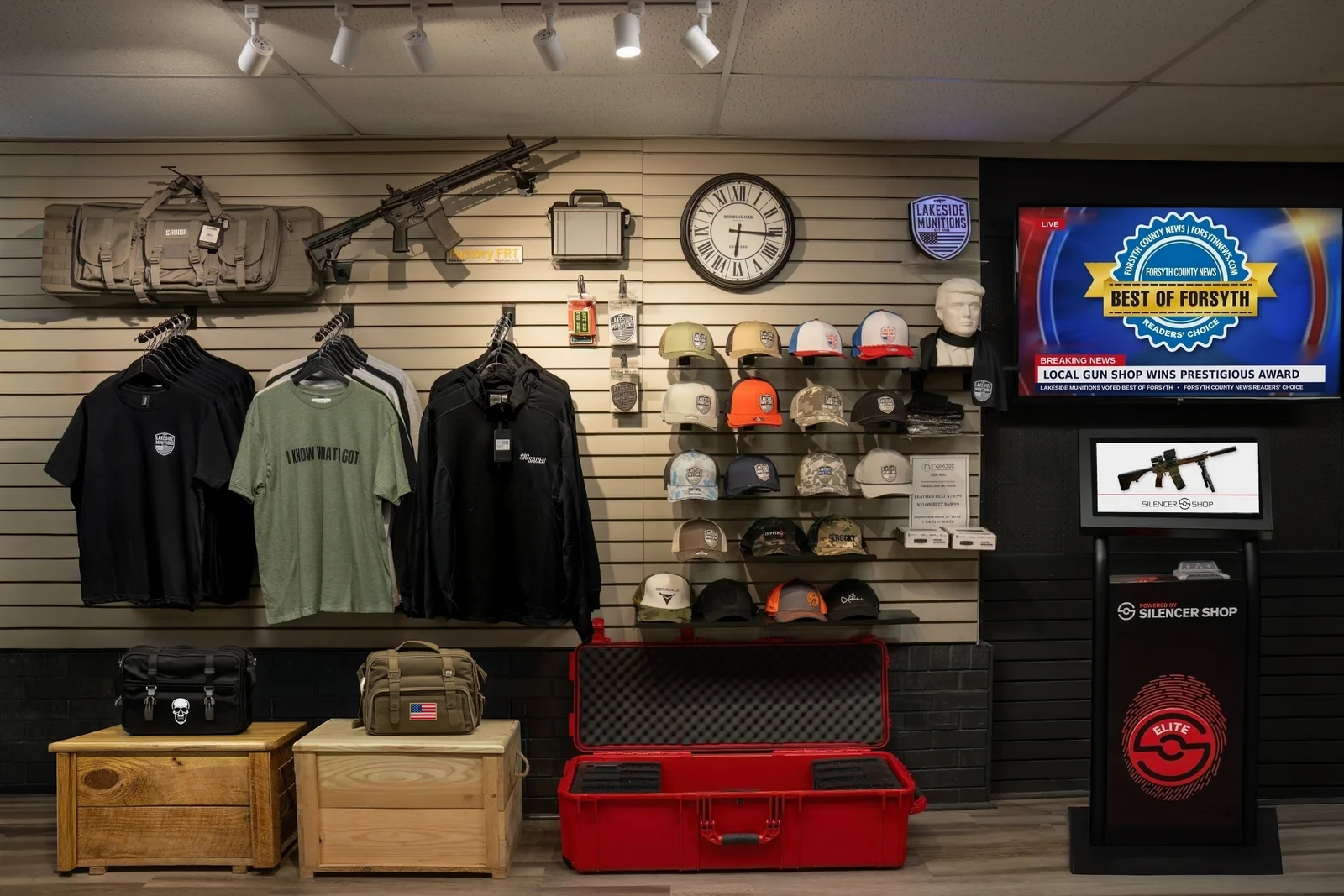
Buying in person gets you more than the savings. You handle the can before you commit to it, on an item most people only buy a few times in their life. We do the Form 4 paperwork and the fingerprints with you in the shop, at the Silencer Shop kiosk with a person next to you, not left for you to figure out alone at the kitchen table. And if something comes up, a question about your application, a form that needs a correction, a question about what fits your rifle, there is a person in Cumming you can call or walk in and see, not a support queue.
One of our customers, Jeff A., put it this way in a Google review: “Need a suppressor? They’ll walk you through the process. Looking for a specific firearm? If they dont have it there, they will look to get it into the store and in your hands as fast as possible.”
Where to Go From Here
If the paperwork and the wait were the only thing holding you back, the math looks different now than it did a year ago. The $200 federal tax on suppressors is gone. What is left is a process that runs 2 to 3 days right now for an individual filing, up to 21 days, and up to a month on a trust, and we will tell you exactly where you sit before you spend a dollar. If you have a gun you no longer shoot, you can trade it toward one: trade value goes on your store account and works on suppressors too.
Come handle a few in our Cumming shop, ask every question you have, even the ones that feel basic. There is no such thing as a dumb question about your first Form 4. While you are here, our gunsmithing price list covers muzzle device installs on a barrel that is already threaded (buy the muzzle device from us and we install it for free), and our pricing page lists our transfer, NFA, gunsmithing and layaway terms, no call required. If you still have questions after that, our FAQ page covers the ones we hear most.


