

For a first suppressor, start with the gun you shoot most, not the one you wish you had. If that is an AR-style rifle, a rifle-class suppressor is the usual fit. If it is a pistol, look at a pistol-class one. If you mostly shoot .22 LR, a rimfire suppressor is the right size. Then check the suppressor’s rating for your exact cartridge before you buy.
That is the short version. The rest of this guide explains the classes, how bore size and pressure decide what fits, and what to ask at the counter. It is general information, not a recommendation of any brand or model.
Your first suppressor: start with the caliber you shoot most
Suppressors are sold in classes, each built for a range of bore sizes and pressures. Silencer Shop, whose kiosk is in our store, lists six:
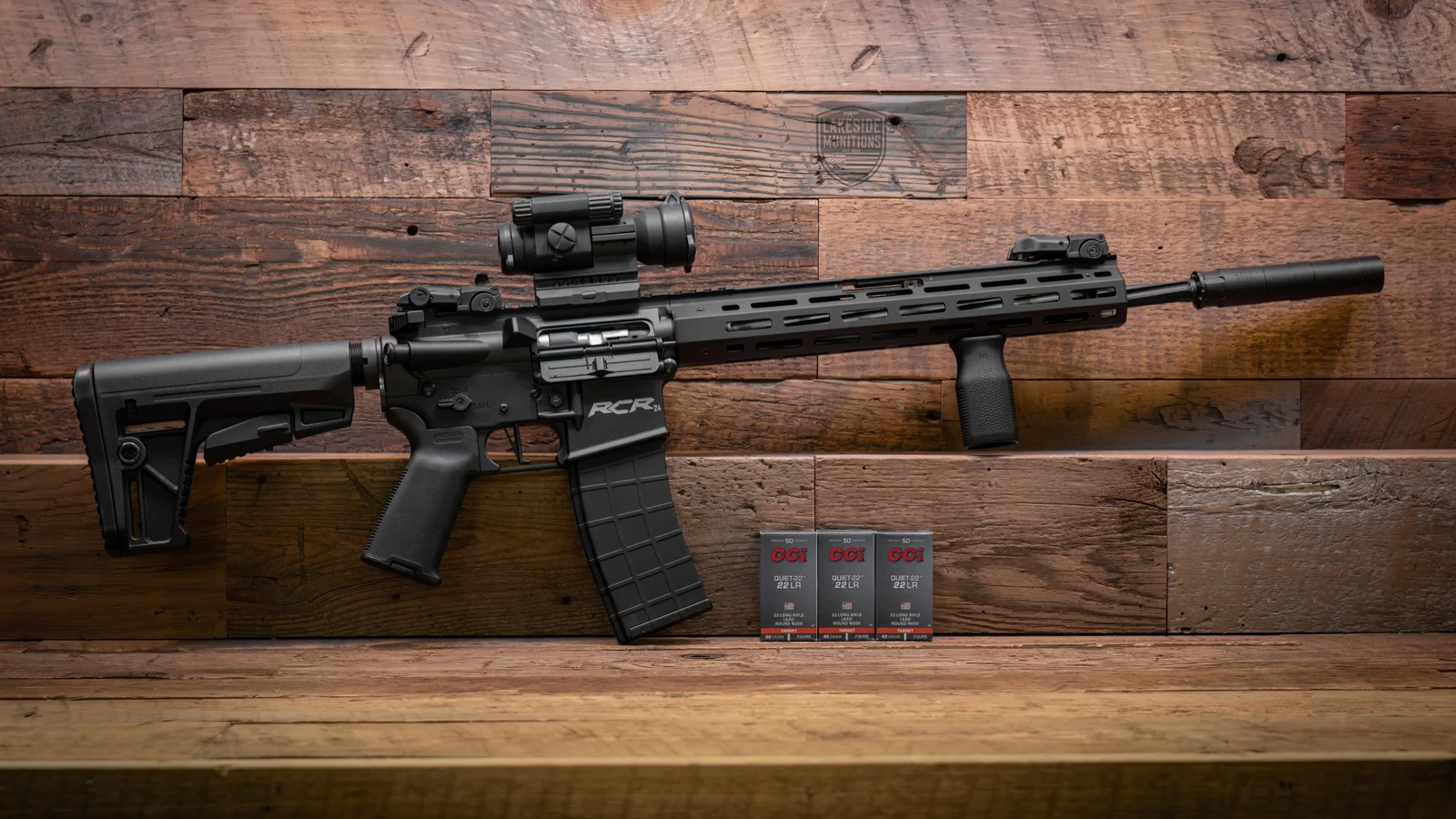
- Rimfire. Handles .22 LR well. It is pickier with .22 Magnum, .17 HMR and 5.7x28, and it will not work on 5.56mm rifles because those rounds make higher pressure.
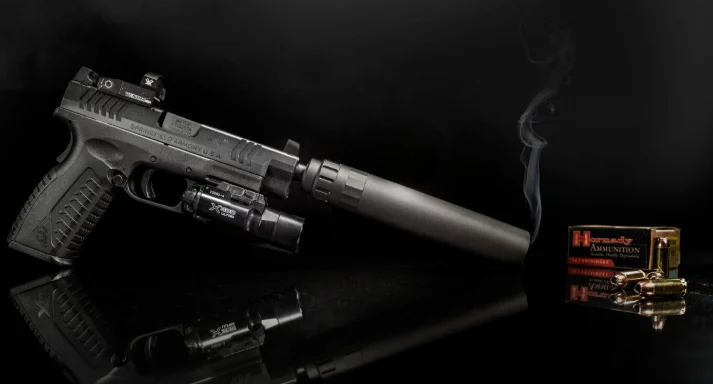
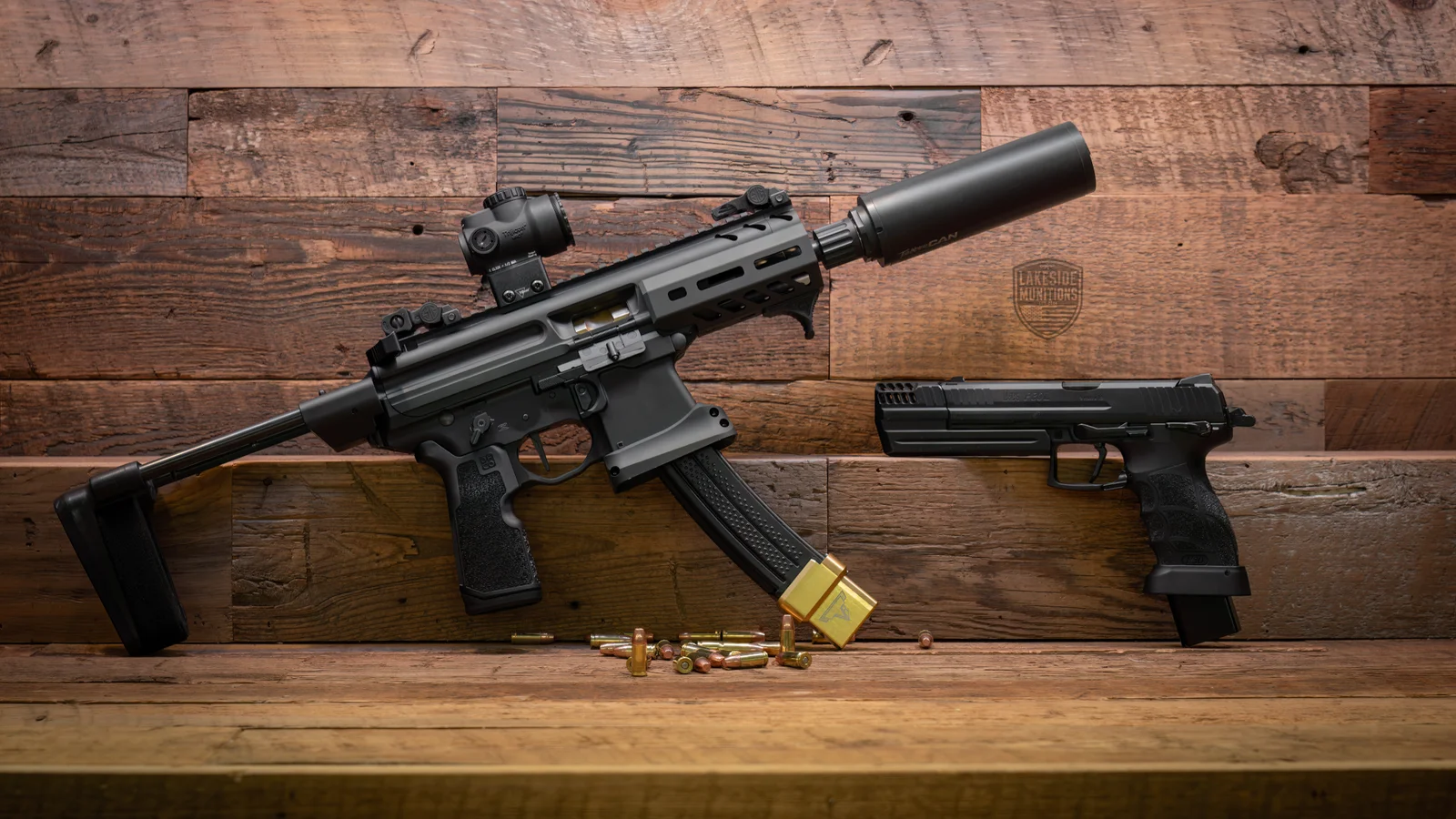
- Pistol. Made for 9mm, .40 and .45 handguns and pistol-caliber carbines. A pistol suppressor can handle .22 LR, but it needs cleaning afterward.
- 5.56mm rifle. Built for higher pressure than pistol or rimfire models, and suited to AR-15s in .223 or 5.56.
- 7.62mm rifle. Handles most .30-caliber and smaller rounds, including .308 and .300 Blackout. Anything above .308 needs confirmation from the manufacturer.
- Large bore. For cartridges like .338 Lapua and .50 BMG. Big, heavy, and usually made for one specific firearm.
- Specialty. Unusual items, such as 12 gauge shotgun suppressors and integrally suppressed barrels.
If you shoot one caliber most of the time, match that class and you are done. The harder case is when you shoot three or four things. That is where the next section matters.
Why bigger and smaller classes do not swap evenly
Silencer Shop says a larger class can sometimes fit a smaller gun. A 7.62mm suppressor can work on a 5.56mm rifle, and a 5.56mm suppressor can work on a pistol with the right booster. The trade is added weight and length, and reduced effectiveness compared with a suppressor made for that gun.
The other direction is the risky one. A pistol suppressor may thread onto a rifle, but the pressure can exceed what it is rated for. Only use a smaller-class suppressor on a larger-caliber firearm if it is specifically rated for that caliber.
So if you own both a rifle and a pistol, one suppressor will not suit both equally well. A 7.62mm suppressor can work on a 5.56mm rifle, but it is heavy and less effective on a pistol.
A simple way to sort it out:
- You shoot mostly .22 LR: a rimfire suppressor.
- You shoot mostly a 9mm pistol or a pistol-caliber carbine: a pistol suppressor.
- You shoot mostly an AR-15: a 5.56mm rifle suppressor, or a 7.62mm one if you also want it for a .308 or .300 Blackout.
That last pick is heavier, so think about whether the extra weight matters on your rifle.
Bore size, pressure and the rating
Three things decide whether a suppressor fits your cartridge, according to Silencer Shop:
- Bore size. The bullet must be smaller than the suppressor’s bore.
- Pressure rating. The suppressor must be rated for your cartridge’s pressure, not only fit it.
- Size and weight. A suppressor can be compatible on paper and still be too large or heavy for your gun.
Always confirm in the manufacturer’s manual or with the manufacturer. The listed rating is the one that counts, not what a friend shot through theirs. A suppressor that threads on is not the same as one that is rated for your load. If you are unsure, ask us at the counter and we can go over the rating with you.
Mounting matters too. The suppressor has to attach to your barrel. Our gunsmithing price list has a muzzle device install for $20 on a barrel that is already threaded. Buy the muzzle device from us and we install it for free.
Questions to ask before you buy
Bring these to the counter. They come straight from how ratings work:
- Is it rated for my exact cartridge, and for any other cartridge I plan to shoot through it?
- Is it rated for the pressure of my load, not only the bullet size?
- How will it attach to my barrel, and will I need a muzzle device installed?
- How heavy and long is it on this particular gun?
- Will I mostly shoot slower ammunition or faster ammunition?
If you shoot a 9mm pistol, Silencer Shop notes that a .45 suppressor is larger and heavier, so a 9mm user often does better with a 9mm model. Some pistol suppressors are rated for specific subsonic rifle rounds, such as 300 Blackout, so read the manual before using one on a rifle.
Sound, ammunition and what to expect
Whatever you pick, a suppressor lowers sound and does not remove it, and no class changes that. In a 2018 study, published in the International Journal of Audiology, suppressors lowered peak sound levels at the shooter’s ear by 17 to 24 decibels. The reduction was larger with low-velocity ammunition than with high-velocity ammunition in the same firearms. The authors still recommend hearing protection whenever you shoot.
For a first suppressor, that means the caliber choice is partly about the ammo you plan to run. Slower rounds drop more sound. Faster rounds drop less. Neither one makes your ears safe on their own, so keep the earmuffs.
Buying it at Lakeside
You can walk in and handle suppressors before you commit. We are a Silencer Shop Elite dealer. We can get the majority of brands, so tell us what you shoot and we will talk you through the options for it.
Here is how the buying works. You pick the suppressor, and we start the ATF Form 4 with you at the Silencer Shop kiosk in the store, with a person next to you. We do the forms and fingerprints in the shop. The form names the suppressor by make, caliber, model and serial number, per 27 CFR 479.84, so settle on the suppressor before you file. The federal tax on a suppressor is $0 and has been since January 1, 2026. ATF approval is still required.
Buy the suppressor from us and there is no transfer fee. A suppressor bought somewhere else and shipped here is $100 to transfer. Approval is taking 2 to 3 days right now for an individual filing, and it can run up to 21 days. A trust takes up to a month. You cannot take it home the same day you start.
For the two forms involved, read Form 4473 vs Form 4. For the common myths, see suppressor myths. To see whether a suppressor makes sense for you at all, read Is a Suppressor Worth It?.
Ready to pick one? Tell us the guns you shoot most and we will point you to the class that fits. Come by the shop with the guns you shoot most, or read how it works on our suppressor page. You can also send a question through the contact page.


