

Most suppressor myths come from movies and old news. A suppressor does not make a gun silent. It is legal in Georgia once it is registered under federal law. The $200 federal tax stamp is gone. And a suppressor does not mean you can skip hearing protection. This is general information as of November 2026, not legal advice.
Below are five myths we hear at the counter, with what the sources say. Each section links the source, so you can read it yourself.
Myth 1: A suppressor makes a gun silent
It does not. A suppressor lowers the sound of a shot. It does not remove it.
Federal hearing researchers measured this. A 2018 study, published in the International Journal of Audiology, found suppressors lowered peak sound levels at the shooter’s ear by 17 to 24 decibels. The reduction was larger with low-velocity ammunition than with high-velocity ammunition in the same firearm. A peer-reviewed review of hearing loss from recreational shooting puts peak firearm sound at about 140 to 175 decibels. It adds that a suppressor does not always bring the peak below 120 to 140.
The authors tie the smaller drop with fast ammunition to the shock waves, called N-waves, that supersonic bullets make. A suppressor cannot remove that part of the sound.
The same study’s authors say firearm users should always wear hearing protection, even with a suppressor. The people near you get a benefit too. In the same study, peak levels about a meter behind the shooter dropped by 20 to 28 decibels. It is still a loud shot. So the myth has a second half: that a suppressed gun is safe for your ears without earmuffs. It is not.
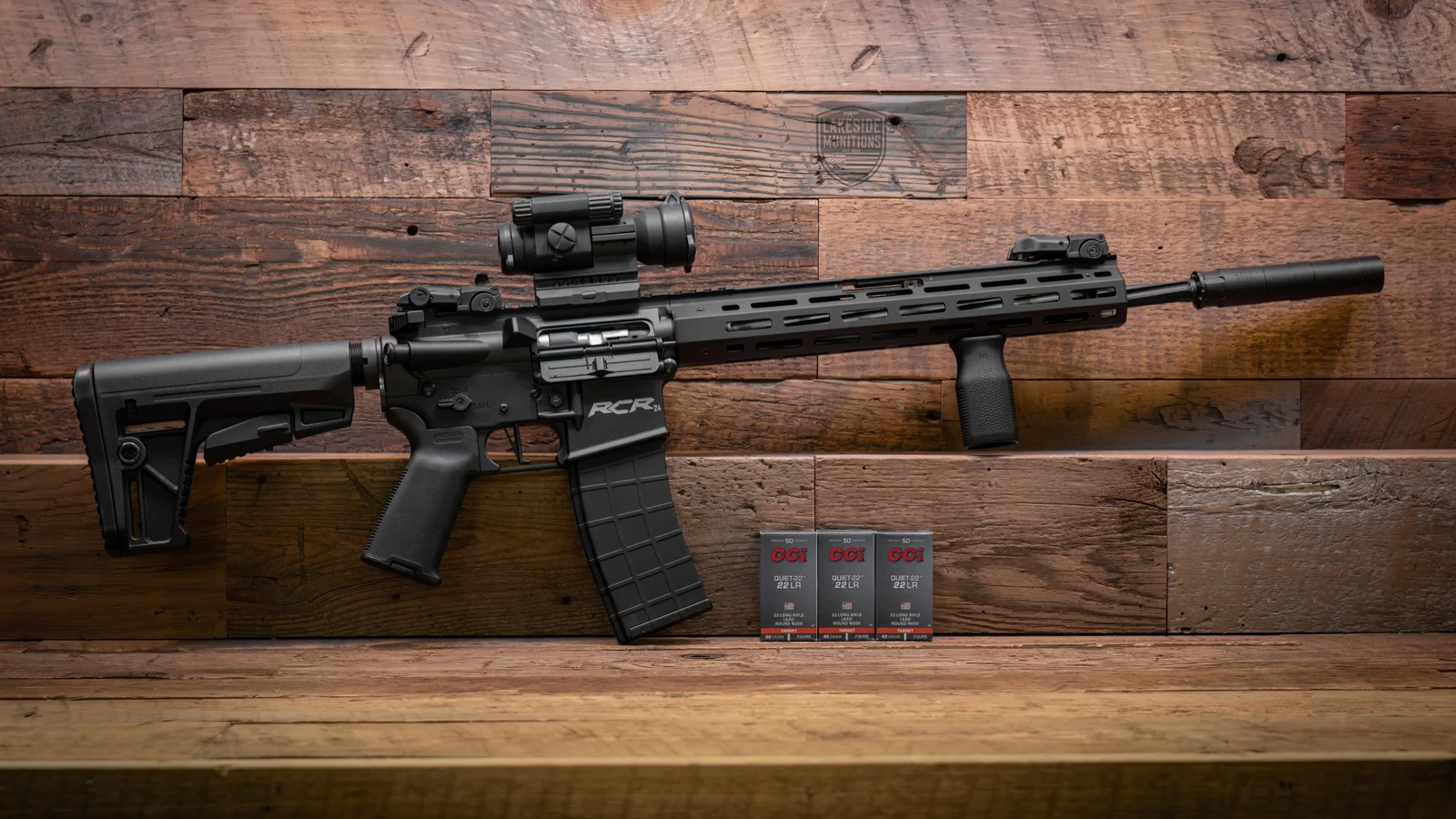
Myth 2: Suppressors are illegal in Georgia
They are not. Georgia’s code bars possessing a silencer except as another section allows (O.C.G.A. 16-11-122). That other section, O.C.G.A. 16-11-124, exempts a person who has registered the silencer under the National Firearms Act. The text we read is FindLaw’s copy, marked current as of March 28, 2024, and we have not seen it change.
So the real rule is not “illegal.” It is “legal once the federal approval is done.” In practice that means you must be allowed to own a firearm, you must be 21 to buy one from a dealer, and ATF must approve your Form 4 first.
If you hunt, the law adds a separate rule. We cover it in hunting with a suppressor in Georgia.
Myth 3: It still costs a $200 tax stamp and takes a year
Both halves are out of date.
The stamp. The federal transfer tax on a suppressor has been $0 since January 1, 2026. 27 CFR 479.84 lists $0 for firearms other than machine guns and destructive devices (eCFR text), and the trade group NSSF confirms the change. ATF approval is still required.
The wait. ATF’s current processing times showed an individual eForm 4 at 9 days and a trust eForm 4 at 33 days for applications finalized in July 2026, when we checked in September 2026. At our counter right now, approval for someone filing as an individual is taking 2 to 3 days, and it can run up to 21 days. A trust takes up to a month. Those are the ranges, and they move.
A year is not what we are seeing. Waits do move up and down with ATF’s workload, so treat any number as a range. And a $0 stamp does not mean no paperwork. The application, fingerprints and photo are still part of it, which we cover in fingerprints for a suppressor. For the full breakdown, see our guide to Form 4 wait times.
Myth 4: ATF stopped regulating suppressors, so Georgia does too
You may have seen the headlines. On October 9, 2026, ATF said it would stop enforcing federal prior approval and registration for suppressors after a federal court ruling. ATF’s own guidance says it does not override state and local laws. It also says a dealer may not deliver an NFA item in violation of state law, and that Form 4473 and the NICS background check still apply. It adds that enforcement could resume, and that there is no automatic grandfathering for unregistered items.
Georgia’s exemption in 16-11-124 is for a silencer registered under the National Firearms Act. We have not seen Georgia change that law. So in Georgia the full Form 4 process still applies, and every suppressor we transfer still goes through it. For what each form does, see Form 4473 vs Form 4. The myth is that the federal change erased the Georgia rule. It did not. You also still cannot take a suppressor home the same day you start the process. If you have a question about an item you already own, that is one for an attorney, not for a blog post or a dealer’s counter.
Myth 5: You need a trust to buy a suppressor
You do not. Georgia is an NFA trust state, which means both paths are open: file the Form 4 as an individual, or file through a trust. Neither is automatically better. Both go through the same ATF approval. If you file as an individual, you will give fingerprints and a photo with the application. A trust adds paperwork for the people who control it, so ask which path fits your situation before you decide.
Filing as an individual is simpler on paper and, going by the ranges above, tends to clear faster. A trust is often set up so more than one person can use the suppressor. At the store, we can help you create a trust for your future needs. For how the two compare, our guide to NFA trusts or individual filing in Georgia covers it.
Check it yourself, then come ask us
Here are the five myths in one place:
| Myth | What the sources say |
|---|---|
| A suppressor makes a gun silent | It lowers peak sound by roughly 17 to 24 decibels at the shooter’s ear in one federal study. Wear hearing protection. |
| Suppressors are illegal in Georgia | Legal once registered under the National Firearms Act (O.C.G.A. 16-11-124). |
| It costs a $200 stamp and takes a year | The tax is $0 since January 1, 2026. ATF’s national average was 9 days for an individual in July 2026. |
| ATF stopped regulating, so Georgia did too | ATF’s guidance does not override state law, and Georgia has not changed its rule. |
| You need a trust | Georgia allows filing as an individual or through a trust. |
Do not take our word for any of this, or anyone else’s. The sources are linked above, and the rules change. Read the ATF guidance and the Georgia code yourself, and ask an attorney about anything beyond the general process.
If you want to handle a few suppressors and ask every question, come by our Cumming shop. We are a Silencer Shop Elite dealer, we do the forms and fingerprints with you at the kiosk in the store, and there is no transfer fee when you buy the suppressor here. You can read how the process works on our suppressor page, or send a question through the contact page.


