

Form 4473 and Form 4 sound alike, but they do different jobs. Form 4473 is the record you fill out at a licensed dealer for any gun you buy, and it supports the background check. Form 4 is the ATF application that approves and registers a suppressor in your name. To buy a suppressor you need both, in this order: ATF approves the Form 4 first, then you fill out a Form 4473 when you pick it up.
This guide explains each form, what each one asks for, and how they fit together. It is general information as of November 2026, not legal advice.
Form 4473: the record of the sale
Federal rules say the buyer fills out Form 4473 before an over-the-counter transfer from a licensed dealer. The rule is 27 CFR 478.124. The dealer then does several things with it:
- Checks your identity against an acceptable ID and records the ID type.
- Contacts NICS, the national background check system, and writes down the date, the response and any transaction number.
- Records the gun’s maker, type, model, caliber or gauge, and serial number.
- Signs and dates the form if the dealer has no reason to believe you are legally prohibited from having a gun, then completes the transfer.
The dealer keeps the form as part of the shop’s required records. You fill out a 4473 for every gun you buy at a counter. That is the same form whether it is a pistol, a rifle or a suppressor you are picking up.
Form 4: the ATF approval for a suppressor
A suppressor is regulated under the National Firearms Act, so it needs a second layer of approval that an ordinary gun does not. That is Form 4, ATF Form 5320.4. Under 27 CFR 479.84, a suppressor cannot change hands until the transferor files a Form 4 and the ATF Director approves it. The form is signed under penalty of perjury, and it registers the item to the person receiving it. It names both parties and identifies the suppressor by make, caliber, model and serial number. If the person receiving it is a trust or another non-licensed entity, the information on each responsible person has to go in too.
The tax on a suppressor Form 4 is $0. That has been true since January 1, 2026, according to the trade group NSSF, and 27 CFR 479.84 lists $0 for firearms other than machine guns and destructive devices. Approval from ATF is still required.
ATF also runs a background check on a Form 4. In a 2026 proposed rule, ATF says it contacts NICS for each NFA making or transfer application to check whether receiving the item would put the applicant in violation of the law. So the check happens twice: once when ATF reviews your Form 4, and again at the counter when you fill out the 4473.
Form 4473 vs Form 4, side by side
| Form 4473 | Form 4 | |
|---|---|---|
| What it is | Record of a firearm sale | ATF application to transfer and register an NFA item |
| Who it is for | Any gun bought from a dealer | Suppressors and other NFA items |
| Who fills it out | You, at the counter | Filed by the transferor, with your information |
| Approval | Background check (NICS) at the counter | ATF approval before the item can move |
| When | The day you pick it up | Before pickup, starting the wait |
The short version: Form 4 is permission to receive the suppressor. Form 4473 is the sale record and background check when it is handed to you.
What happens at Lakeside, in order
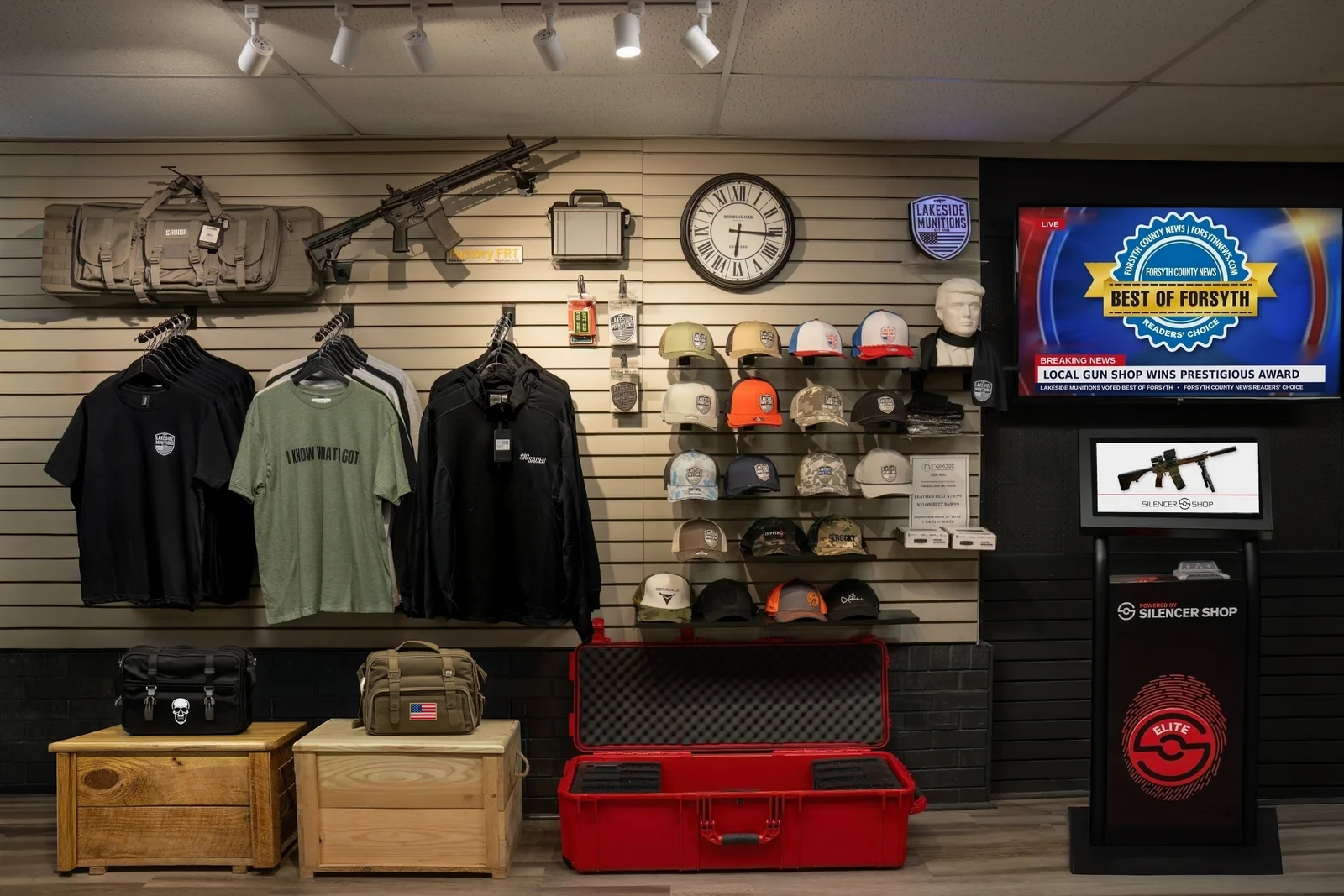
Here is how it goes for a suppressor at our shop. You pick the suppressor, and we start the Form 4 with you at the Silencer Shop kiosk in the store, with a person next to you. We do the forms and fingerprints in the shop. Then ATF reviews the application.
Right now approval is taking 2 to 3 days for people filing as an individual, and it can take up to 21 days. A trust takes up to a month. For comparison, ATF’s own current processing times showed an individual eForm 4 at 9 days and a trust eForm 4 at 33 days for applications finalized in July 2026, when we checked in September 2026. Those are national averages. The numbers move with ATF’s workload.
When ATF approves, you come in and fill out the standard Form 4473, show a valid government photo ID with your current address, and the dealer completes the NICS check. Then you take it home. You cannot take a suppressor home the same day you start.
For fingerprint and photo details on the Form 4, read our guide to suppressor fingerprints and photos. For why each wait takes as long as it does, see Form 4 wait times.
Put plainly, the two forms answer two different questions. Form 4 asks ATF whether this suppressor may be registered to you. Form 4473 asks the dealer, on the day of sale, whether this sale to this person may go through. Passing one does not skip the other.
Did ATF stop requiring Form 4 in October 2026?
You may have seen headlines. On October 9, 2026, ATF said it would stop enforcing federal prior approval and registration for suppressors, after a federal court ruling. ATF’s own guidance says three things that matter here. It does not override state and local laws. A dealer may not deliver an NFA item in violation of state law. And Form 4473 and the NICS background check still apply.
Georgia’s code allows a suppressor that is registered under the National Firearms Act (O.C.G.A. 16-11-124), and we have not seen that change. So in Georgia the Form 4 still goes first, and every suppressor we transfer still goes through it. ATF’s guidance also notes that enforcement could resume. This section is current as of November 2026.
What this means for your first suppressor
Form 4 is the one for a normal purchase. A different ATF form, Form 5, is used for tax-exempt transfers, such as an executor passing a registered item to an heir after a death. The rule is 27 CFR 479.90a. If that is your situation, start with our guide to inherited guns in Georgia, because the steps for an estate are different from a purchase.
For a purchase, here is the cost picture. Buy from us and there is no transfer fee. A suppressor or NFA item bought somewhere else and shipped here is $100. One bought directly from Silencer Shop carries no transfer fee either. In both cases, the Form 4 and the 4473 are the same steps. Our suppressor page explains the whole buying process.
If you still have a question about which form is which, come by the shop or send us a note through the contact page. We will walk you through it before you pay.


