

Yes, you need fingerprints for a suppressor, and a photo too. As of November 2026, an individual filing an ATF Form 4 submits two fingerprint cards and a 2-inch by 2-inch passport-style photo. ATF has proposed cutting that to one card and a copy of your photo ID, but the proposal is not final as far as we could find, so the current rules still apply. This is general information, not legal advice.
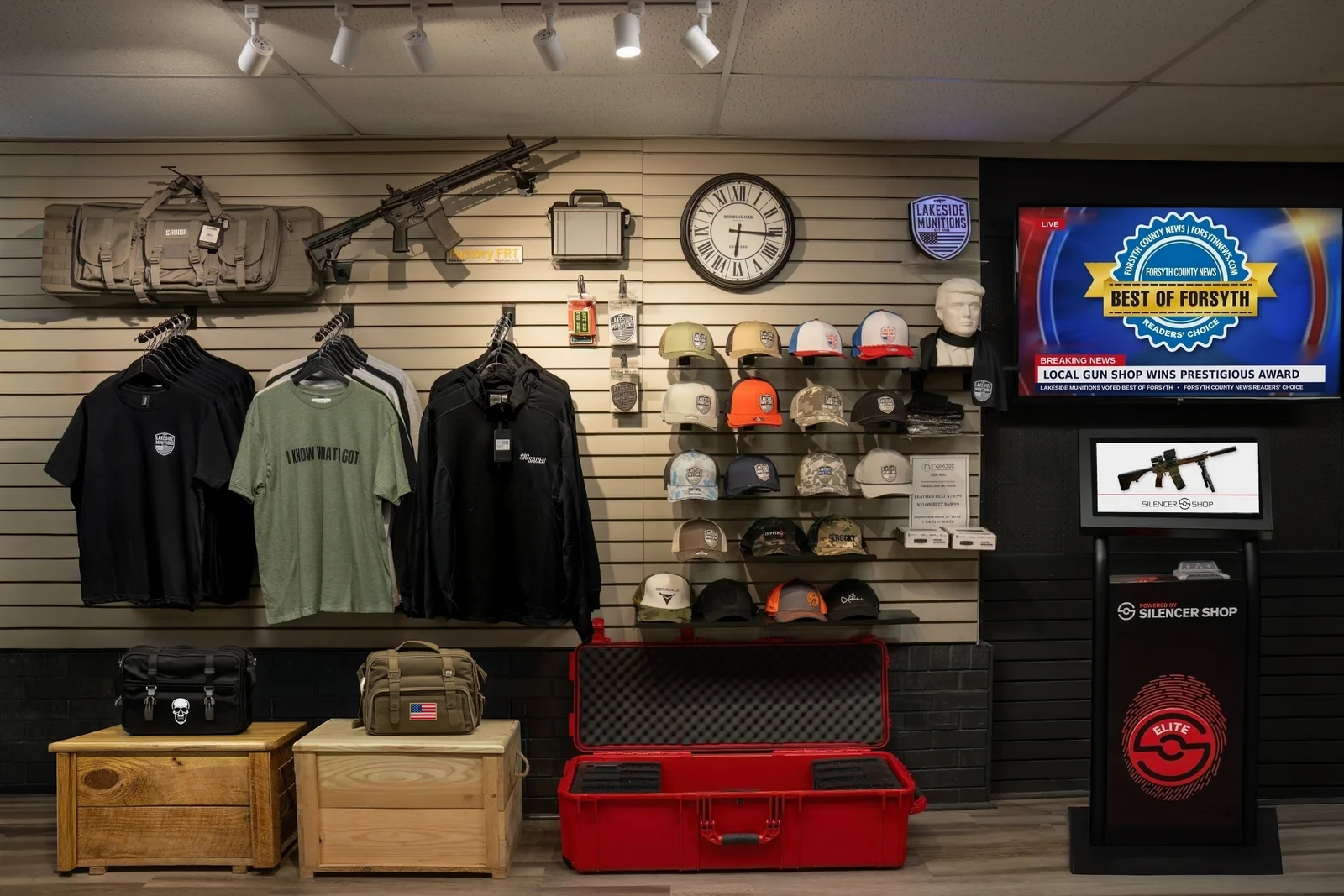
At Lakeside Munitions we do the forms and fingerprints with you at the Silencer Shop kiosk in the store, with a person next to you.
Fingerprints for a suppressor: what is required today
The rule for individuals is 27 CFR 479.85. It says the person receiving the suppressor attaches two completed FBI Form FD-258 fingerprint cards to the application. The prints must be clear enough to classify, and the rule says a person properly equipped to take them should do it.
ATF confirms the same picture in its own words. In a proposed rule published July 6, 2026, it says applicants “must submit” passport-style photographs and either one or two fingerprint cards, depending on the application type. For an individual on a Form 4, the proposal describes the current requirement as two cards and says it would drop that to one.
ATF’s proposal adds a detail worth knowing: it counts each NFA applicant as currently submitting two fingerprint cards, while an applicant for a federal firearms license submits one. So the two-card rule is specific to NFA items like suppressors.
If you are using a trust instead of filing as an individual, the people who control the trust, called responsible persons, have their own fingerprint and photo requirements today. The same proposal says those were added by a 2016 rule.
Why ATF collects them
The law itself asks for these. The National Firearms Act requires an individual who applies to receive an NFA item to include fingerprints and a photograph, in the way the regulations set out. ATF says the statute puts no such requirement on trusts or other legal entities, which is why the proposal treats trust responsible persons differently from individuals.
ATF contacts NICS, the national background check system, for each NFA application. The proposal says the check itself runs on name, sex, race, date of birth and state of residence, with no fingerprint needed. Fingerprints are mostly used to help the FBI settle questions that come up, such as when your details match another person’s. So the prints are not the whole background check. They are the backup when the check needs one.
The photo
Under 27 CFR 479.85, each copy of the Form 4 gets a 2-inch by 2-inch photo of you. It must show your face from the front with your head uncovered, and your head should measure about 1 and 1/4 inches from the top of the head to the chin. The photo must have been taken no more than one year before the date you apply.
Ask us at the counter what you need to bring for the photo before you start, so you have it ready when we sit down with you.
ATF’s stated reason for the proposed change is that a copy of a photo ID is now as clear as an original, and easier to get than a passport-style photo. That is the reason for the shift in the proposal. It does not change what you need to submit today.
What ATF has proposed, and where it stands
The proposal is called Fingerprint and Photograph Requirements for Firearms Applications (docket ATF-2026-0397, RIN 1140-AA63). Here is what it would change, in ATF’s words and ours:
- Photos. Instead of a passport-style photo, an applicant could submit a copy of a government photo ID.
- Fingerprints for individuals. One card instead of two on Forms 1, 4 and 5.
- Fingerprints for trust responsible persons. One card only if needed to help with a background check.
- Who takes them. The proposal would remove the language that a specially trained person must take the prints. Individuals could take and submit their own, on the FD-258 card or with digital equipment, as long as the prints are clear.
ATF’s reasoning is that fingerprint cards helped the FBI with only a small share of these applications. ATF also says it cannot drop the fingerprint requirement for individuals completely, because the law requires it for individual applicants.
It is a proposal, not a rule yet. ATF published the proposal on July 6, 2026 with a 90-day comment period, so comments were due in early October. We looked for a final rule as of November 7, 2026 and did not find one. Until ATF publishes a final rule, the two-card, passport-photo requirement is what you submit. If that changes, ask us at the counter what applies to your filing date.
How fingerprints fit into the wait
You may wonder whether the prints are what take the time. ATF’s proposal describes the fingerprint card as a backup for the FBI when a background check hits a question, not as the check itself.
The fingerprints and photo go in with the rest of the application at the start. Right now, approval for someone filing as an individual is taking 2 to 3 days, and it can run up to 21 days. A trust takes up to a month. We do the forms and fingerprints with you in the shop.
For the national picture, ATF’s current processing times showed an individual eForm 4 at 9 days and a trust eForm 4 at 33 days for applications finalized in July 2026, when we checked in September 2026. Those are averages across the country. For a full look at the timing, read our guide to Form 4 wait times.
Where fingerprints fit in the whole process
A suppressor takes two forms, in order. Form 4 comes first and is the ATF approval, with your fingerprints and photo. When ATF approves it, you fill out a standard Form 4473 at the counter and the background check is run. We explain the two in Form 4473 vs Form 4. You cannot take a suppressor home the same day you start.
On cost: buy the suppressor from us and there is no transfer fee. A suppressor bought somewhere else and shipped here is $100 to transfer. The federal tax stamp has been $0 since January 1, 2026, and ATF approval is still required.
A short plan for your first visit:
- Decide whether you will file as an individual or through a trust. Our guide to filing as an individual or through a trust in Georgia covers the choice.
- Ask at the counter what to bring for the photo.
- Expect to give fingerprints. As of today, an individual gives two cards’ worth.
- For a trust, expect each responsible person to give prints and a photo under the rules as they stand today.
If you are ready to start, or you want to see the kiosk first, come by the shop. You can read how the whole process works on our suppressor page, or send us a question through the contact page.


