
How to Sell a Gun in Georgia: Private Sale or a Dealer
How to sell a gun in Georgia, the legal way. What federal law says about private sales, when a dealer helps, what a store needs from you, and what to skip.
You can sell a gun in Georgia two ways: to another Georgia resident yourself, or to a licensed dealer. Both are lawful for an ordinary rifle, shotgun or handgun. The private route has the fewest federal steps. The dealer route is the one that asks the least of you, because the dealer handles the paperwork on its side.
This guide covers what the law says about each route, with a link to the law itself, and how to choose. It is general information as of November 2026, not legal advice. An attorney can answer questions about your own situation.
The short answer
- To a Georgia resident, private sale. Federal law lets you transfer a gun to an unlicensed resident of your own state, as long as you do not know or have reasonable cause to believe the buyer is prohibited from having guns (ATF Firearms Q&A).
- To a licensed dealer. You may transfer a gun to a licensee in any state (ATF Firearms Q&A). The dealer records the gun and who it came from.
- To someone in another state. The sale has to go through a licensed dealer.
- Suppressors and other NFA items. These need an approved ATF transfer. They do not follow the steps for an ordinary gun.
Do you need a license to sell your own gun?
No. Federal law requires a license only for people engaged in the business of dealing in firearms. The statute says a person who sells “all or part of his personal collection” is not engaged in the business (18 U.S.C. 921(a)(21)).
ATF’s 2024 rule that tried to widen that definition was struck down. A federal court in Texas vacated it nationwide on June 12, 2026 (State of Texas v. ATF). Rules in this area have changed several times, so check the current status before you sell many guns in a short time. If you plan to sell a lot of guns, talk to an attorney first.
Selling to another Georgia resident
For an ordinary gun, here is what we found.
There is no federal record keeping. ATF says that when both people live in the same state, federal law does not require a dealer, a Form 4473 or any record keeping (ATF Firearms Q&A).
We found no Georgia background check law for private sales. Georgia’s background check statute covers dealer transfers (O.C.G.A. 16-11-172). We found no statute in the firearms article that requires one between two private Georgia residents. That is a “we found none” and not a promise that none exists, so ask an attorney if the sale is large or unusual.
There is no Georgia gun registration. State law bars local governments from regulating registration and transfers (O.C.G.A. 16-11-173). Only NFA items are registered, with ATF.
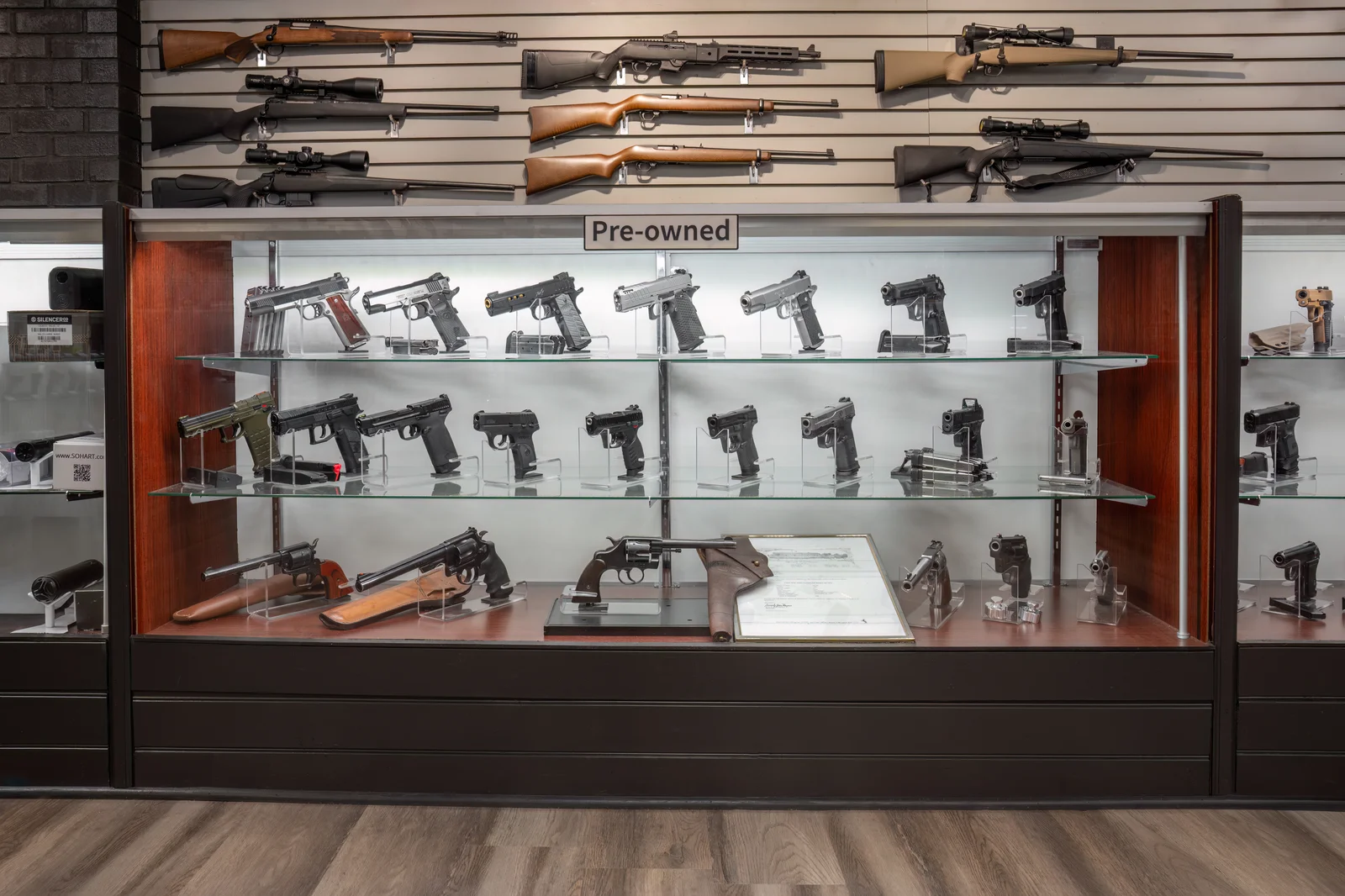
Who you must not sell to
The legal duty in a private sale is about who the buyer is. Federal law makes it unlawful to sell or dispose of a gun to someone you know or have reasonable cause to believe is prohibited from having one (18 U.S.C. 922(d)). The list includes people convicted of a crime punishable by more than a year in prison, people convicted of misdemeanor domestic violence, people under certain protective orders and unlawful users of controlled substances, among others.
Georgia adds its own rules:
- Knowingly providing a firearm to a felon, or to a person on felony first-offender probation, is a felony (O.C.G.A. 16-11-113).
- Selling or furnishing a pistol or revolver to a minor is unlawful, with limited exceptions for a parent or guardian (O.C.G.A. 16-11-101.1).
The standard is what you know or have reason to believe. A buyer who gives you a reason to doubt, or who will not answer a plain question, is a signal to walk away. A sale is not worth the risk.
Selling to a licensed dealer
When you sell to a dealer, the dealer takes on the paperwork on its side. A licensed dealer keeps a record of each firearm it receives and who it came from, including the name and address of the person (27 CFR 478.125).
At our shop in Cumming, here is how it works:
- Bring a photo ID and the gun, unloaded. If you have the original box, magazines and accessories, bring them too.
- The appraisal is free when you want to sell, with no obligation. We run a national average calculation for that make and model and agree the number with you before anything else happens.
- Cash or trade. For the guns we buy, you can take cash, or the value can go on a store account toward something else in the store.
- We may not buy every gun. We will tell you which ones we can.
- An appraisal-only visit may carry a fee. If you want a number and have no plan to sell, tell us when you arrive.
Our bring list for selling a gun has the full list, and selling or trading in a gun compares cash with trade.
Private sale or dealer: how to choose
| Private sale to a Georgia resident | Sale to a dealer | |
|---|---|---|
| Who finds the buyer | You | The dealer is the buyer |
| Your legal duty | Do not sell to someone you know or suspect is prohibited | Dealer keeps the record of receipt |
| Federal record keeping | None required for a same-state sale | Dealer records the gun and who it came from |
| Time to a sale | Depends on finding a buyer | No buyer to find |
| Best fit | You want to pick the buyer and set a price | You want a straight number and a finished deal |
Our post on what a gun is worth covers how condition moves a price, whichever route you pick.
Guns that need a different plan
Suppressors and other NFA items. A suppressor is an NFA item, and a transfer needs ATF approval, applied for on a form (27 CFR 479.84). Georgia law allows a suppressor only when it is registered under the NFA. Do not sell one like an ordinary gun, and do not hand one to a dealer to hold without an approved transfer. Call us first. Our suppressor page covers how approvals work here.
Guns from an estate. An executor’s steps differ from an everyday sale. Our guide to inherited guns in Georgia covers them, and our sell your gun page covers how we assess a collection. For an estate, email a list of the firearms to info@lakesidemunitions.com.
A few plain tips for a private sale
These are our suggestions, not legal requirements:
- Ask a plain question, such as whether the buyer is allowed to own a gun, and watch how it is answered.
- Write a short receipt with the date, the gun’s make, model and serial number, and both names. It is your own record.

When to call an attorney
Call one if you plan to sell many guns, if the buyer’s eligibility is unclear, if the gun is an NFA item, or if the gun is part of an estate with a complicated will. The laws above change, and a lawyer can read how they apply to you.
How the shop helps
We Buy Preowned Firearms
Bring in one gun or a whole safe. We appraise it and make a fair cash offer on what we can buy.

Common questions
Do I need a background check to sell a gun privately in Georgia?
We found no Georgia law that requires a background check on a private sale between two Georgia residents, and ATF says federal law does not require a check or any record keeping for a same-state private sale. Federal law still bars you from selling to someone you know or have reasonable cause to believe is prohibited from having guns.
Can I sell a gun to someone who lives in another state?
Not directly. Federal law lets you transfer a gun to an unlicensed person who lives in your own state, and to a licensed dealer in any state. A sale to a buyer in another state goes through a licensed dealer.
Can I sell a suppressor to another person?
Not like an ordinary gun. A suppressor is an NFA item, and a transfer needs ATF approval. In Georgia, a suppressor is lawful only when it is registered under the NFA. Call a dealer before you list one.
Do I have to register a gun I sell or buy in Georgia?
Georgia has no gun registration requirement, and state law bars cities and counties from regulating registration. Only NFA items, such as suppressors, are registered with ATF.
Sources
Each fact in this guide links to one of these sources, so you can read the rule itself.
- ATF Firearms Questions and Answers: transfers by unlicensed persons atf.gov
- ATF Firearms Questions and Answers: record keeping and registration atf.gov
- ATF Firearms Questions and Answers: who needs a license atf.gov
- 18 U.S.C. 921, Definitions (engaged in the business) uscode.house.gov
- 18 U.S.C. 922, Unlawful acts (selling to a prohibited person, out-of-state transfers) uscode.house.gov
- 27 CFR 478.125, Record of receipt and disposition (dealer records) ecfr.gov
- State of Texas v. ATF, order vacating the 2024 engaged in the business rule (N.D. Tex., June 12, 2026) storage.courtlistener.com
- O.C.G.A. 16-11-172, Background checks on dealer transfers codes.findlaw.com
- O.C.G.A. 16-11-113, Providing a firearm to a felon or first offender codes.findlaw.com
- O.C.G.A. 16-11-101.1, Furnishing a pistol or revolver to a minor codes.findlaw.com
- O.C.G.A. 16-11-173, State preemption of firearm regulation codes.findlaw.com
- 27 CFR 479.84, Applying to transfer (NFA items) ecfr.gov

Want a number before you decide?
Call Lakeside Munitions in Cumming and talk it through with someone at the counter.