

In the red dot vs holographic sight choice, a red dot is the better pick for most people. It is smaller, lighter and runs for years on one small battery. A holographic sight is bigger and heavier, and it uses a battery much faster. In return, its reticle is larger and keeps working when the glass is damaged.
Neither one zooms. You look through the glass with both eyes open and put the reticle on the target. The real question is which trade-offs you can live with.
Red dot vs holographic: what is different inside
A red dot projects a lit dot onto the glass in front of your eye. EOTech, which makes holographic sights, says its sights use holography “not LED projection” to form the reticle. That is the core difference. Same job, different way of making the reticle.
You do not need to know the physics to shop. You need to know what each design costs you in weight, battery life and size.
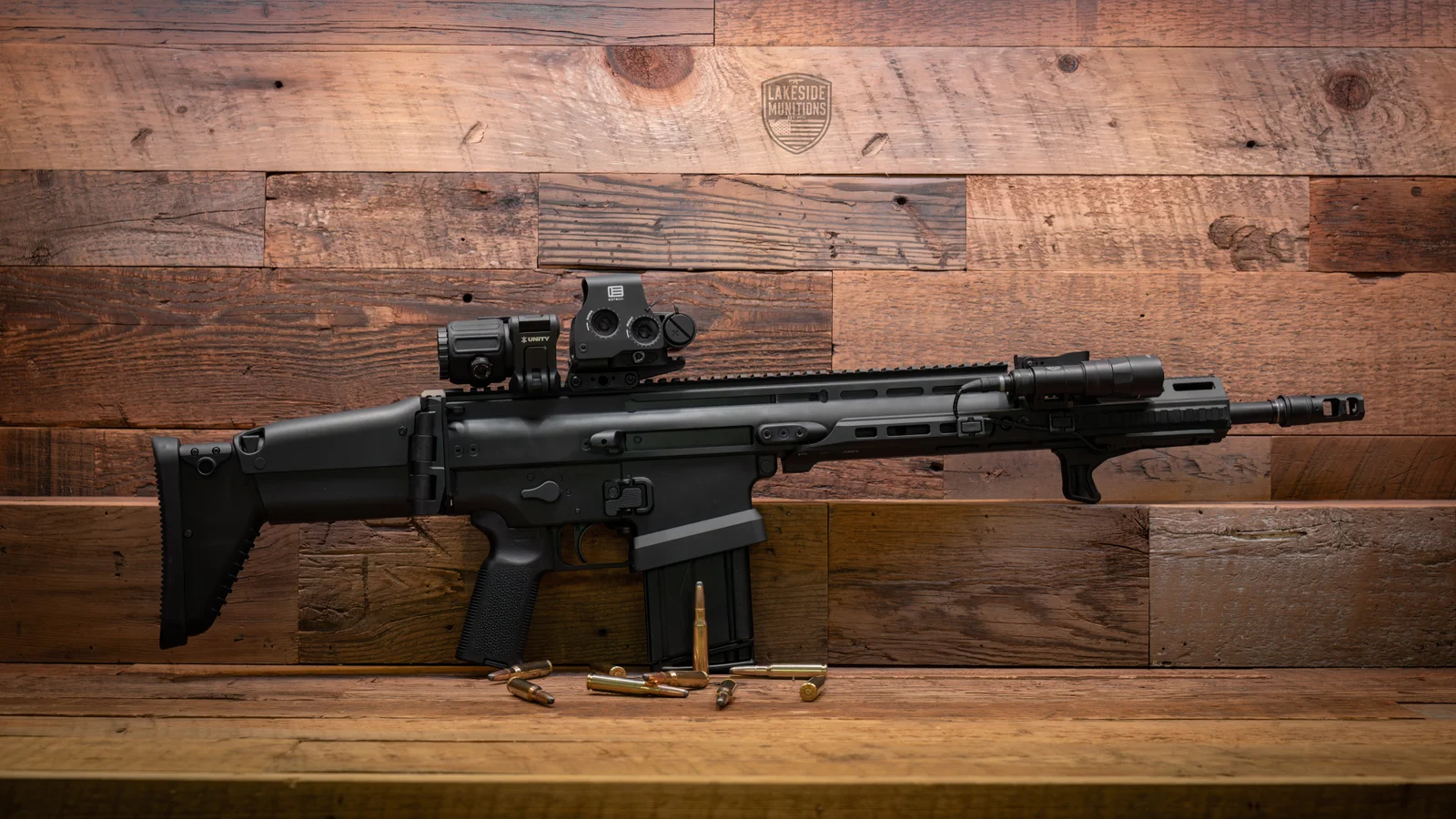
Weight and size
Weight is the easiest difference to feel. Aimpoint lists its Micro T-2 red dot at 94 grams, or 3.3 ounces, for the sight alone (Aimpoint product sheet). EOTech lists its EXPS3 holographic sight at 11.2 ounces (EOTech EXPS3 page).
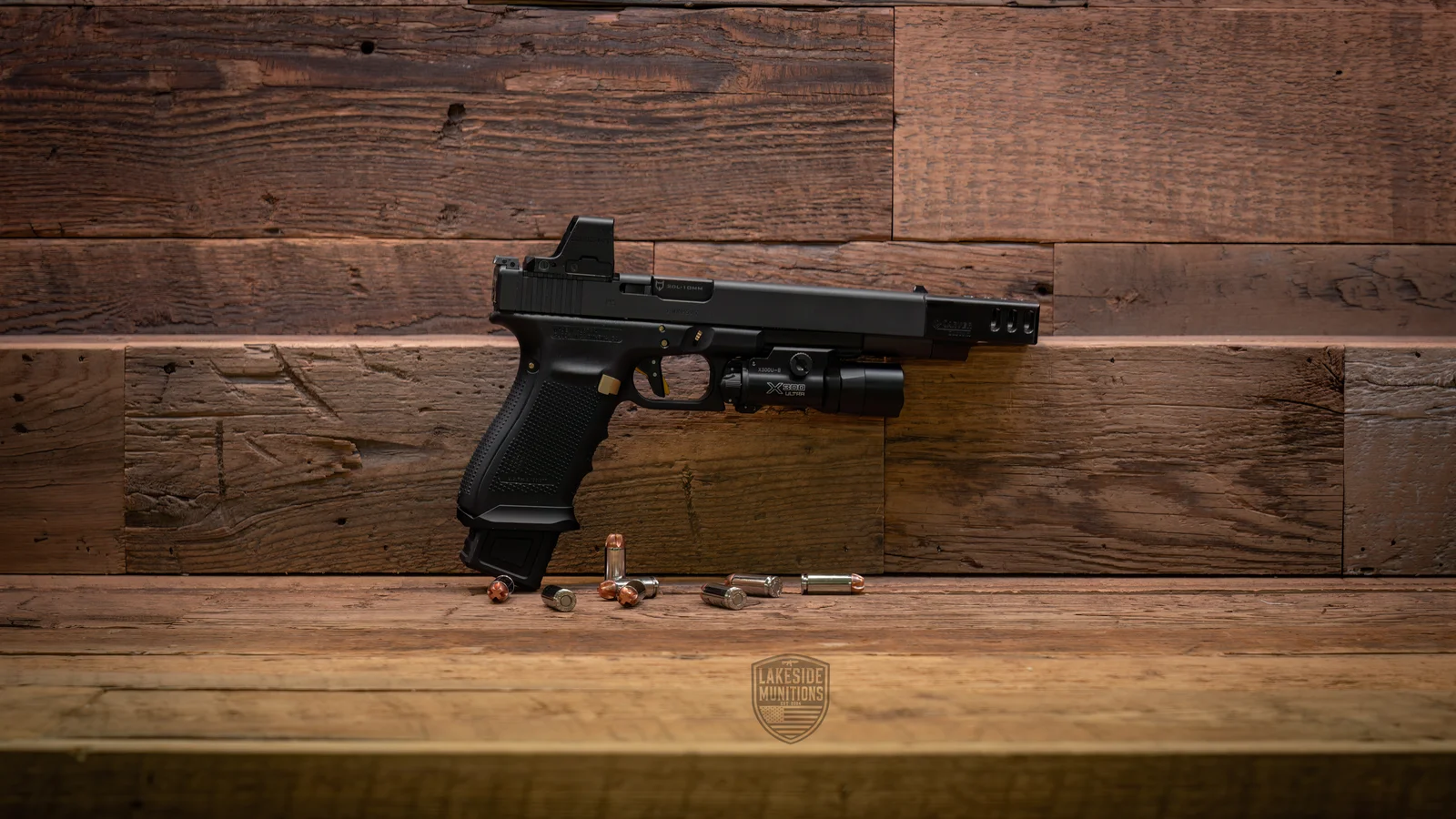
That is about three and a half times the weight. On a pistol slide, which moves with every shot, that difference matters a lot. Ask whether your pistol can take a heavier optic before you buy. On a rifle, the extra weight is easier to ignore.
The two are not the same size either. The EXPS3 measures 3.8 by 2.3 by 2.9 inches. Aimpoint calls the Micro T-2 “extremely lightweight.” If your rifle already has a light, a magnifier and a bipod, every ounce adds up.
Battery life
Here the red dot wins by a wide margin. Aimpoint rates the Micro T-2 at 5 years, or 50,000 hours, of constant use on one CR2032 battery. That is at setting 8 of its daylight settings (Aimpoint product sheet).
EOTech rates the EXPS3 at 1,000 continuous hours on one CR123 battery. That is at nominal setting 12, at room temperature (EOTech EXPS3 page).
| Aimpoint Micro T-2 (red dot) | EOTech EXPS3 (holographic) | |
|---|---|---|
| Weight | 3.3 oz, sight only | 11.2 oz |
| Battery | One CR2032 | One CR123 |
| Rated battery life | 50,000 hours at setting 8 | 1,000 hours at setting 12 |
| Zoom | None (1x) | None (magnifier sold separately) |
These are manufacturer ratings for one model each, not a promise for every red dot or every holographic sight. Other models differ. The ratings also depend on the brightness setting, and EOTech’s is measured at room temperature, so your own results will differ.
Even so, 1,000 hours is a lot for most shooters. A sight left on at the range for a few hours a month will last a long time. The real risk is forgetting to turn it off, or leaving it on a home-defense rifle that you do not touch for months.
The reticle you see
A red dot gives you one small dot. The Micro T-2 in this post uses a 2 MOA dot. MOA means minute of angle, a way of measuring size at distance. A 2 MOA dot covers about 2 inches at 100 yards.
The EXPS3 offers several reticles. The 0-reticle is a 68 MOA ring with a 1 MOA dot in the middle. EOTech says the ring is built for fast target acquisition and gives three aiming points when matched to a .223 load. With shotguns, EOTech says the ring approximates shot patterns, which change with the choke and the shell. It also sells a 1 MOA dot-only version for people used to red dots.
The big ring is easy to find fast, even with both eyes open. Some shooters love it. Others find it busy and prefer a clean dot. Look through both before you decide, because this part is personal.
Window damage and parallax
EOTech says its holographic sights keep working “even when the window is damaged or obscured.” That is a manufacturer claim, not a test we ran. If you use a rifle hard, ask what the maker of any sight says about damage before you buy.
Parallax is the shift in the reticle when your eye is not lined up with the sight. Aimpoint describes the Micro T-2 as parallax-free. EOTech says it minimizes parallax by projecting its reticle at 200 meters. Either way, both makers say they have dealt with it, so parallax should not decide this for you.
Night vision and magnifiers
Both makers build in room for add-ons. EOTech lists 20 daylight brightness settings for the EXPS3, plus 10 more for use with Gen I through III+ night vision (EOTech EXPS3 page). Aimpoint lists the Micro T-2 as night vision compatible, with 4 night vision settings and 8 daylight settings, and as usable with 3X and 6X magnifiers (Aimpoint product sheet).
If you think you will ever want zoom or night vision, check that the sight you pick supports it. It costs more to swap a sight later than to choose well now.
Which one fits which job
A short guide, based on the numbers above. It is our judgment, not a rule:
- Pistol: a red dot, because weight rides on the slide.
- Home-defense rifle you rarely touch: a red dot, mostly for the battery life. Check any sight’s brightness setting before you put it away.
- AR-style rifle with other accessories: either one. Pick by weight and the reticle you like.
- Shotgun: either one. EOTech says the ring approximates shot patterns, but test your own load.
- Rifle used hard, in rough conditions: look hard at a holographic sight and its window claim.
If you want help choosing, tell the counter what gun it is going on and what you will do with it. They can talk through the options with you.
Mounting and zeroing
A good sight on a bad mount is a bad sight. Sights sit at a set height on the gun, and that height decides how the sight lines up with your iron sights. The EXPS3 has a 7 mm raised base made for a lower 1/3 iron sight co-witness, according to EOTech. Our post on red dot co-witness explains what that means.
After you mount it, you still have to zero it. Our post on how to zero a red dot walks through that. If you are weighing a bigger, zooming optic instead, read LPVO vs red dot.
Get it mounted in Cumming
At Lakeside Munitions, an optic mount is $45, for a red dot or a magnified optic. If you buy the item here, we install it for free. Bore sighting is $15. You can see every posted price on our gunsmithing page, or contact us with the gun and the sight and we will tell you what the job takes.
Sources checked November 2026. Specs come from the makers and can change by model, so check the exact model you buy.


