

The safe first step is a phone call, not a trash can. SAAMI, the group that sets safety standards for American ammunition makers, says ammunition should only be disposed of following federal, state and local regulations, and that your local law enforcement, fire department or shooting facility may be able to give you disposal guidance.
We have not published whether Lakeside Munitions takes old ammo from the public, so do not drive over with a box before you check. Call the store and ask. The rest of this post explains when ammo counts as bad, what not to do, and who else to call.
When is ammo “old” enough to get rid of?
Age alone is not the test. Modern factory ammo can last a long time if it was stored well. What matters is its condition and what it has been through. For more on that, see our post on ammo shelf life.
SAAMI’s storage and handling publication says to inspect ammunition before use, and to properly dispose of cartridges or shotshells that show signs of physical damage, such as corrosion, deep dents or scratches. Its rule of thumb is simple: if in doubt, do not chamber or fire the ammunition (SAAMI, Recommendations for Safe Ammunition Storage and Handling).
Three situations call for a closer look:
- Damage you can see. Corrosion, deep dents or scratches.
- Water. SAAMI’s guidance says the safe answer for previously submerged ammunition is not to try to salvage or use it.
- Heat. SAAMI says that if you think ammunition, powder or primers were exposed to temperatures above about 200 degrees Fahrenheit, it should be safely disposed of under all applicable rules.
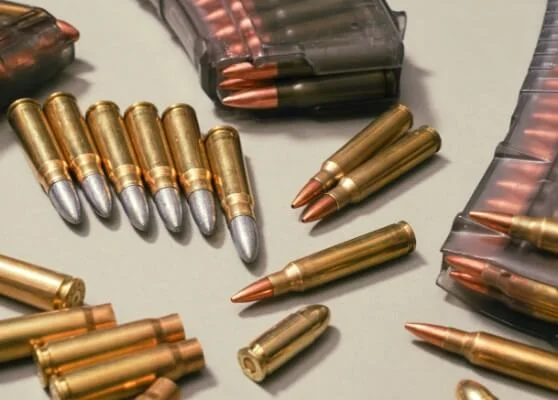
What not to do with questionable ammo
SAAMI’s guidance gives clear warnings:
- Do not try to dry out wet ammo with heat. SAAMI says using direct heat can degrade the smokeless powder in the case and change how it burns, which can make the round unsafe to fire. It also says rounds can set themselves off if they get too hot in the drying process, which could cause severe injury or death to bystanders.
- Do not salvage submerged ammo. SAAMI says it is impossible to know for certain how much any one cartridge was affected, so the safe answer is not to try to use it.
- Do not ship it back to the maker. SAAMI says directly: do not ship the ammunition back to the manufacturer.
- Do not fire it off to get rid of it. A bad round can fail to fire or burn in an odd way. SAAMI describes a case where a weak charge leaves the bullet stuck in the barrel, and firing the next round into the blocked barrel could lead to catastrophic failure. Source: SAAMI, Guidance on Ammunition That Has Been Submerged in Water.
- Do not leave it for someone else to find. Keep it stored and out of reach until you have a plan, following the steps in how to store ammo.
Why SAAMI is so careful about heat, water and chemicals
You cannot judge a round by looking at it. SAAMI’s publication says exposure to extended high heat or high humidity can damage ammunition, and that the damage can raise or lower chamber pressure, cause incomplete burning of the powder, or cause a failure to fire. It also names water, solvents, petroleum products, acids and ammonia as things that can damage ammunition, by weakening the case or making the round hard or impossible to chamber.
On heat, SAAMI’s separate fire guidance says there is no easy way for a consumer to tell how badly powder was hurt, and that the damage can vary inside one stock of ammunition (SAAMI, Guidance on Firearms, Ammunition and Propellant Exposed to Fire). That is why one bad-looking box is a reason to inspect the rest of what sat beside it, and to set aside anything that shared the same shelf, shed or trunk during the heat.
On water, SAAMI says rimfire ammunition is much more susceptible to moisture damage than other types because of how the cartridges are made. If you have wet rimfire, take that seriously too.
Who to call about disposal
SAAMI points to local authorities. For submerged ammunition, it says to contact your local law enforcement agency for guidance on disposal instructions in your area. In its general storage guidance it names three places that may help: your local law enforcement, your fire department, or a shooting facility.
Here is a sensible order:
- Your local police or sheriff’s office. Use the non-emergency number, not 911. Say you have ammunition you need to dispose of, and ask what they accept and how they want it brought in. Their answer will depend on where you live, so ask before you go.
- Your fire department. SAAMI names fire departments as another place to ask for guidance.
- A shooting facility or a local gun counter. SAAMI lists shooting facilities. A store may or may not take ammo, so call and ask. That includes us.
When you call, say what the problem is: old, wet, rusted or heat-exposed. Have the caliber and rough count ready. Ask how they want it packed and brought in. Do not show up with a loose pile.
What about household hazardous waste days?
A county recycling event might sound like the right fit, but not for ammo. Forsyth County’s notice for its household hazardous waste event, run by Keep Forsyth County Beautiful with the county recycling department and the City of Cumming, lists the items that will not be accepted. The list includes medical waste, needles, ammunition, explosives, pharmaceuticals and non-hazardous items (Forsyth County, 2025 Household Hazardous Waste notice).
That notice is from 2025, so check the newest one before assuming. As written, though, it does not include ammunition as an accepted item. Paint, cleaners and batteries are fine for those events. Ammo is not.
What about ammo that is fine but you do not want?
Not every unwanted box is a safety case. If your ammo is clean, undamaged and was stored well, you may not need disposal at all. Ask the counter before you decide. We do not give legal advice, so for anything about selling or passing ammo along, check the rules with your local authorities.
If you inherited ammo with a collection, our guide on inherited guns in Georgia covers the bigger picture. Condition is still what matters most. Check each box and use SAAMI’s list above.
A short checklist
- Stop. Do not fire it, dry it with heat, or ship it back.
- Store it cool, dry and out of reach while you sort it out.
- Separate the damaged, wet, rusted or heat-exposed rounds from the good ones.
- Call local police, sheriff or fire and ask what they accept.
- Call Lakeside Munitions and ask whether we can help or point you somewhere.
If you are not sure how to start, reach us through the contact page or stop by the counter in Cumming. Ask us what we can do, then use the steps above to find the safest place to take it.

