

First round pop is a sharper, louder bang on the first shot through a suppressor. The shots after it are quieter. It is a known quirk, it is usually a small difference, and most shooters learn to live with it.
This post explains what causes it, which setups show it most, and what people do about it. It also covers a question new buyers ask a lot: does it hurt your ears?
What first round pop is
You fire a suppressed gun and the first shot sounds sharper than the next few. That is first round pop, often called FRP.
Silencer Shop, the company behind the kiosk in our store, describes the cause this way. Oxygen sits inside the suppressor while it is at rest. On the first shot, hot gas from the gun meets that oxygen and the unburnt powder, and a secondary ignition happens inside the can. That extra burn makes the pop. Once the first shot has used up that oxygen, the shots right after it are cleaner.
Silencer Shop does not give a decibel reading for it, so you will not find a hard number here.
When you notice it most
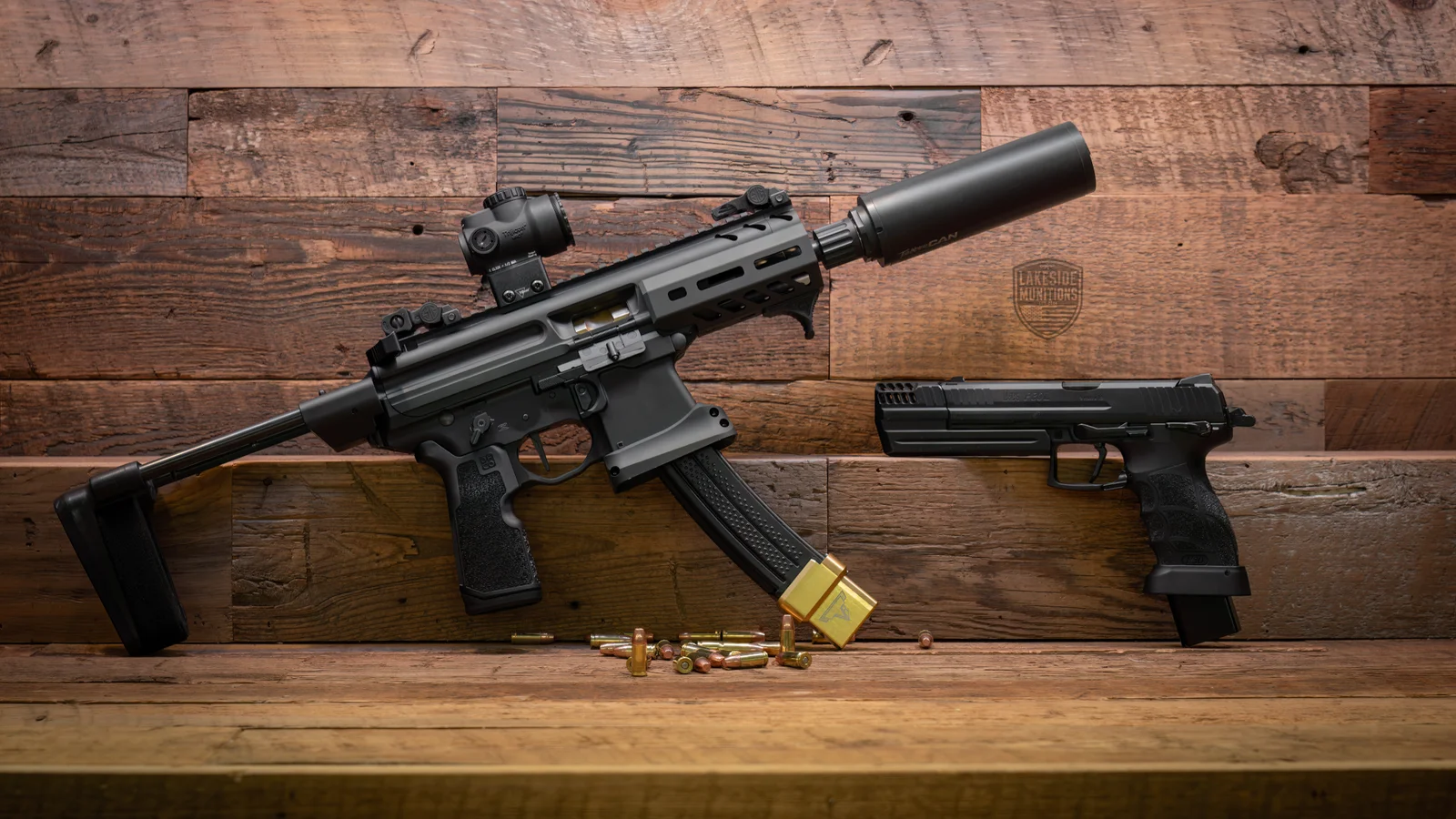
Silencer Shop says higher-pressure rounds make it worse, such as .223, 6.5 Creedmoor and 6 ARC. It says lower-pressure rounds, such as .22 LR, 9mm and subsonic 300 BLK, make less. It also says a suppressor with more internal volume traps more oxygen and pops more.
So the pop depends on your gun, your round and your suppressor, and no single rule fits everyone. If you are curious how it will sound with your setup, ask at the counter and we will tell you what we know. We would rather say “it varies” than promise one answer.
When it comes back
First round pop does not happen on every shot. Silencer Shop says that if the suppressor cools to air temperature, about 10 to 15 minutes, FRP likely returns.
So on a day at the range you may hear one pop at the start of each new string and then smooth shots after that.
Does it hurt your hearing?
Silencer Shop says FRP is not nearly as loud as an unsuppressed shot and is not significant enough to cause hearing damage like one in most cases.
Keep it in proportion. A suppressor does not make a gun silent. Peak sound from firearms runs from about 140 to 175 decibels, according to a peer-reviewed review of hearing loss from recreational shooting. In one study that review describes, suppressors on AR-15 rifles cut the mean peak by 18 to 22 decibels, and they do not always bring the peak below 120 to 140 decibels. So wear hearing protection at the range, whether you hear a pop or not.
What people do about it
Most shooters do nothing. Still, there are a few options you will hear about.
Pick a design built to reduce it. Silencer Shop names the Dead Air Mask, the Thunder Beast Dominus-SR and the SilencerCo Spectre II as designs built to reduce FRP. That is a retailer’s description of those products, so check the maker’s own notes before you decide. We are not saying Lakeside carries any of them. Ask the counter what we can get.
Shoot it wet. This means adding a small amount of water or wire-pulling gel before the first shot. Silencer Shop says the liquid turns to steam and works against the burning oxygen, and says only low-pressure, pistol-type rounds should be shot wet, using about a water bottle cap’s worth.
That limit matters. Not every suppressor is rated to be fired wet. Check your manufacturer’s instructions first. If you are not sure, do not do it.
Keep it warm. Silencer Shop notes a hot suppressor between shots helps keep FRP down. That does not mean rush your shooting. It only explains why the pop tends to show up after a cool-down.
Should first round pop change what you buy?
For most people, no. It is a small quirk, and it should not be the reason to pick one suppressor over another. Fit to your gun, how you plan to use it, and the weight and length matter more.
If you want to hear it for yourself, listen to the first shot of a string, then again after a break. Silencer Shop says a rest of 10 to 15 minutes is the kind of gap after which the pop likely returns. Silencer Shop describes it as a first-shot event that is not nearly as loud as an unsuppressed shot.
If you are choosing a first suppressor, start with what you shoot most. Our post on whether a suppressor is worth it walks through cost and how approval works in Georgia. If you shoot a pistol, our pistol suppressor guide goes deeper on what to look for.
Come see suppressors in person at our Cumming shop. You can handle them, ask about FRP, and start the paperwork with someone next to you at the Silencer Shop kiosk. Read how it works on our suppressors page, or use the contact page to ask a question before you come in.

