

A curio and relic firearm, or C&R, is a gun that federal rules treat as a collector’s piece. The most common way a gun qualifies is by age: it was made at least 50 years ago. If you inherited an older gun, or you are thinking of selling one, the label tells you how the government classes it. It does not tell you what the gun is worth.
This post explains what counts, what the C&R license does, and what to do with an older gun from an estate. It is general information as of November 2026, not legal advice.
What counts as a curio or relic
Federal regulation defines curios or relics as firearms “of special interest to collectors” for some reason other than being a sporting, offensive or defensive gun. A firearm can qualify in one of three ways (27 CFR 478.11):
- Age. It was made at least 50 years before the current date. Replicas of those guns do not count.
- A museum. A museum curator certifies it as a curio or relic of museum interest.
- Rarity or history. A large part of its value comes from being novel, rare or bizarre, or from its link to a historical figure, period or event.
The age rule is the one most families run into. ATF says any firearm that is at least 50 years old, and still in its original configuration, would qualify as a C&R firearm, and that it does not need to be on ATF’s list (ATF, Curios and Relics). Because the clock keeps moving, a gun that did not qualify last year can qualify this year.
There are limits. ATF says it treats surplus military firearms as curios or relics only in their original military configuration, and that frames or receivers of curios or relics are not generally recognized as curios or relics. A rifle that was changed a lot over the years may not qualify, even if the year stamped on it is old enough.
How to find out if yours qualifies. Start with the make, model and serial number, and read the maker’s date of manufacture if you can find it. Then compare it with the three tests above on ATF’s page. If you are not sure, ask us when you bring the gun in. We can look at it together, and for anything legal you rely on, ATF’s own page is the answer to check.

Curio and relic is not the same as antique
People mix these up. Federal law has a separate term, “antique firearm,” that mostly covers guns made in or before 1898 and certain black powder guns, along with some replicas (27 CFR 478.11). A gun can be a curio or relic and not be an antique. A rifle from the 1950s may qualify as a C&R and is far too new to be an antique.
If you are not sure which one you have, the make, model, serial number and date of manufacture are the starting points. Do not guess the year. A mistake here can lead to wrong assumptions about the gun.
What the C&R license does
There is no federal requirement to have a license just to collect firearms. A C&R license is a separate, optional collector’s license. ATF explains that its main benefit is letting a collector acquire C&R firearms in interstate commerce (ATF, Curios and Relics).
Two limits are worth knowing:
- It does not let you deal. A licensed collector is not authorized to be in the business of dealing in any firearms, C&R ones included. A dealer’s license is a different license.
- It covers C&R guns only. For a gun that is not a curio or relic, a licensed collector has the same status as anyone without a license.
You do not need a C&R license to inherit an older gun, to keep it or to sell it to a licensed dealer. The license is for collectors who want to buy C&R guns across state lines. If you only want to keep one gun that has been in the family for years, you have nothing to apply for.
Does C&R status make a gun worth more
Not by itself. C&R is a legal label about age and interest to collectors. A gun’s value depends on what it is, how much of it is original and what shape it is in. Our post on what a gun is worth covers how condition moves the number.
A few things help when an older gun is appraised:
- Original parts. ATF says a gun at least 50 years old and in its original configuration qualifies, so changes to an older gun matter.
- The original box, magazines and papers. Bring whatever came with the gun. On an older or collectible gun, these can matter.
- What you know about it. Who owned it, when, and anything that was changed or replaced.
Do not refinish or “fix” an old gun before you have it looked at. Changes can be hard to undo.
An old gun from an estate
Older guns often show up in estates: a grandfather’s rifle in a closet, a pistol in a drawer. The steps for the family are the same as for any inherited gun. Keep it locked up, write down the make, model and serial number, and take a photo. Our guide to inherited guns in Georgia walks through the legal side, including what changes for suppressors and other NFA items.
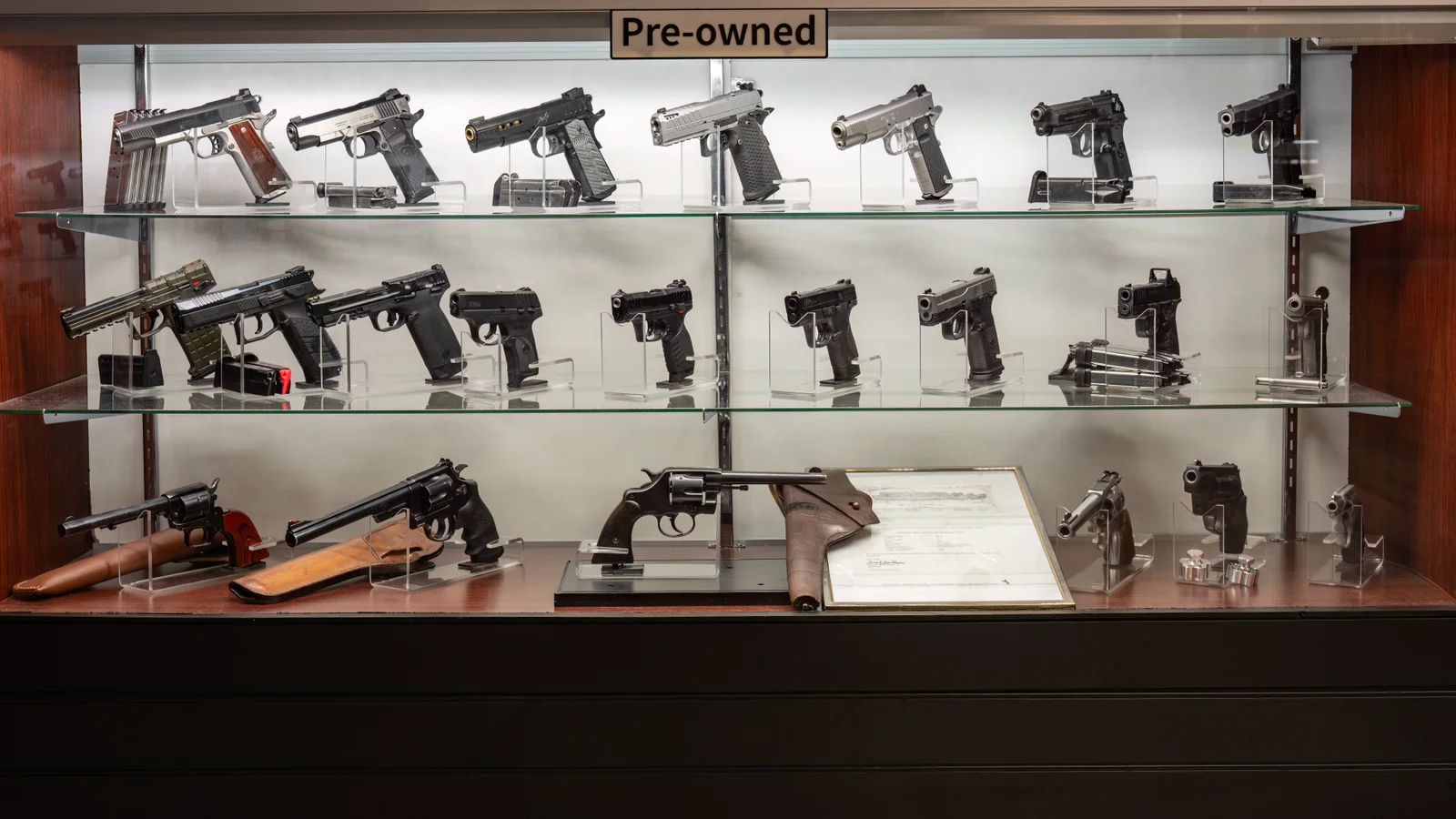
If the family wants to sell, email a list of the firearms to info@lakesidemunitions.com, with serial numbers and details, and a price if you have one in mind. We assess the collection and decide the best course of action. You can bring the guns to our store, or we can travel to locations in the Southeast. We may not buy every gun in a collection, and we will tell you which ones we can. We make an offer on those and pay cash, and we help you understand the value of any guns the family keeps.
Selling one older gun.
If you have a single older gun, the steps are the same as for any gun. Bring a photo ID and the gun, unloaded, along with any box, magazines and extras. The appraisal is free when you want to sell, with no obligation. We run a national average calculation for the gun and agree the number with you before anything else happens. Our bring list for selling a gun has the full list.
If the gun is a suppressor or other NFA item, call us before you bring it. These items need an approved transfer, and our suppressor page explains how that works here.
Bring it in
If you have an older gun and want to know where it stands, bring it to our shop in Cumming. We can look at it with you and tell you what we can offer if you want to sell. See our sell your gun page for how it works, or contact us with a question first.


