

To inspect a used gun, make it safe first, then check the serial number, the wear, the way it works, and what has been changed. Seven checks cover it, and none of them needs special tools. This post walks through each one, using the NRA’s condition standards and federal rules, so you know what to look for and what to ask the seller.
We sell preowned firearms at our shop in Cumming, and we buy them too, so we see both sides of this. If you are on the buying side, this is the list we would want you to have in your pocket. It is general information, not legal advice, checked as of November 2026.
How to Inspect a Used Gun: Start With Safety
Check 1: Make it safe. Before you judge anything, confirm the gun is unloaded. The National Shooting Sports Foundation says to open the action and look at the chamber, the receiver and the magazine, every time you pick up a gun or hand it to someone. It also says never to assume a gun is empty.
Keep the muzzle pointed in a safe direction and your finger off the trigger while you look. If you are at a shop counter, ask to have the gun handed to you with the action open. In a private sale, do the same: open the action yourself and look.
Check 2: Read the Serial Number
Every gun made by a licensed maker carries a serial number. Federal rules require a licensed manufacturer or importer to mark each firearm with an individual serial number on the frame or receiver, cut or cast so that it resists being erased or changed (27 CFR 478.92).
So look for it, and make sure it is whole. Is it there? Can you read every digit? Does it look scratched, ground down or stamped over? Federal law makes it a crime to ship, transport or receive a gun in interstate commerce with the maker’s serial number removed, erased or altered, and also to possess or receive one that has been tampered with if it has ever moved in interstate commerce (18 U.S.C. 922(k)). That is a reason to walk away from a gun with a damaged number, not a reason to haggle.
A dealer records the serial number of each gun that comes in the door, along with the maker, model, type and caliber, and who it came from (27 CFR 478.125). That is true at our shop for every gun we take in.
Check 3: Grade the Wear on the NRA Scale
“Good condition” means very little until you know what it means. The NRA’s modern gun condition standards give each word a meaning:
| Grade | What the NRA standards say |
|---|---|
| Excellent | Nearly new, used very little, with no noticeable marring of wood or metal and intact bluing except at the muzzle or sharp edges |
| Very Good | Fully working, with no appreciable wear on working surfaces, no corrosion or pitting, and only minor surface dents or scratches |
| Good | Safe to use, with minor wear on working surfaces, no broken parts, and no corrosion or pitting that interferes with working |
| Fair | Safe to use but well worn, possibly needing minor parts replaced or adjusted, which should be disclosed when the gun is advertised, with no rust though non-hazardous pits may be present |
Use the table in two ways. First, check the gun against the grade the seller claims. A scratched slide, holster wear and a gritty trigger do not add up to Excellent. Second, treat rust and pitting as a flag at every level. Very Good allows none, and Good allows none that interferes with how the gun works.
Checks 4 and 5: How It Works and What Has Changed
Check 4: Ask whether it works the way it should. On the NRA scale, a Very Good gun is fully working, while Good and Fair guns only need to be safe to use. So function tells you which grade you are really looking at. Ask the seller how the gun has been used. Ask whether it has been fired much, whether anything has been repaired, and whether it has been sitting in storage.
Then use your own eyes. Work the action if the seller or counter lets you, and watch the parts move. Look for parts that bind, move roughly or do not seem to line up. If anything feels wrong, say so and ask about it. A seller who is straight with you will not mind the question.
Once you own the gun, a cleaning is a smart first step. Our gunsmithing is light work done in the shop with posted prices: a cleaning is $35, or $25 if purchased at Lakeside, and the bench fee is $45 an hour. Surface rust cleanup is included during a cleaning, to the best of our ability.
Check 5: Find out what has been changed. Used guns often carry changes: a new sight, a different trigger, a refinished slide, an added optic. None of that is a problem on its own. The point is to know about it.
The NRA standards grade condition, and they do not address bore condition or refinishing, so a grade tells you nothing about either one. Ask directly. Has the gun been refinished? Which parts are not original? Was the work done by a gunsmith? The NRA scale says parts that have been replaced or adjusted on a Fair gun should be disclosed, and a good seller will volunteer the same for any gun.
Changes can add or take away value, and the next buyer may not want them. Our post on what a gun is worth explains why upgrades do not always add back what they cost.
Checks 6 and 7: What Comes With It and the Sale Steps
Check 6: Ask what comes with it. Ask whether the box, extra magazines and any papers come with the gun. For an everyday gun, they matter little. For an older or discontinued one, a box and papers can matter more to a collector. Either way, they are part of the deal, so know what you are getting before you pay.
Check 7: Know the steps for your kind of sale. Buying from a licensed dealer and buying from a private seller are different. When you buy from a dealer, the dealer completes ATF Form 4473 and runs the background check (27 CFR 478.124). A dealer may not sell a handgun to anyone it knows or has reason to believe is under 21, or a rifle or shotgun to anyone under 18 (18 U.S.C. 922(b)(1)).
A private sale between two people who live in the same state is different. ATF’s questions and answers say a person may sell a firearm to an unlicensed resident of their own state if they do not know the buyer is prohibited, and a same-state private sale needs no federal record keeping, no dealer and no Form 4473. That means more of the checking is on you.
If you are the seller, federal law bars a sale to someone you know or have reason to believe is prohibited (18 U.S.C. 922(d)). If you decide to sell instead, our page on selling your gun explains how a sale to us works.
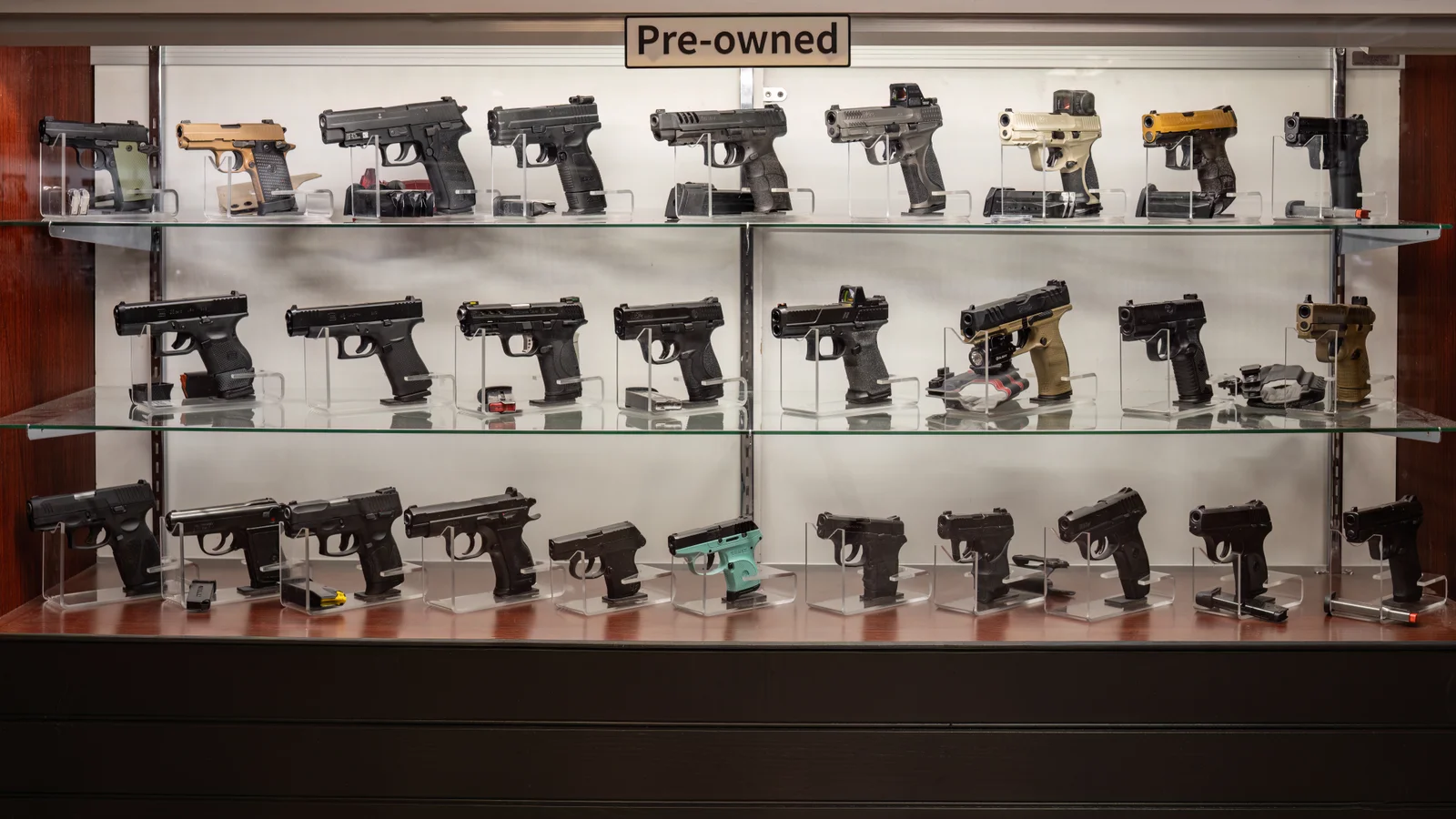
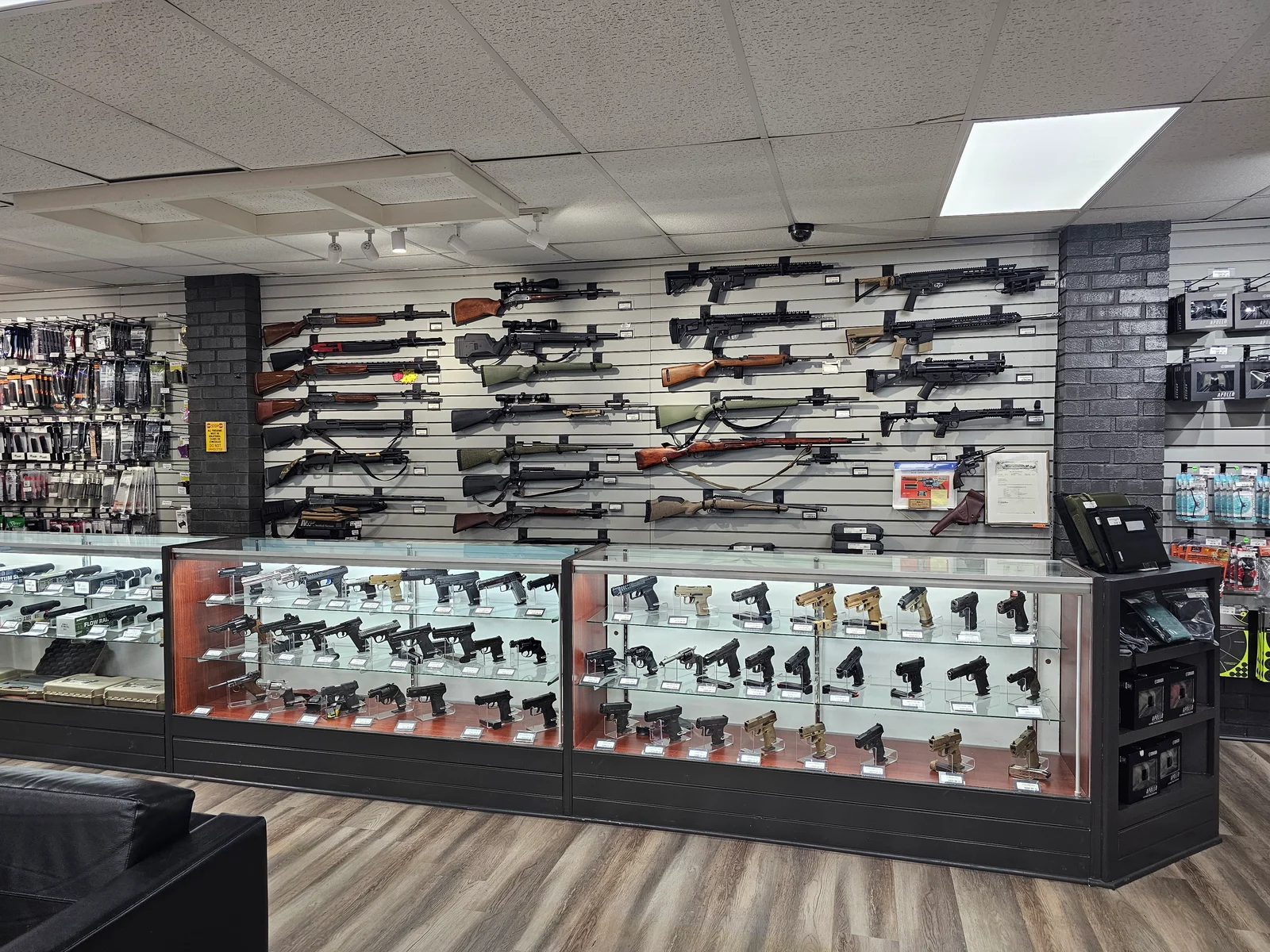
Look at Preowned Guns in Person
Come in, ask questions and handle the guns. Our preowned cases and walls are at 211 Atlanta Rd in Cumming, and the counter will take a gun out for you. We are open Tuesday to Friday, 10 AM to 6 PM, and Saturday, 10 AM to 5 PM. For the next step, see what you need to know about buying or send us a question on the contact page.


