

An FFL is a Federal Firearms Licensee. That means a person or business that holds a license from the federal government to deal in firearms. When you hear “ship it to my FFL,” it just means a gun shop with that license, the kind of place that can legally receive a gun for you and hand it over after the paperwork is done.
Most buyers first run into the term when they buy a gun online. The seller asks for an FFL, and you may have no idea what to say. This post explains what the license is, why the law ties gun sales to it, and how to pick one. It is general information, not legal advice, and it is current as of November 2026.
What does FFL mean?
FFL stands for Federal Firearms Licensee. “Licensee” is the person or business that holds the license. People also use FFL to mean the license itself, or the shop that holds it. All three uses point to the same thing.
The rule behind it is in federal law. 18 U.S.C. 923(a) says no one may engage in the business of importing, manufacturing or dealing in firearms until they have applied for and received a license. The agency that handles those licenses is ATF, the Bureau of Alcohol, Tobacco, Firearms and Explosives.
So an FFL is not a special club. It is simply what the law calls a gun business that has done what the law requires to operate.
Who counts as a dealer?
The federal definition is wide. Under 27 CFR 478.11, a dealer is any person engaged in the business of selling firearms at wholesale or retail. The definition also covers pawnbrokers and people who repair firearms or make or fit special barrels, stocks or trigger mechanisms. It applies whether the work happens at a gun show, online or at a home.
There is also a carve out for ordinary owners. The law says someone who only makes occasional sales or trades to enhance a personal collection, or who sells all or part of a personal collection, is not “engaged in the business” (18 U.S.C. 921(a)(21)). That is why a person selling one gun from their own safe does not need a license. The rules on what counts as being “in the business” have been in the courts, so an owner who sells often should ask a lawyer rather than guess.
What does an FFL have to do?
A licensee carries duties that a private seller does not. Two matter most to a buyer.
Keep records. The same law that requires the license also requires licensees to keep records of receipt, sale and other disposition of firearms (18 U.S.C. 923(g)(1)(A)). Those records stay at the licensee’s place of business.
Complete Form 4473 for each sale. When a licensee sells or transfers a firearm to someone who is not licensed, the buyer fills out ATF Form 4473 and the licensee checks the buyer’s identification document. The licensee also records the firearm’s details, including the serial number, and runs the background check where it applies. The details are in 27 CFR 478.124. We walk through the form itself in our plain guide to Form 4473.
That is the real point of the license. A sale through an FFL leaves a paper trail and includes an identity check. That is by design.
Why do online guns ship to an FFL?
Federal law generally bars a licensee from shipping a firearm across state lines to someone who is not licensed (18 U.S.C. 922(a)). So when you buy a gun from an out-of-state seller, it ships to a licensee near you, and you complete the transfer in person there. We cover the full sequence in can you buy a gun online in Georgia.
In practice it works like this:
- You buy the gun and pay the seller.
- At checkout, you give the seller the shop you picked as your FFL.
- The seller ships the gun to that shop, not to your home.
- The shop logs it in when it arrives.
- You come in with ID, complete the form and background check where it applies, pay the transfer fee, and take the gun home.
The shop you pick does not sell you the gun in this case. It is the legal handoff point. That is why people also call this an “FFL transfer.”
What does an FFL transfer cost?
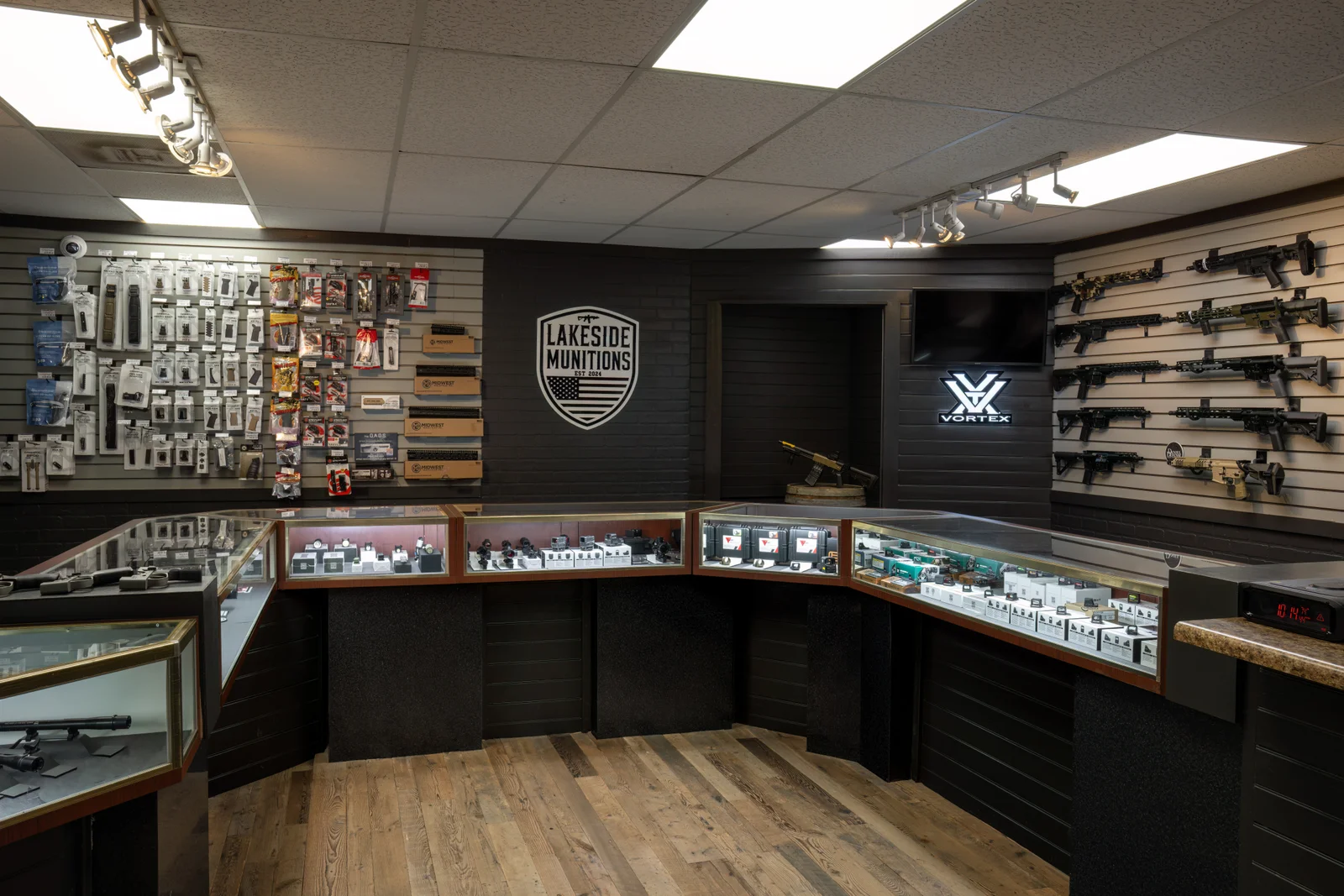
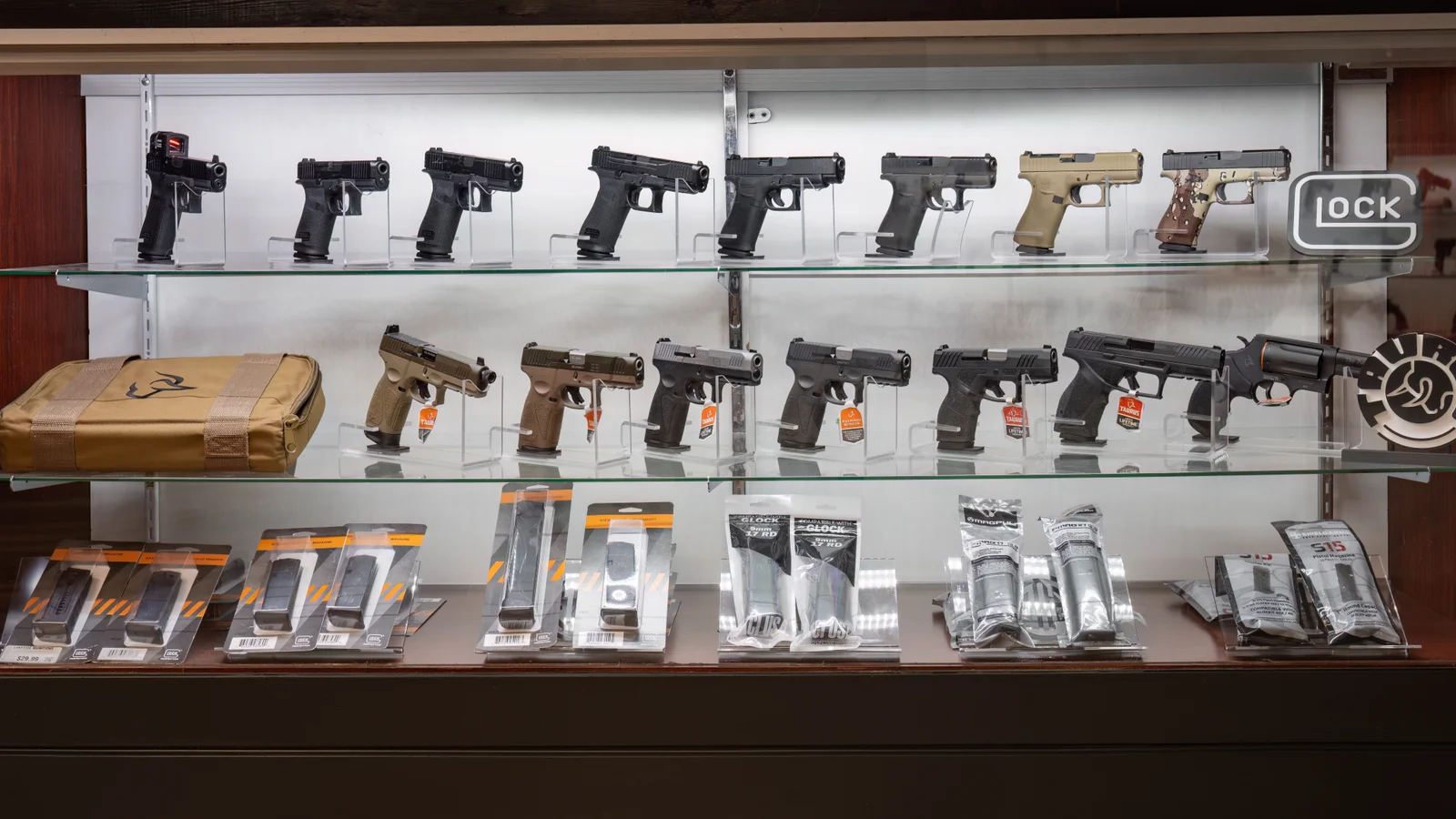
The fee is set by each shop. At Lakeside Munitions, an FFL transfer is $40 flat per firearm. A suppressor or other NFA item bought somewhere else is $100. If you buy a suppressor from us, there is no transfer fee. Fees at other shops are their own, so ask before you pick one.
The fee is only part of the choice. How the shop treats your gun when it arrives matters more. At our shop, we log each transfer in the day it arrives, any day we are open, and we call you right away.
How do you pick an FFL?
Keep it simple. Before you buy, check four things.
- Is the shop open when you can come in? A gun that lands on a day you cannot reach the shop just sits.
- What is the fee? Ask for the price per gun, and ask whether it changes for a suppressor or NFA item.
- When do they log your gun in and tell you? Same day is a good answer.
- Will they take your gun at all? Some shops decline certain transfers. Call before you buy.
Then give the seller the shop’s name and address as your FFL. Many sellers also ask for a copy of the shop’s license. Ask the shop what it sends for that.
What do you need to bring?
For a regular transfer, bring a valid government photo ID with a current address. That is the same rule on our FFL transfers page.
What an FFL cannot do
A licensee cannot skip the form or the check because it knows you. It also cannot complete a transfer to a buyer who fails the background check. If you are not sure you can legally own a gun, talk to a lawyer before you order anything.
The short version
An FFL is a gun business with a federal license. It keeps records, checks ID and completes the paperwork when a gun changes hands. If you bought a gun online, an FFL is the shop where it lands and where you pick it up.
If a gun is on its way and you want it to land at a shop that logs it in the day it arrives, see our FFL transfers page or contact us before the seller ships.

