

ATF Form 4473 is the federal record of a gun sale at a licensed dealer. Its official name is the Firearms Transaction Record. You fill out one when you buy a gun at a gun shop, and when you pick up a gun that was shipped to a shop for you. The dealer fills out part of it too, and keeps it.
If you have never done this, the form can feel like a quiz. It is not. It is mostly your name, address and a list of yes or no questions about whether you are allowed to own a gun. This post covers what the form is for, who completes which part, and what to have ready. It is general information, not legal advice, and it is current as of November 2026.
What is Form 4473 for?
The form does two jobs. It identifies who is getting the gun, and it records that the buyer says they are legally allowed to have it.
Federal law requires a licensed dealer to run a background check before it transfers a gun to a buyer who is not licensed (18 U.S.C. 922(t)). The form is where that is written down.
The rule that requires it is 27 CFR 478.124. It says a licensed importer, manufacturer or dealer must record a sale or other disposition of a firearm to a person who is not licensed on Form 4473.
When do you need one?
Any time a licensed dealer hands a firearm to someone who is not licensed. That covers:
- A gun you buy at the shop’s counter.
- A gun you buy online that ships to the shop for you. We explain the steps in how buying a gun online works in Georgia.
- Handguns, rifles and shotguns alike.
The rule lists a few cases where the form is not required, such as a dealer returning a gun to its owner after repair, or a transfer to another licensed dealer. For most people, if you are picking up a gun from a shop, you fill out the form.
Who fills out which part?
Both of you do.
The dealer identifies the gun. The regulation says the dealer records the manufacturer, type, model, caliber or gauge and serial number of the firearm on the form (27 CFR 478.124).
You complete your section. The rule says the buyer provides identifying information: name, sex, residence, date and place of birth, height, weight, race, citizenship and state of residence. There is also an optional line for a Social Security number, which can help avoid mistaken identity at the background check.
You certify. You state that you are not prohibited from receiving or possessing firearms under federal law, and that you are not buying the gun for someone who is prohibited. Read each question and answer it yourself. The dealer cannot answer for you.
The dealer checks your ID. The dealer examines the identification document you present, notes what type it is on the form, runs the background check, and signs and dates the form if it has no reason to think you are disqualified.
What does the background check do?
For a sale over the counter, the dealer records on the form the date it contacted NICS, the system’s response, and any identification number the system gave. NICS is the National Instant Criminal Background Check System.
If the check does not return an answer, federal law gives a time limit. Under 18 U.S.C. 922(t), when three business days pass without a denial, the dealer may complete the transfer, but is not required to. That is a choice the dealer makes. For some buyers under 21, the window can be longer. If your check is delayed, ask the shop how it handles that.
Georgia law also covers dealer transfers. A dealer sale in Georgia is subject to the NICS check under O.C.G.A. 16-11-172.
Who cannot buy a gun?
The certification on the form rests on federal law. 18 U.S.C. 922(g) lists the people who may not receive or possess a gun. The list includes people convicted of a felony, fugitives, unlawful drug users, people found by a court to be mentally ill, certain non-citizens, people with a dishonorable discharge, people who renounced citizenship, people under certain protective orders and people convicted of a domestic violence misdemeanor.
Georgia has its own rule for felons. Under O.C.G.A. 16-11-131, a person convicted of a felony, and a person on felony first-offender probation, may not receive or possess a firearm.
If you are not sure whether one of these applies to you, do not guess on the form. Ask a lawyer first. The dealer cannot decide that for you, and it cannot complete a sale to someone who fails the check.
How old do you have to be?
Federal law sets the age at a licensed dealer. You must be at least 18 to buy a rifle or shotgun from a dealer, and at least 21 to buy a handgun (18 U.S.C. 922(b)(1)).
What should you bring?
Bring a valid government photo ID with your current address.
Take your time with the form. Answer the questions yourself, and ask the person at the counter if a question is unclear. The form is a federal record, so a rushed answer is a poor way to start.
Is the 4473 the same as a Form 4?
No. They are two different forms for two different jobs. The 4473 is the record of a sale at a licensed dealer, and it is used for ordinary guns and for suppressors. A Form 4 is the ATF application to transfer an NFA item such as a suppressor. For a suppressor, ATF approval comes first, and once it is approved the pickup at the shop includes a standard 4473. We cover the difference in 4473 vs Form 4, and the buying steps are on our suppressor page.
What happens to the form after?
The dealer keeps it. The rule says each form must be kept in order, either by buyer’s name, by date of sale or by transaction number (27 CFR 478.124).
What we do at our shop
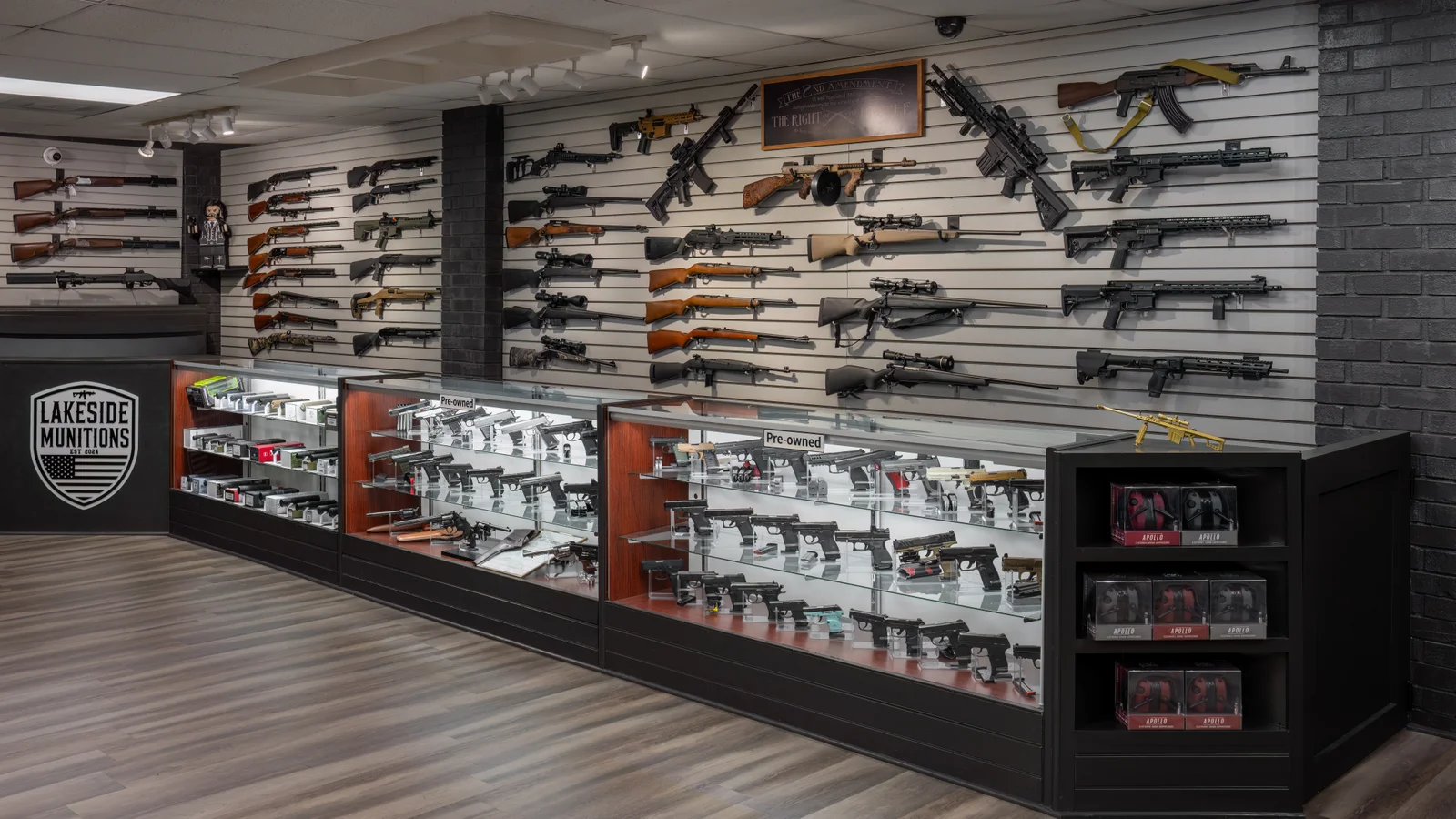
If you bought a gun online and picked Lakeside Munitions as your FFL, the steps are the same ones above. We log the gun in the day it arrives, any day we are open, and call you. You come in, fill out the 4473 here, and pay the flat $40 transfer fee per firearm. Our FFL transfers page has the full list of what to bring. If you have a question about the form before you come in, contact us or call the shop.

