

A suppressor and a silencer are the same device. Federal law uses the word “silencer.” Most makers, dealers and owners say “suppressor.” There is no extra paperwork, no different rule and no different product behind either word.
The names do tell you something, though. This post explains where each one comes from, what the law actually says, and why the word “silencer” is a little misleading. It is general information, not legal advice, checked against the sources below as of November 2026.
Suppressor vs silencer: the short answer
Same thing, two names. Here is how the words are used:
- Silencer is the word in federal law and the one ATF uses. It is also the older word.
- Suppressor is the everyday word among owners, and it fits better, because the device lowers the sound of a gunshot. It does not remove it.
- Muffler shows up too. The federal definition covers “firearm silencer” and “firearm muffler” together.
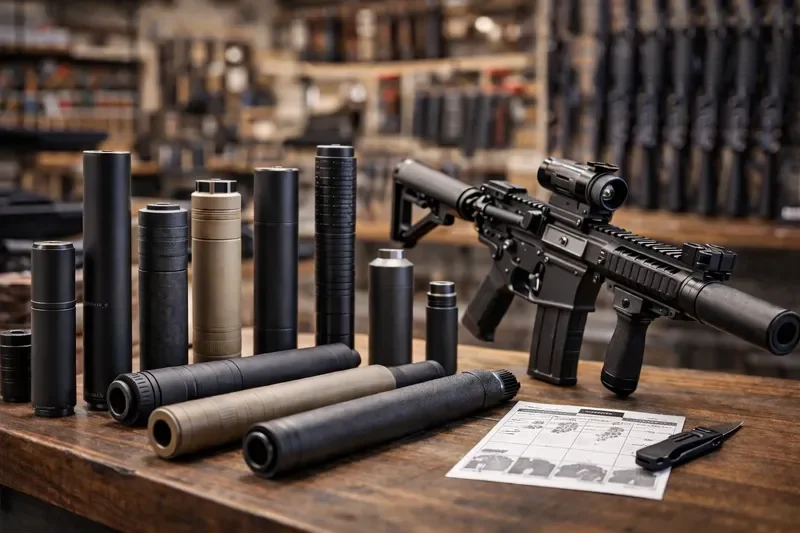
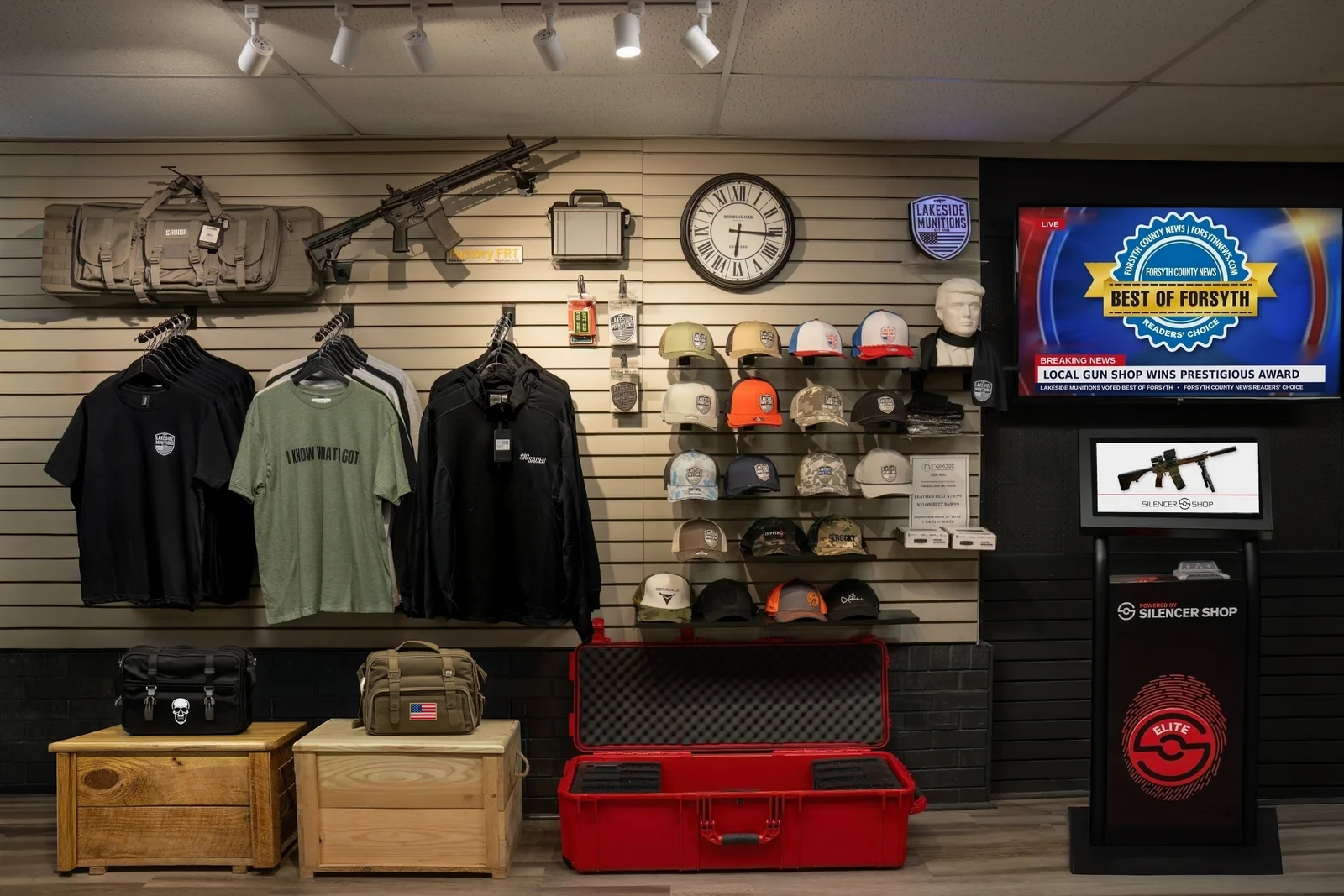
You will see both words on the same rack, on the same form and in the same statute. A company can use one name and its customers the other. Silencer Shop, where Lakeside is an Elite dealer, uses “silencer” in its own name, and kiosk and counter conversations still use both words.
What federal law says
The legal wording is in two places. The Gun Control Act, at 18 U.S.C. 921, defines “firearm silencer” and “firearm muffler” as any device for silencing, muffling or diminishing the report of a portable firearm. That includes any combination of parts designed or redesigned, and intended for use in assembling or fabricating a silencer or muffler, and any part intended only for use in such assembly or fabrication.
The National Firearms Act then lists what it treats as a “firearm.” Item seven on that list in 26 U.S.C. 5845 is “any silencer,” as defined in the section above. That link is why a suppressor goes through ATF’s NFA process, the Form 4 paperwork, and not through the usual 4473 alone. We explain how long that takes in our Form 4 wait times guide.
The law also treats the finished device as a registered item with a serial number. ATF’s August 2026 letter explains that its 2022 final rule made the outer tube the “frame or receiver” of a silencer, which is the part that gets marked, and that a complete silencer must be marked and registered as a firearm under the NFA. So the legal word covers the whole device and every part made for it.
The word “suppressor” is not in either of those federal definitions. That is the only real “difference” between the two terms, and it is about vocabulary, not the device. ATF uses the legal word too. The federal definition covers not only the device but “any part intended only for use in such assembly or fabrication.” So a loose baffle that can only be used in a silencer is, under that definition, a silencer too.
What Georgia calls it
Georgia’s code uses both words. The hunting rule at O.C.G.A. 27-3-4 refers to “silencers or suppressors” in the same paragraph, and the weapons code in 16-11-124 says “silencer.” The two words are not treated as two different things. If a Georgia rule applies to one, it applies to the other. We cover the legal side in who can own a suppressor in Georgia and the hunting rule in hunting with a suppressor in Georgia.
An old device, and why “suppressor” fits
The idea is more than a century old. Hiram Percy Maxim filed for a patent in 1908, and it was granted on March 30, 1909 as U.S. Patent 916,885, titled “Silent firearm.” The patent says the aim was to make a firearm discharge quieter, with a device on the muzzle that sets the escaping gases spinning so their energy fades before they reach the air.
The patent’s title promises a “silent” firearm, and “silencer” is still the word in federal law today. The idea behind the patent was to quiet a shot, and that is still all any of these devices do.
A gunshot is loud, and a suppressor lowers it by a measurable amount, not to nothing. In a study by federal and university hearing researchers, suppressors cut peak sound at the shooter’s ear by 17 to 24 decibels. The same authors tell shooters to wear hearing protection anyway, because the cumulative exposure from suppressed guns can still be a significant hearing risk.
That is why many owners prefer “suppressor.” It says what the device does: it suppresses sound. Real suppressed guns are quieter, and still loud. We break that down in suppressor myths, measure it in how loud a suppressed gun is and cover the safety side in are suppressors hearing safe.
Does the word matter when you buy?
No. At the counter, you can say either, and nobody will correct you. The product, the ATF form and the process are the same:
- You pick a suppressor.
- You pass a background check and submit the Form 4 with fingerprints and photos.
- ATF approves the transfer.
- You take it home.
At Lakeside, the forms and fingerprints are done in the shop with a person next to you, and there is no transfer fee when you buy the suppressor from us. The $100 transfer fee only applies to one bought somewhere else and shipped to us. We also handle the filing questions, such as individual versus trust, which we explain in our trust or individual guide.
If you are searching online, search both words. Some stores, brands and forums use one and some use the other, and you will miss good information if you stick to a single term. The same goes for a form or a question to a dealer. “Can I buy a silencer here?” and “Do you sell suppressors?” get the same answer, and the same list of steps.
One more word you may see is “muffler.” It appears in the federal definition, next to “silencer,” and it covers the same kind of device. It is worth knowing if you ever read the statute itself.
Where to go from here
To sum up: the device is the same, the law says silencer, owners say suppressor, and Georgia’s code uses both. Nothing about the buying process changes with the word you pick. What does change the process is how you file, as an individual or through a trust, and whether the suppressor was bought from us or elsewhere. Those are the questions worth spending time on.
If you came here with a question about a word, the answer is that it does not matter. If you came here because you are thinking about buying one, we are glad to talk. Start with our suppressor page to see how buying one works in Cumming, or send us a question before you drive over.
Sources: 18 U.S.C. 921 and 26 U.S.C. 5845 (Cornell Legal Information Institute), O.C.G.A. 27-3-4 and 16-11-124 (FindLaw copies), U.S. Patent 916,885, and the Int J Audiol 2018 suppressor study.


