

A good home defense shotgun is one you can handle well, that fits your body, and that you will practice with. Gauge, action and barrel length all matter, but fit and practice matter more than any spec on a box.
This post covers the choices a first-time buyer faces: gauge, pump or semi-auto, barrel length, and the three kinds of shotgun ammunition. It is general information, not legal advice, and the rules cited here are current as of November 2026.
Home Defense Shotgun Gauge: 12 or 20
Most home defense shotguns are a 12 gauge or a 20 gauge. The 12 gauge is the older standard and has the widest choice of guns and shells. It also kicks harder.
The 20 gauge is a smaller shell with less recoil. For a smaller shooter, or anyone who flinches on the first shot, a 20 gauge you shoot well can be a better pick than a 12 gauge you dread. Shell choice for a 20 gauge is narrower, so ask what is easy to find before you commit.
Neither gauge is “wrong.” The better question is which one you will actually take to the range and shoot often enough to get comfortable. If you can, handle both at the counter and see how each one comes up to your shoulder.
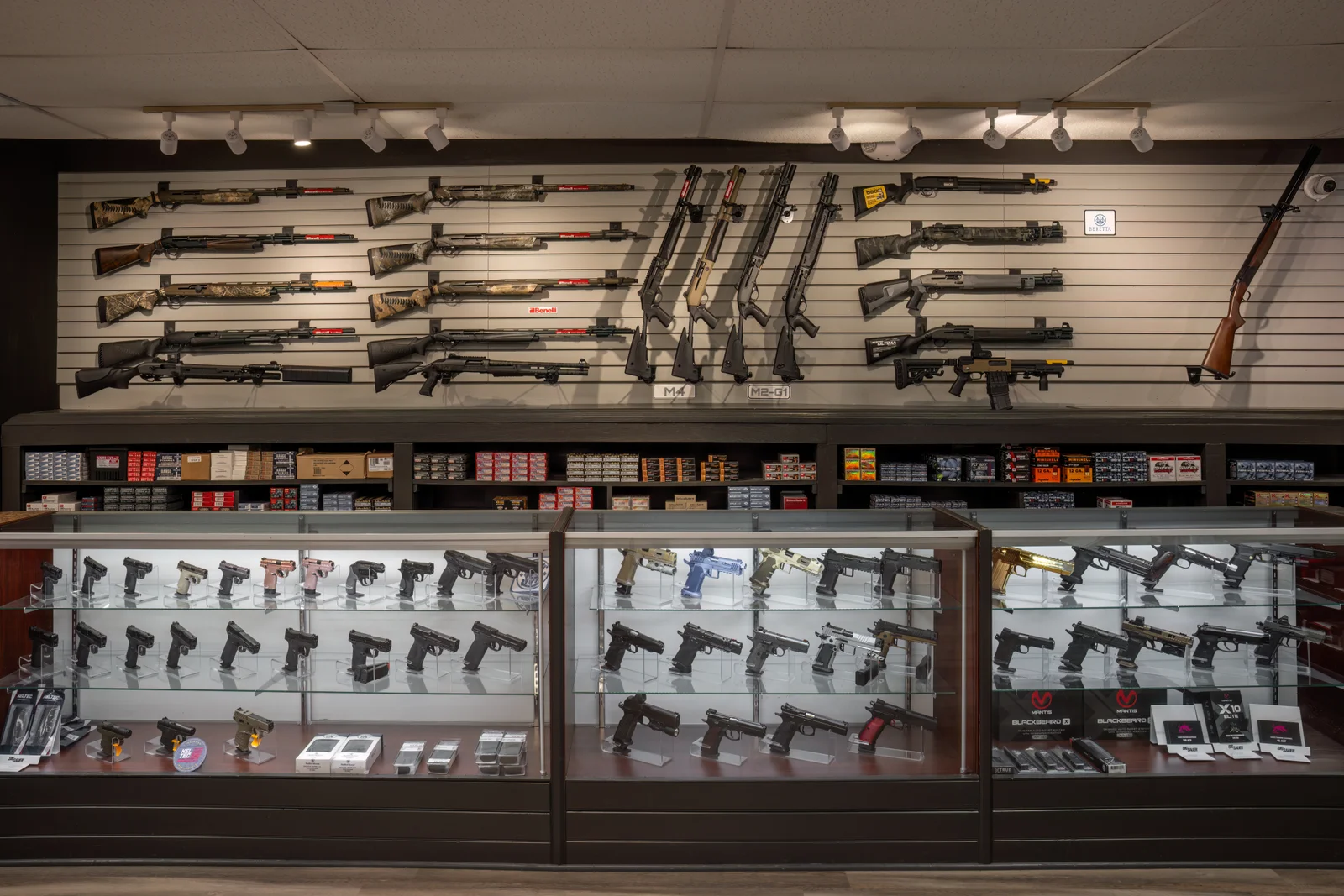
Pump or Semi-Auto
A pump-action shotgun is worked by hand: you slide the forend back and forward to load the next shell. It has fewer moving parts and is the traditional choice. It asks you to run the action on every shot, and that takes practice.
A semi-auto loads the next shell for you after each shot. It is easier on the shooter’s shoulder because part of the recoil goes into cycling the action, and many people find it quicker to shoot well. It has more moving parts, so it needs regular cleaning and a decent amount of range time with the ammunition you plan to keep in it.
If you are not sure, ask yourself two questions. Do you want to learn a manual action? And will you clean and test the gun often? A pump suits someone who wants simple. A semi-auto suits someone who wants lighter recoil and will keep up with care. Our post on how often to clean your gun covers the care side.
Barrel Length and the Federal Rule
Longer barrels are easier to aim and are steadier. Shorter barrels are easier to turn in a hallway or around furniture. Many home defense shotguns sit in a middle range, and the right length depends on your height and your home.
There is one hard line. Under federal law, a shotgun with a barrel of less than 18 inches is a “firearm” under the National Firearms Act, which means it is regulated like a suppressor or a short-barreled rifle (26 U.S.C. 5845). The same section covers a weapon made from a shotgun with an overall length under 26 inches. Cutting a barrel down is not a casual change, because it can turn an ordinary shotgun into a regulated one.
For almost every buyer, the answer is simple: buy a shotgun whose barrel is 18 inches or longer, and ask the counter to confirm the length before you pay.
Birdshot, Buckshot and Slugs
Shotgun shells come in three broad kinds.
- Birdshot is a lot of small pellets. It was made for birds, small game and clay targets.
- Buckshot is a smaller number of larger pellets. It was first used for deer and is now the usual choice for defensive use.
- A slug is one large projectile.
Liberty Safe’s birdshot, buckshot and slug guide notes that birdshot carries less risk of going through walls, but that experts generally do not consider it a good choice for defense. It also notes that slugs suit places where going through a wall is not a major concern, such as a rural property with no close neighbors. In its informal tests, larger buckshot kept going through several sheets of drywall.
Take two points from that. First, every shotgun load can go through walls, so what is behind your target matters. The National Rifle Association lists “identify your target and what is beyond it” among its basic rules (NRA gun safety rules). Second, the exact load is worth a conversation at the counter, not a guess from a blog. Different guns shoot different loads differently, and you should pattern your own gun at the range to see what it does.
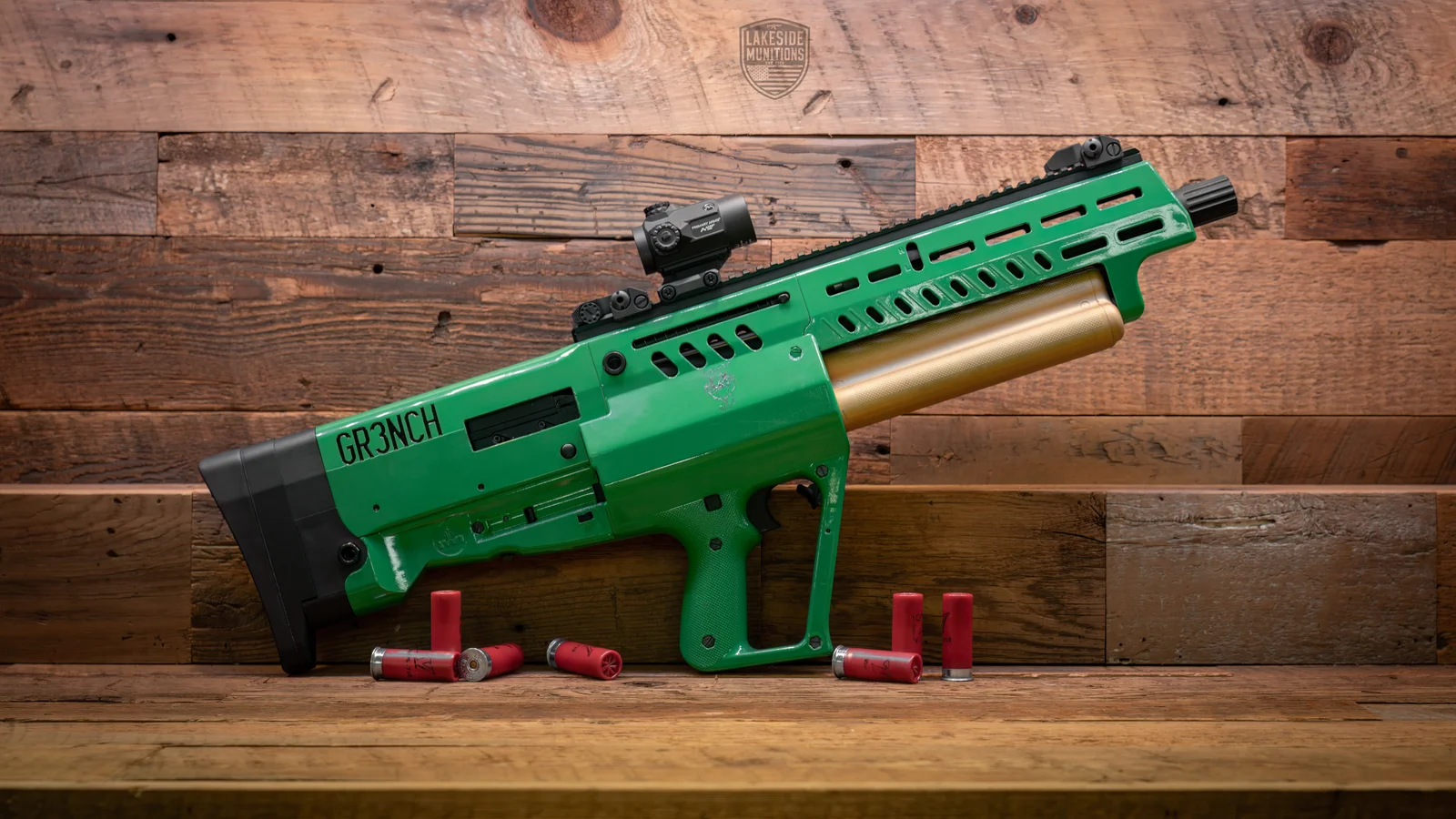
Shot Sizes in Plain Numbers
Liberty Safe’s guide gives some numbers worth knowing. Birdshot pellets run from #9 (about 0.08 inch across) up to #1 (about 0.16 inch), and then to larger BB sizes. A 1⅛-ounce load of #8 lead has about 460 pellets, while the same weight of #4 has about 153. Buckshot pellets are bigger, from #4 (about 0.24 inch) up to 000 (about 0.36 inch). In a 2¾-inch 12 gauge shell, a #00 load holds 8 to 9 pellets, a #1 load holds 12 to 16, and a #4 load holds 21 to 28.
The pattern is simple. Smaller pellets mean more of them, and bigger pellets mean fewer of them. The label on the box tells you the shell length and the shot size, so read it, and make sure your gun is made for that shell length. The NRA lists using only the ammunition the gun is designed for among its basic rules (NRA).
Fit, Sights and Lights
A shotgun that fits you is easier to shoot well than a better gun that does not. The distance from the trigger to the end of the stock, called length of pull, should let you reach the trigger without stretching or crowding. Check that the gun comes to your shoulder with your head upright and your eye lined up with the sights.
Sights are the next choice. Many shotguns come with a simple bead. Some people add a red dot or a rail-mounted light. If you add an optic, bring the gun in and we can mount it for the posted price on our gunsmithing page. If you buy the part here, installation is free. A newly mounted optic needs to be checked on a target at the range. Our post on bore sighting a rifle shows the idea for a rifle scope.
Do not buy a pile of accessories before you have shot the plain gun. Add one thing at a time and go back to the range after each change.
Storage and Practice
A home defense gun that anyone in the house can reach is a risk as well as a tool. The NRA’s rules say to keep guns away from unauthorized people, and to remember that locks and mechanical safeties can fail and do not replace safe handling (NRA). Decide on a storage plan before you bring the gun home, and make it one every adult in the house understands.
Practice matters just as much. Put a few hundred rounds through the gun, learn how it loads and unloads, and learn what its recoil feels like. Wear eye and ear protection on the range. That is one of the NRA’s basic rules too, and a shotgun is loud.
Questions to Ask Before You Buy
Bring this short list to the counter.
- Does this gun fit me when I hold it up to my shoulder?
- What shell length does it take, and is that shell easy to find?
- How does the action work, and can I work it smoothly?
- What is the barrel length, and is it 18 inches or longer?
- Can I add a light or a red dot, and what does that cost?
- How do I take it apart and clean it? Our post on cleaning kit essentials lists what you will need.
If you are still deciding between a shotgun and a handgun, our post on buying your first gun in Georgia walks through what to expect at the counter.
What to Do Next at Lakeside
Come by the store in Cumming and handle a few shotguns. Tell us your height, your experience and what you want to use the gun for, and we will point you to what fits. Shotguns are one of the categories you can browse in our online store, and if you want something we do not have on the wall, ask us about a special order. The contact page has our hours and a form if you would rather ask first.
