

Yes, gunshots can hurt a dog’s ears. A 2018 study of 50 pointers found signs of acoustic trauma, which means hearing damage from loud sound, in hunting dogs exposed to firearm noise. A suppressor lowers the sound a dog hears, but no study we found shows it makes a shot safe for a dog.
This post is general information, not veterinary advice. The research on dogs is small, so we say plainly what is known and what is not. If your dog works near gunfire, your veterinarian is the person to ask about its hearing.
Do gunshots hurt dogs’ ears?
They can. The loud, short bang of a gunshot is the kind of sound that damages hearing in people, and the same kind of damage shows up in dogs.
Veterinary researchers in Turkey tested 40 hunting dogs and compared them with 10 puppies that had not been around gunfire. They used a brainstem auditory test, which measures how the dog’s brain responds to clicks and tones, plus a middle ear test. The authors concluded that firearm noise causes acoustic trauma in dogs. Their main evidence was a clear drop in the size of the brain’s response to click sounds in the hunting dogs. The paper is titled “Does acoustic trauma occur in pointers due to firearm noise? A prospective study on 50 hunting dogs” and ran in the Ankara University veterinary faculty journal in 2018.
Be fair about its limits. It is one small study. It does not tell you how many shots a dog needs to hear before damage shows. The authors suggested dog-specific hearing protection and more hunter awareness as ways to prevent it.
What a case report adds
A second source is a 2019 case report from the University of Illinois, “Noise-Induced Hearing Loss in 3 Working Dogs”, published in Topics in Companion Animal Medicine. Three working dogs were diagnosed with noise-induced hearing loss after loud noise. Each had a normal physical and neurologic exam, and the same brainstem test showed deafness in both ears.
The outcomes differed. One dog did not get its hearing back but kept working, with handlers changing how they gave commands, using hand signals. One dog was lost to follow-up. The third was treated with vitamins and an antioxidant supplement and regained hearing about two months later, based on a repeat test. Three dogs cannot tell you how common this is, and the report does not say that treatment is a reliable fix. What it does show is that the hearing loss can be real, can be total, and sometimes does not come back.
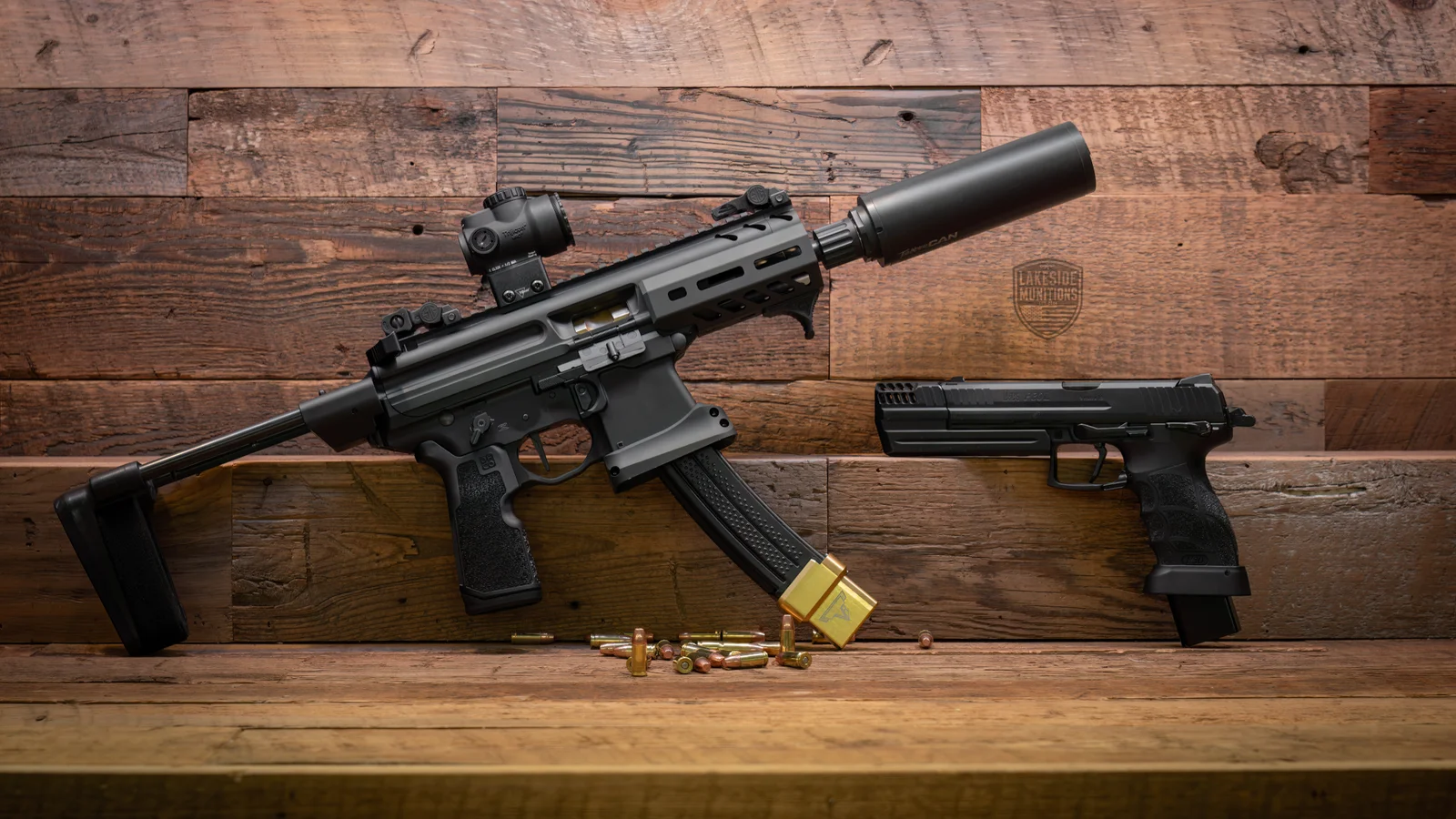
How loud is a shot compared with the safe limit?
Nobody has published a dog-specific safe limit that we could find, so the best yardstick is the one for people. NIOSH, the federal hearing research agency, recommends that a single loud impulse not go above 140 decibels of peak sound, and that one event at 140 would use up a person’s whole daily allowance. NIOSH measured firearms between 144 decibels for a .22 rifle and 172 decibels for a .357 revolver. Those readings were taken for human exposure, not dogs, so treat them as a rough guide only.
Where the dog stands matters. A study of suppressors by federal and university hearing researchers, published in the International Journal of Audiology, put microphones at several spots around test firearms. At the microphone about a meter behind the shooter, unsuppressed peaks ran from 123 to 150 decibels across the rifles and the pistol tested. At the muzzle end they ran from 149 to 176. A dog that is out ahead of the shooter, or crowded against the muzzle, gets a louder shot than one sitting behind.
A decibel number is not linear, so small differences hide big changes. NIOSH’s guidance says a sound 10 decibels louder is ten times more intense. The gap between a 123 decibel reading and a 150 decibel reading is not a little. It is a very large difference in sound energy.
What a suppressor does for a dog
A suppressor lowers peak sound. In that same study, suppressors cut peak levels at the microphone behind the shooter by 20 to 28 decibels. In those tests, suppressed peaks at that spot ran from 100 to 123 decibels. The sound at the muzzle end dropped too, with suppressed peaks from 128 to 150.
So a suppressor makes the same shot quieter for a dog standing in the same place. What the studies did not do is measure at a dog’s ear or test a dog’s hearing after suppressed shots. That means we cannot tell you a suppressed shot is safe for a dog, and nobody honest can. The study’s own authors say that the total of all your shots over time can still be a real hearing risk, even with a suppressor, which is why they say to wear hearing protection whenever shooting or hunting. We cover that research in are suppressors hearing safe.
The ammunition matters as well. In that study, the sound reductions were larger with low-velocity ammunition than with high-velocity ammunition in the same firearms. The authors tie that to the crack that a supersonic bullet makes as it flies, which a suppressor cannot take away.
What you can do
The studies do not give a rule, so here is what follows from them, offered as common sense and not as veterinary advice.
- Think about where the dog stands. The tests above show the shot is much louder at the muzzle end than behind the shooter. Keeping a dog away from the front of the gun and from right beside it cuts what it hears.
- Think about how many shots, not just how loud. The human research, including the suppressor study above, stresses that exposure adds up over many shots. It is reasonable to assume the same holds for a dog, though the dog studies did not test that.
- Ask about hearing protection made for dogs. The Turkish authors suggested it. We do not have a study that says how well any product works, so ask your veterinarian before you buy one.
- Watch for a change. If your dog stops responding to commands or sounds it used to answer, tell your veterinarian. The brainstem test used in both studies is how vets measure a dog’s hearing, and the Illinois case report shows that early care mattered for at least one dog.
If you hunt with a dog and a suppressor, Georgia has its own rules on where a suppressor may be used for hunting. We explain them in hunting with a suppressor in Georgia. Buying one starts with a federal approval, covered on our suppressor page.
Where to go from here
The short version is that a gunshot can hurt a dog’s ears, a suppressor makes the shot quieter but is not proven safe for a dog, and distance and shot count both matter. If you are thinking about a suppressor partly for your dog, we are glad to talk it through at the counter in Cumming. See how buying one works on our suppressor page, or send us a question before you drive over.
Sources checked November 2026: the two dog studies above, NIOSH’s hearing guidance for hunters and shooters, and the peer-reviewed suppressor study by NIOSH and university researchers.


