

Scope ring height is the distance from the top of the mount to the spot where the scope sits. The right height is the lowest one that lets the front of the scope, called the objective bell, clear the barrel by a few millimeters. Go lower and the scope touches the barrel. Go higher than you need and you lift your head off the stock.
This post gives you the size chart, a simple way to check, and the mistakes to avoid. It is general information. The scope maker’s spec sheet and the rings’ own instructions come first.
What Scope Ring Height Means
Rings are the clamps that hold a scope to the base on your rifle. They come in different heights, and the names are low, medium, high and extra-high.
The height that matters is the one that puts the scope at the right level over the barrel and receiver. Weaver, a maker of mounts and rings, describes ring height as the distance from the top of the mounting base or rail to where the scope sits. Two things set it for you: how big the objective bell is, and how much room the barrel and any rear sight take up.
The One Rule: Clear the Barrel
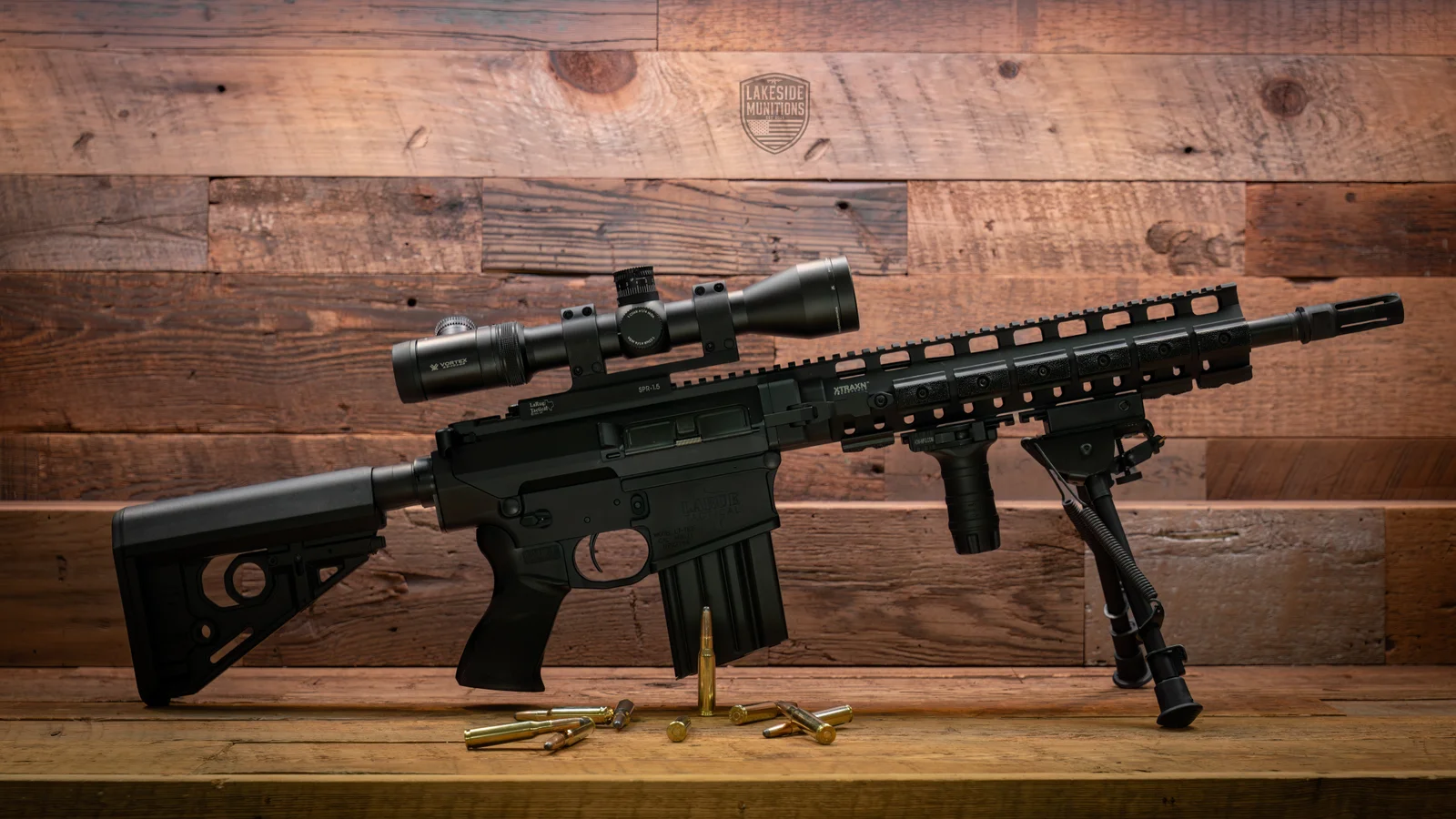
The objective bell is the wide front part of the scope. It has to clear the barrel, and the rear sight if there is one. If the rings are too low, the bell touches the barrel.
Weaver advises a gap of about 2 to 4 millimeters as a safe minimum. That is a small gap. It also leaves room for a lens cap. If clearance is tight, Weaver says to go up one ring size.
The bell is usually a little wider than the lens size on the box, so measure the bell itself or look it up in the scope’s specs. Weaver says to check actual measurements or the maker’s guidance, because “low” and “medium” are not the same from one brand to the next.
Ring Height Chart
Weaver publishes a chart for its 1-inch rings. Use it as a starting point, not a final answer.
| Ring height | Saddle height | Objective size it fits |
|---|---|---|
| Low | about 0.15 inch | up to 40 mm |
| Medium | about 0.27 inch | up to 50 mm |
| High | about 0.40 inch | up to 56 mm |
| Extra-high | about 0.52 inch | over 56 mm |
A few more notes from Weaver:
- Scopes around 40 to 44 mm may go low or medium, depending on the rifle.
- A 50 mm objective usually calls for medium rings.
- Weaver’s 30 mm medium rings are listed for objectives up to 56 mm.
- A Picatinny or Weaver rail adds base height, so a rail may let you use one size lower than a rifle without one.
That chart is for one brand, so another brand’s sizes can differ. Always look at the maker’s chart for the rings you plan to buy.
How to Check It
You can test the fit before you ever tighten a screw.
- Make the rifle safe. Unload it and check the chamber.
- Set the scope in the open rings. Do not tighten them yet. Look from the side at the gap between the front of the scope and the barrel.
- Look for a gap of 2 to 4 millimeters. Weaver gives that as a safe minimum.
- Check the other end. On a bolt-action rifle, run the bolt through its full travel. Weaver says to check that the bolt handle does not hit the scope or the rings.
- Do a comfort test. Close your eyes and put the rifle to your shoulder, with your cheek in a natural spot. Open your eyes. If you see the center of the scope, the height is right. If you see the bottom or top of the scope, or you look over it, the rings are probably too low. If you have to lift your head to see through it, the rings are probably too high.
The comfort test matters as much as the clearance check. The best rings clear the barrel, and also let you rest your cheek on the stock.
If your rings do not fit. Say you set the scope in the rings and the gap is too small. Weaver’s advice is to go up a ring size. Say the comfort test shows you looking at the top of the scope, or over it. That points to rings that are too low, so you also go up. Say you have to lift your head to see through the scope. Those rings are probably too high, so you go down, as long as the bell still clears the barrel.
It is worth getting the height right before you tighten everything down. Take the scope, the rifle and the rings to the counter together if you can, so you can test the fit with all three in your hands.
Common Mistakes
Buying rings by the scope’s tube size alone. The tube size, 1 inch or 30 mm, tells you which diameter ring fits. It does not tell you the height. You need both.
Going too low. A low ring may look neat, but if the bell touches the barrel it is too low. Weaver says to go up a size when clearance is tight.
Going too high. Taller rings than you need lift the scope. Weaver says that if you have to lift your head to see through the scope, the rings are probably too high.
Skipping the bolt check. A scope that clears the barrel can still block the bolt handle on some rifles.
Trusting a label. Weaver notes that the words “low” and “medium” are not universal. Look at the real measurement.
After the rings: Once the rings fit, the scope still needs to be mounted level and sighted in. Our post on how to mount a scope covers the mounting steps, and how to bore sight a rifle gets your first shots on paper.
What It Costs at Lakeside
Lakeside Munitions posts a price for every gunsmithing job. An Optic Mount is $45, for a red dot or a magnified optic, and a Bore Sight is $15. Both are on the gunsmithing price list. If you buy an item from Lakeside Munitions, we install it for free.
Posted prices are for a firearm in factory condition. If other changes have been made to the gun, we look at the job first, and the cost may vary. The work is done at the shop, not shipped out, and it is walk-in with no appointment needed.
If you are not sure which ring height your scope and rifle need, bring both in and ask. We do not list specific rings on this page, so ask the counter what is on the shelf. You can also send us a message first.
We are at 211 Atlanta Rd in Cumming, open Tuesday through Friday 10 to 6 and Saturday 10 to 5. See the gunsmithing page for the full price list.


