

To mount a red dot on a pistol, the slide has to have a place for it. That place is either a factory optic cut, an adapter plate that bolts into a slide that was made for plates, or a cut machined into the slide. Which one you need depends on your pistol and the optic you want. If your pistol has no optic cut at all, a plate alone will not fix that.
This post lays out the three routes, how the screws and plates fit, and what to check before you spend money. It is general information from the makers. Our own part in it is small, and we say exactly what that is near the end.
What Are the Three Ways to Mount a Red Dot on a Pistol?
There are three common starting points:
- The pistol is optic-ready from the factory. The slide already has a cut, and the optic bolts on directly or through a plate. GunTalk is careful on this point: “optics ready” does not mean the slide accepts every optic. The footprint, the pattern of the mounting holes, still has to match.
- The pistol uses an adapter plate system. Glock’s Modular Optic System (MOS) is one example. Glock says standard MOS pistols come with a single adapter plate that fits Trijicon, Ameriglo and Holosun optics (except the Holosun 509). Other optics may need a different plate sold separately.
- The slide gets cut. If the pistol has no optic cut and no plate system, someone has to machine the slide. GunTalk says that for a pistol with no optic cut at all, the choices are slide milling or a dovetail-mount adapter.
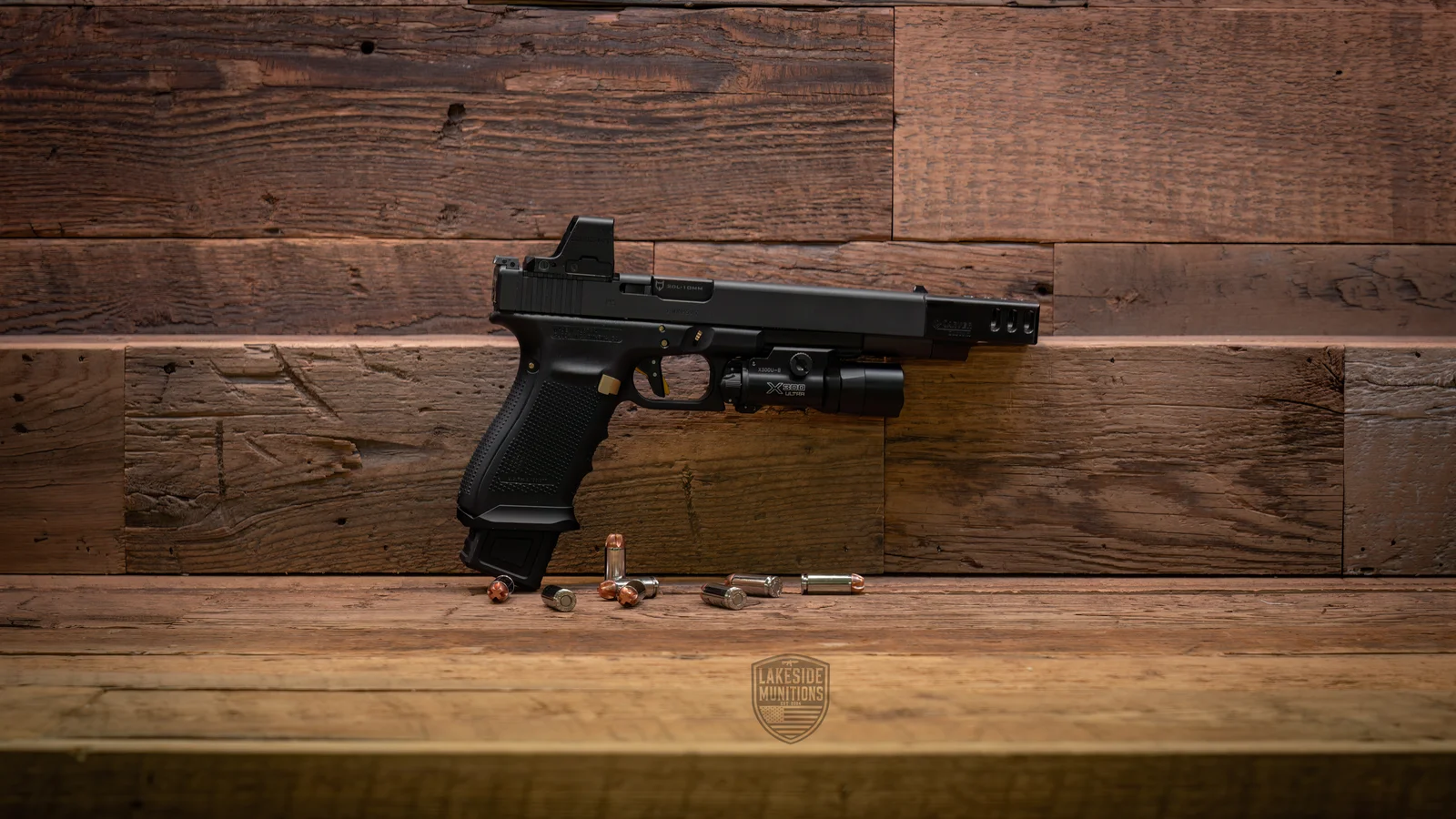
Many pistols are not optic-ready. EGW, a maker of pistol optic mounts, says modifying a slide is a cost to plan for, and that manufacturers are increasingly shipping pistols optics-ready from the factory. So the first question is simple: does your slide already have a cut, a plate system or nothing? The answer tells you which of the three routes you are on.
How Do Adapter Plates and Direct Cuts Compare?
A plate lets one slide cut hold more than one optic. A direct cut holds one footprint and needs no plate.
| Adapter plate | Direct cut | |
|---|---|---|
| What it is | A plate between the slide and the optic | The optic’s own footprint cut into the slide |
| Good for | Trying different optics, or a pistol that came with a plate system | One optic you have settled on |
| Watch for | Plates are made for specific pistols and generations | The slide is cut for one footprint only |
GunTalk recommends a direct cut for competition, for duty use, or once you have settled on one optic, because zero retention matters more there. It also advises against stacking two adapter plates.
Plate systems also change between models. Glock says its Gen6 standard-frame pistols come optic-ready with three plates for mounting optics straight to the slide, which is a different setup from MOS. Check your exact model and generation.
What Footprint Do You Need Before You Buy a Red Dot?
Check the footprint before you check the price. It decides which optics can go on your slide. We cover each footprint in a separate post on red dot footprints, but here is the short version.
Shooting Illustrated names five common ones: the Trijicon RMR and SRO pattern, the Shield RMSc pattern, the Holosun K pattern, the Leupold DeltaPoint Pro pattern, and the Aimpoint ACRO pattern. It says the RMSc pattern suits slimmer pistols, and that aftermarket slide makers often default to the RMR pattern.
Two warnings from the mount makers:
- Some footprints look close but are not the same. EGW lists Holosun 407K and 507K optics on the DeltaPoint Pro pattern only if the rear pins are removed from the base.
- Some optics, like the Aimpoint ACRO and the Holosun 509T, have their own footprints and need their own mounting solution, per EGW.
Look up your exact pistol model and generation, then look up the optic. Do not buy the optic first.
A short checklist before you spend money:
- Does the slide have a cut, a plate system, or nothing?
- If it has a cut, which footprint is it?
- Does the optic you want use that footprint, or does a plate exist for that exact pistol and optic?
- Does the optic’s manual call for particular screws and a particular torque?
If you can answer all four, you know whether you are buying an optic, a plate, or a slide job. If you cannot, ask the maker or ask us before you order.
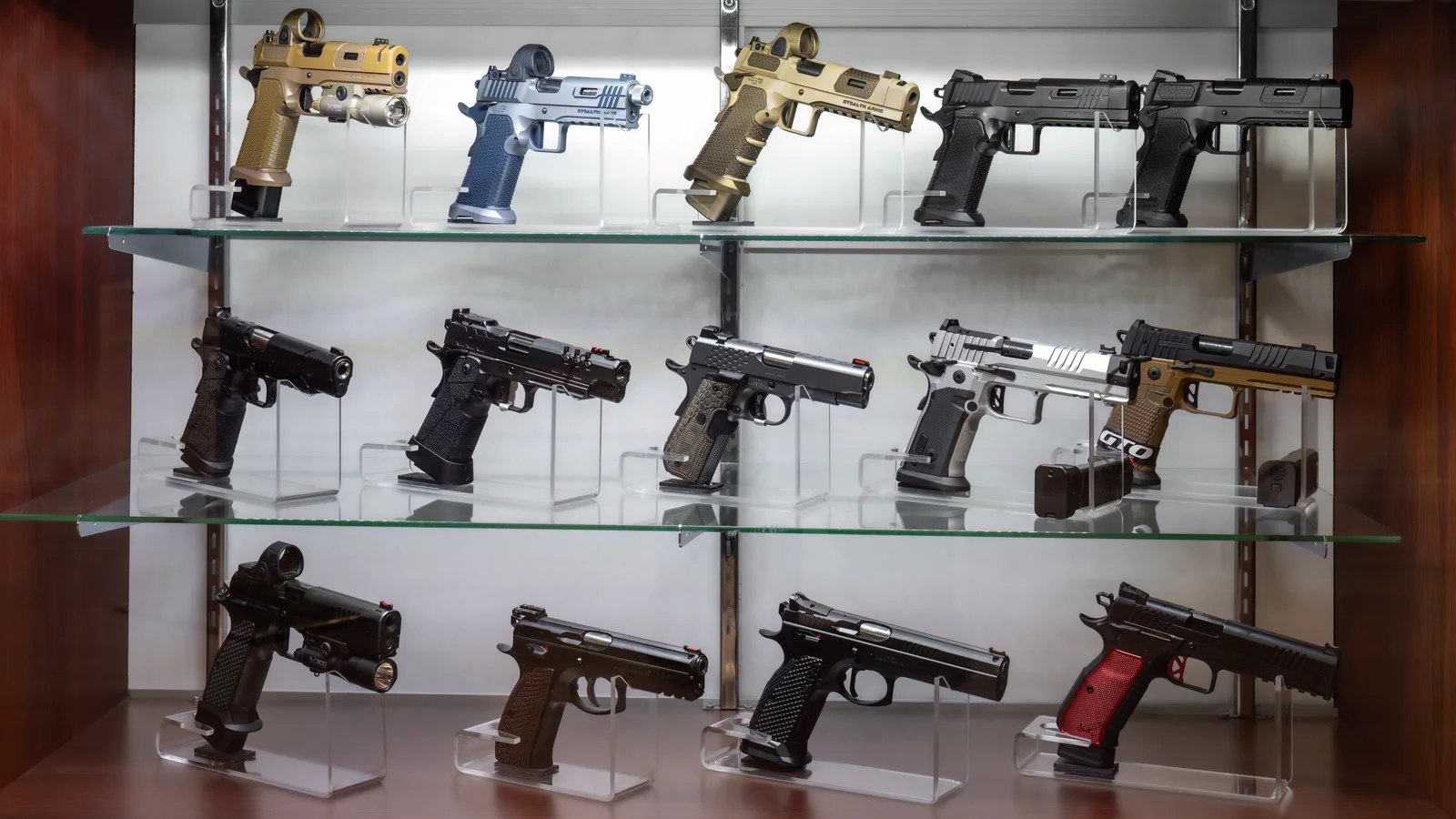
How Do You Fasten a Red Dot to a Pistol?
Once the slide and the footprint match, the optic is held on by small screws. The details come from the optic maker, so read the paper that came in the box.
As an example, Trijicon’s RMR manual says the RMR ships with two sets of #6-32 screws, one set 1/2 inch long and one set 3/8 inch long. The shorter screws are required to mount the RMR to a Glock MOS system. For other mounts, Trijicon says to use the longer screws when possible, for more thread engagement, and to torque the mounting screws to 15 inch-pounds. That is one optic. Another maker may ask for different screws and a different number.
On Glock’s own page, the company says to make sure the pistol is unloaded, with the magazine out and the chamber empty, before you install or remove a cover plate or adapter plate. The NSSF’s rules say the same thing in plain terms: keep guns unloaded until you are ready to shoot, and keep the muzzle pointed in a safe direction.
When the optic is on, it is not ready. You still have to zero it with live rounds. Trijicon’s manual says the optic needs a new zero if you move it to a different firearm. We cover that in our post on how to zero a red dot.
What Does Lakeside Do, and What Do We Not Do?
We keep this plain, because it is easy to drive over with the wrong job.
Our posted price for an optic mount is $45, for a red dot or a magnified optic, on our gunsmithing price list. If you buy the optic from us, we install it for free. The posted prices are for a firearm in factory condition. If other changes have been made, we look at the job first and the price may vary.
Our gunsmithing is light work. It does not include complex machining or permanent changes to a firearm, and we do not post a price for cutting a slide. We also do not post a separate price for a red dot on a pistol. So if you are not sure whether your pistol needs a plate or a cut, call before you come. Tell us the pistol, the generation if it has one, and the optic you want.
If your pistol is already cut for your optic, or comes with the right plate, that is the simplest case to bring in. Read the gunsmithing page for the whole list, or contact us with your pistol and optic and ask what the job looks like before you make the trip.


