

To clean a pistol, unload it and check the chamber, take it apart only as far as your manual shows, clean the bore and chamber with a brass brush, solvent and patches, wipe the outside, add a light touch of oil, put it back together and check that it works. Skip no step, and do the first one every time.
This guide follows the manual for Smith & Wesson’s M&P pistols (the link goes to a retailer-hosted copy). Other makers differ on how the gun comes apart, so your own manual comes first. The steps below hold for most pistols. If you would rather have someone else do it, we cover that at the end.
What You Need Before You Start
Smith & Wesson lists a basic cleaning kit: a brass bore brush and a cleaning jag sized for your bore, firearm cleaning solvent, gun oil, cotton cleaning patches, and a cleaning rod long enough to push the brush and jag all the way through the barrel. Buy supplies made for your type and caliber of gun, and follow the directions that come with them. Our post on what goes in a gun cleaning kit goes deeper.
Add three habits from the manual. Wear safety glasses whenever you take the gun apart or put it back together. Clean where there is good airflow, and wash your hands afterward, because cleaning a gun can expose you to lead and other substances. And clear a flat, well lit place to work.
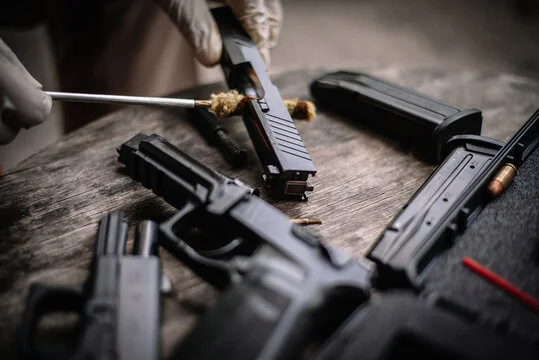
Steps 1 and 2: Unload the Pistol, Then Field Strip It
Step 1: unload and check twice. Every manual we read puts this first. The NRA’s rules of gun safety say to keep a gun unloaded until you are ready to use it.
Smith & Wesson’s manual sets out how to do it on its pistols. Point the muzzle in a safe direction, keep your finger off the trigger and out of the trigger guard, and remove the magazine. Then pull the slide fully to the rear to clear any cartridge from the chamber, lock the slide open, and make certain the chamber is clear. USCCA’s maintenance guide adds that ammunition belongs in a separate room before you touch a cleaning rod or solvent. The Smith & Wesson manual says to unload the gun before any cleaning, and to keep the muzzle pointed in a safe direction throughout.
Step 2: field strip, and stop there. Field stripping means taking the pistol apart into its main pieces: typically the slide, the barrel, the recoil spring and the frame. How that happens depends on the model, so follow the pictures in your manual and not a video of a different gun.
Smith & Wesson adds a warning worth copying. Never take the gun apart beyond what the manual shows. It says to never change any internal parts unless the manual tells you to, and that any other work should be done by a qualified gunsmith. The manual says that changing internal parts can affect the safety and reliability of the gun.
Steps 3 and 4: Clean the Bore, the Chamber and the Rest
Step 3: bore and chamber. This is the heart of the job. The manual says to remove firing residue from the bore and chamber using a properly fitted brass brush dipped in gun cleaning solvent. Then finish by running a dry cotton patch through the bore to take out the leftover residue and solvent.
A few details help. Use a brush and jag sized for your caliber, as the manual’s kit list says. And before you move on, check that no patch or tool is left behind: the manual warns that anything lodged in the barrel can cause a dangerous rise in pressure when you shoot.
Step 4: the rest of the gun. Wipe down the slide, the frame and the other parts you took apart, working where residue collects. Smith & Wesson says to clean the outside with a non-abrasive cloth. It also says some cleaners can damage a gun’s finish, so use solvents made for firearms and avoid long soaks and long ultrasonic cleaning. Never use ammoniated or other strong alkaline solvents on its guns.
Then wipe the outside of the gun to remove solvent, oil and fingerprints. The manual says finger moisture left on the metal could start a corrosion process.
Steps 5 and 6: Oil It Lightly, Then Check It
Step 5: a light touch of oil. Here is where many people go wrong. Smith & Wesson says its M&P pistols have seven lubrication points where a single drop of good firearm lubricant should go. Take care not to over-lubricate: it says extra lubricant collects unburned powder and carbon, which can interfere with the pistol working properly. After cleaning, the manual also says to lightly coat the metal parts, inside and out, with a high quality gun oil.
The oiling points are different on every model, so look them up in your manual. If you use the gun in cold weather, the manual says to pick an oil of an appropriate weight, so it does not thicken and slow the parts.
Step 6: reassemble and check. Reassemble in the order your manual shows, with safety glasses on. Then check the pistol. On the M&P, the manual says to replace the empty magazine and draw the slide fully rearward, at which point the slide stop should move up and hold the slide open. Colt’s carbine manual puts it the same way for rifles: do the function check after cleaning and putting the gun back together, and if it fails, have a competent gunsmith look at it.
Smith & Wesson also says to check the gun for signs of wear every time you clean it. If you see wear, do not shoot the gun. Have it checked by a qualified gunsmith.
After Cleaning: How to Store It
Smith & Wesson has storage advice too. Do not wrap the pistol in anything that holds moisture, such as leather or heavy cloth, and do not store it with a plug in the barrel, which can add to moisture buildup. If the gun will sit for a long time, the manual says to oil the bore, chambers and inner working parts with a quality oil or preservative made for firearms, and to coat the outside working parts and barrel with an anti-rust oil. Clean it again before you use it next. Rust starts where moisture sits, and our post on whether a rusty gun can be restored shows what that costs you.
How Often, and When to Hand It Off
How often depends on how you use the pistol. Our post on how often to clean your gun lays out the intervals from USCCA and Otis for range, hunting and stored guns.
If you would rather skip the job, Lakeside cleans guns in the shop: $35, or $25 if you bought the gun from us. Surface rust cleanup is included during a cleaning, to the best of our ability. Gunsmithing is walk-in, with no appointment. Read about what a professional cleaning includes or see the whole gunsmithing price list. Questions about your pistol? Use our contact page or come by the shop in Cumming.


